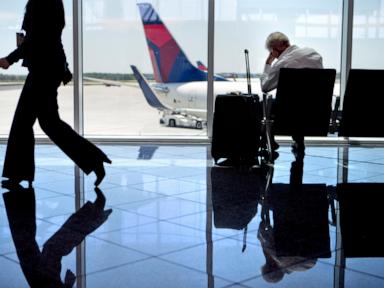
Every time Hartsfield-Jackson Atlanta International Airport grinds to a halt, the press releases follow a predictable script. An "automation system issue" gets trotted out as the villain. Pundits nod sagely. Travelers curse the machines.
They are looking at the wrong culprit. You might also find this similar article insightful: Why the Media Completely Misunderstands Politician Meme Coins and Exclusive Investor Dinners.
Blaming an automation glitch for Delta flight delays in Atlanta is like blaming a smoke detector for burning down the kitchen. The software didn't fail the airline. The airline’s structural addiction to hub-and-spoke hyper-efficiency broke the software’s guardrails. When you run the world’s busiest airport at 99 percent capacity with zero slack in the schedule, a three-minute hiccup in a dispatch algorithm doesn't cause a three-minute delay. It triggers a nuclear chain reaction across four time zones.
The lazy consensus says airlines need better, smarter tech to prevent these outages. The reality is much uglier. Legacy carriers have spent three decades optimizing away every ounce of operational buffer in the name of quarterly yield. Now, when their brittle software inevitably stumbles, there is no human safety net left to catch the falling planes. As reported in detailed articles by Harvard Business Review, the effects are worth noting.
The Lie of the "Automation Glitch"
Let’s define what actually happens during an airline IT outage.
In commercial aviation, "automation" isn't a single monolithic robot flying planes or sorting bags. It is a sprawling, duct-taped federation of legacy mainframes from the 1980s talking to modern cloud APIs. You have crew-scheduling solvers, weight-and-balance calculators, flight-plan routers, and gate-management databases all screaming at each other in real time.
I have sat in war rooms with enterprise infrastructure architects who manage these exact systems. I have watched companies blow tens of millions of dollars on shiny front-end dashboards while leaving the core transactional database running on code older than the pilots flying the jets. When a carrier cites an "automation issue," they are almost always describing a synchronization failure—one database choked on a data packet, and the downstream systems froze because they didn't know how to proceed without corrupted information.
The press treats this like an act of God. It isn't. It is technical debt coming due with compound interest.
Why Atlanta Amplifies Every Digital Hiccup
Atlanta is not just another airport. For Delta, it is the central nervous system of a global network. Hundreds of thousands of passengers funnel through those concourses daily, riding on tightly bank-scheduled waves of arrivals and departures.
In a point-to-point network, a software crash in Dallas stays in Dallas. In a mega-hub like Atlanta, a 20-minute freeze in the automated gate-assignment or baggage-routing logic creates a physical traffic jam on the tarmac. Inbound planes sit on taxiways burning fuel because outbound planes are stuck at the gates. Those outbound planes are stuck because the automated weight-and-balance manifest hasn't cleared.
By the time engineers reboot the server, the physical geometry of the airport is locked up. Planes are in the wrong places. Crews are timing out under strict Federal Aviation Administration (FAA) duty limits. The software is back online, yet the delays drag on for 48 hours.
The Real Villain Is Hyper-Optimization
If you want to understand why these meltdowns keep happening, stop reading tech blogs and start reading operations research.
For twenty years, aviation consultants worshiped at the altar of asset utilization. An airplane sitting on the ground makes zero dollars. A gate sitting empty for forty minutes is wasted real estate. A reserve crew sitting in an airport lounge getting paid to wait is an unacceptable drag on operating margins.
So airlines used sophisticated algorithms to squeeze the slack out of the system. Turnaround times—the window between a plane landing, unloading, cleaning, refueling, boarding, and pushing back—were shaved down to the bone. Crew pairings were engineered so a pilot lands in Atlanta on Flight A and has barely enough time to walk across the terminal to command Flight B.
- The upside: On a sunny Tuesday when every server hums, the airline prints money. Load factors hit record highs, and costs per available seat mile drop.
- The downside: The system has zero shock absorbers.
In systems engineering, this is known as tight coupling. Charles Perrow, the legendary Yale sociologist who studied catastrophic failures in complex systems, proved decades ago that tightly coupled systems with high interactive complexity are guaranteed to suffer normal accidents. When you eliminate buffers to maximize efficiency, small failures don't stay small. They cascade.
Imagine a scenario where a highway operates at 100 percent lane capacity with every car moving at 75 miles per hour, bumper-to-bumper. If one driver taps their brakes for half a second because a dashboard warning light flickered, you don't get a minor slowdown. You get a fifty-car pileup that closes the interstate until midnight.
Delta’s Atlanta hub is that highway. The automation system wasn't the cause of the crash; it was just the driver who tapped the brakes.
Why "More Automation" Makes the Problem Worse
Whenever an outage strands thousands of flyers, armchair analysts immediately demand more artificial intelligence and better predictive automation. This is precisely the wrong medicine.
The more you automate a complex operational workflow, the more you erode the manual fallback capability of your human workforce.
Twenty years ago, if the automated dispatch or gate-control system went dark at a major hub, veteran station managers pulled out clipboards, grease pencils, and printed manifests. They knew how to route baggage manually. They knew how to calculate center-of-gravity load sheets by hand. It was slower, sure, but the planes kept moving.
Today, those manual muscle memories are gone. Worse, the sheer scale of modern hub operations makes manual intervention physically impossible. No human brain—or room full of human brains—can manually re-solve the crew-legality matrix for 1,000 daily flights in Atlanta once a disruption hits.
When you replace human judgment with automated optimization, you create a brittle edge. The system performs better than humans 99.5 percent of the time, and fails catastrophically 0.5 percent of the time. By pouring more complex machine learning into the stack without rebuilding the underlying decoupling buffers, airlines are simply building taller skyscrapers on cracked foundations.
The Dirty Secret of Aviation IT Budgets
Why don't airlines just rip out the ancient mainframes and build an unbreakable, cloud-native operational core?
Because Wall Street hates infrastructure spending that doesn't show immediate passenger-facing returns. Building a flashy mobile app that lets you track your bag or order a gin and tonic from seat 14A drives customer satisfaction scores and credit card sign-ups. Spending $500 million to refactor a 35-year-old Transaction Processing Facility (TPF) mainframe that handles crew scheduling? That produces zero press releases and depresses free cash flow for three years.
Plus, migrating a live, 24/7 airline core is like changing the engines on a Boeing 777 mid-flight over the Atlantic. The risk of a catastrophic cutover failure terrifies executives. So they kick the can down the road. They wrap the legacy core in modern translation layers, pray the middleware holds together during peak summer travel, and keep a PR template ready for when it doesn't.
Dismantling What Travelers Get Wrong
When delays hit Atlanta, search engines light up with frantic questions from stranded passengers. Most of those questions are built on completely false premises about how airlines actually operate.
"Why didn't Delta have a backup system?"
They do. Every Tier-1 carrier runs redundant data centers, failover servers, and disaster-recovery protocols. The problem isn't hardware dying; it is bad state data replicating across the backups. If a software bug corrupts the database that tracks which flight attendant is legally allowed to work which aircraft, the backup system dutifully mirrors that corrupted data in milliseconds. Redundancy protects you from a backhoe cutting a fiber-optic cable. It does nothing to protect you from a logic flaw in the code.
"Should I avoid connecting through Atlanta?"
If you are flying during peak weather months or Friday afternoons, yes—but not because Delta’s tech is uniquely bad. Every mega-hub carrier (American in Dallas-Fort Worth, United in Chicago O'Hare) suffers from the exact same structural vulnerability. Avoiding Atlanta won't save you if you just trade it for another tightly coupled fortress hub. The real trick is avoiding the last bank of the day. When an automation hiccup happens at 10:00 AM, the airline has twelve hours of schedule padding to recover. When it happens at 6:00 PM, crews hit their mandatory FAA rest limits, planes get stranded out of position, and your flight gets canceled outright.
"Will federal fines force airlines to fix their tech?"
No. Regulatory penalties from the Department of Transportation are treated by corporate finance teams as a predictable cost of doing business. Even a $50 million fine is a rounding error compared to the billions saved over a decade by running lean schedules and deferring core mainframe replacements. Airlines only change operational behavior when customer defection hits corporate travel contracts—the high-margin road warriors who pay full fare.
The Uncomfortable Trade-Off Nobody Wants to Pay For
I have to be honest about the downside of my own argument. Fixing this isn't free, and travelers wouldn't like the bill.
If airlines decoupled their hubs, added 30 minutes of buffer time between every bank of flights, kept 15 percent more reserve crews sitting on standby, and maintained fully staffed manual fallback teams in Atlanta, flight delays from IT glitches would plummet. Operational resilience would skyrocket.
And average ticket prices would jump by 20 to 30 percent overnight.
The uncomfortable truth of modern aviation is that consumers voted with their wallets for fragile efficiency. Passengers sort flights by lowest price and shortest total travel time. Nobody clicks "Sort by Operational Buffer" on Expedia. Airlines looked at consumer behavior, stripped out every spare aircraft, every extra gate agent, and every minute of schedule padding, and gave the public the cheap, high-frequency network it demanded.
We got the exact aviation system we paid for. It works brilliantly until a single line of code stumbles in Georgia.
How to Bulletproof Your Own Travel Against Hub Failures
You cannot fix Delta’s middleware, and you cannot force airline CFOs to love operational slack. You can, however, stop playing by the hub-and-spoke rules that trap millions of flyers in terminal concourses every year.
- Book the first wave out. Always take the earliest morning flight—ideally before 7:30 AM. The aircraft is already sitting at the gate from the night before. The crew is fresh off mandatory rest. Morning flights decouple you from the cascading delays of the day.
- Respect the 90-minute connection floor. Airlines will happily sell you a 38-minute connection in Atlanta because their algorithm says it is legal. That algorithm assumes zero taxi delays, instant gate docking, and flawless baggage routing. Never book a hub connection under 90 minutes unless you enjoy sleeping on terminal carpet.
- Bypass the fortress hubs entirely. Whenever possible, pay the slight premium for a nonstop flight on a point-to-point carrier, or connect through a secondary, lower-density airport. Fewer intersecting flight paths mean fewer dominoes waiting to fall.
- Monitor the incoming aircraft, not your flight status. Airline apps routinely claim a flight is "On Time" right up until ten minutes before boarding, even while the inbound plane is still sitting on a tarmac 600 miles away. Use a public flight tracker to check the tail number of your incoming aircraft two hours before departure. If that plane hasn't taken off yet, your flight isn't leaving on time—regardless of what the gate screen says.
Stop waiting for airlines to announce that their automation systems are finally fixed. In a business model built on zero margin for error, the next meltdown isn't a software bug—it is a permanent feature of the schedule.