The narrative is stale. You have likely read the panic-stricken headlines: Cyclosporiasis is skyrocketing, The government is failing you, and Food safety is at a breaking point. It is a predictable cycle of outrage designed to keep you scrolling. But if you strip away the alarmism and look at the actual mechanism of how we track disease, you find a different reality. This is not a crisis of incompetence; it is a crisis of visibility.
We are currently witnessing a massive surge in reported cyclosporiasis cases. The numbers are jarring—over 15,000 confirmed cases and thousands more in the queue. Critics point to this as evidence of a systemic collapse in regulatory oversight. They want you to believe that the parasite is suddenly behaving differently, or that our supply chains have vanished into thin air.
They are dead wrong.
The Illusion of a Sudden Spike
When you see a graph with a vertical line shooting upward, your brain assumes something has changed in the environment. It is a natural heuristic, but it fails here. The primary driver of these rising numbers is not just "more germs." It is a massive expansion in our diagnostic capability.
For decades, Cyclospora was the ghost in the machine. It was difficult to identify, easy to misdiagnose as common traveler’s diarrhea, and rarely tested for unless a clinician was particularly persistent. Today, we have ubiquitous multiplex PCR panels—comprehensive tests that scan for dozens of pathogens in a single go.
Imagine a scenario where you are searching for a specific needle in a haystack. For years, you used your hands. Now, you have a high-powered magnet. If you suddenly pull out a thousand needles, did the field suddenly become more dangerous, or did you just get better at finding what was already there?
We are finally mapping the baseline of what has likely existed for decades. When you hear that cases are "on the rise," you are really hearing that the medical system is finally waking up to a reality it previously ignored.
The Food Safety Fantasy
There is a pervasive myth that if we just had more inspectors and more budget, your iceberg lettuce would be sterile. This is a dangerous lie.
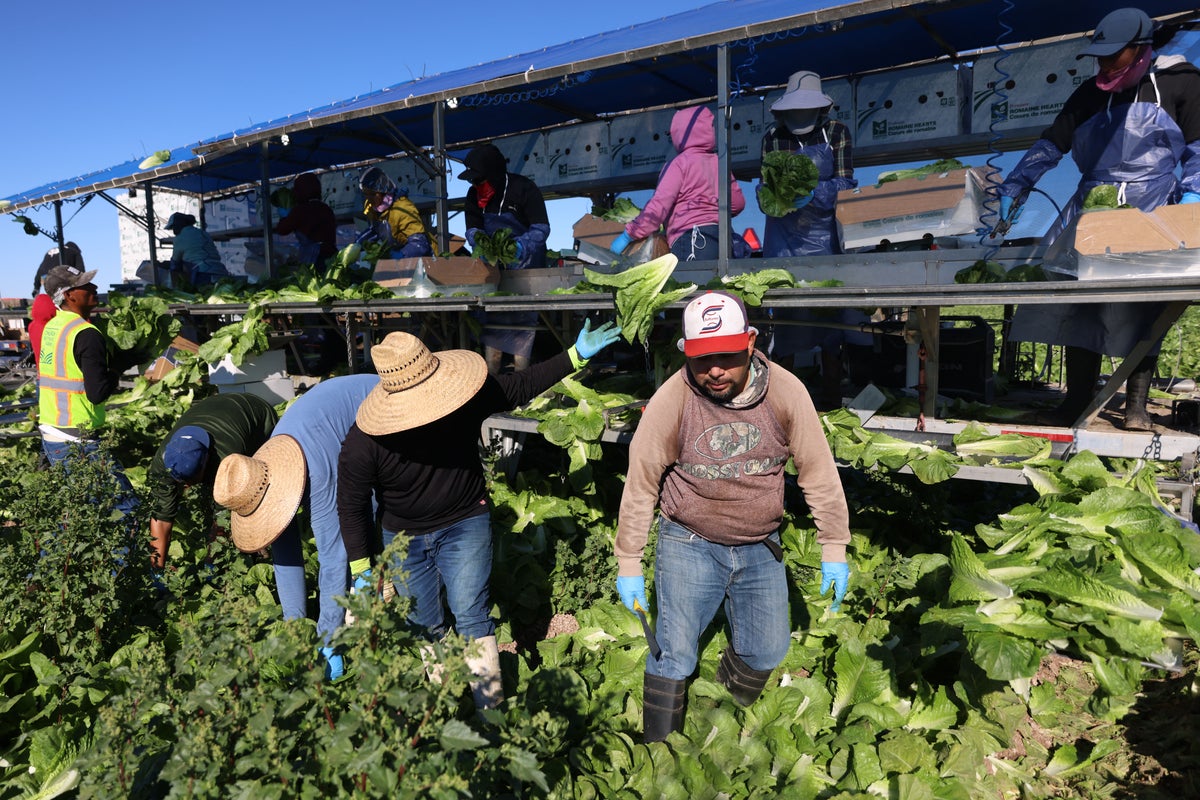
I have spent enough time in industrial food logistics to know the truth: our food system is built on scale, not total eradication of every microscopic threat. You cannot effectively pasteurize a head of lettuce without destroying it. We are dealing with biological products that require water, soil, and human handling. Unless you plan on moving to a completely irradiated, lab-grown diet, you are accepting a non-zero risk every time you open a bagged salad.
The "catastrophic" failure that pundits describe is actually the system working exactly as designed. We identify a cluster, we trace it back to a distribution hub or a growing region, and we issue a recall. The speed of these investigations—compared to twenty years ago—is actually a triumph, not a tragedy. The fact that we can link a stomach bug across 47 states back to a specific processing plant in Mexico is a feat of modern epidemiology that would have been impossible a generation ago.
The Real Vulnerability
If you want to talk about true failure, stop looking at the CDC’s budget and start looking at your own kitchen habits.
The parasite Cyclospora cayetanensis is not a highly aggressive bioweapon; it is a persistent, annoying passenger that thrives in the gaps of our hygiene protocols. It does not spread person-to-person. It requires ingestion.
The public obsession with "government oversight" is a convenient way to outsource personal responsibility. People demand stricter regulations so they can continue to eat pre-washed, pre-bagged convenience produce without a second thought. If you want to avoid this, the solution is remarkably simple and universally ignored: cook your greens or stop buying the pre-packaged convenience traps.
Stop Asking for More Rules
People keep asking: "Why is the government not doing more?"
The better question is: "Why are we surprised that high-density, low-margin agricultural production has biological side effects?"
We have optimized our food system for price and availability. We demand year-round access to fresh, crisp produce at a cost that allows for grocery store margins. We cannot simultaneously demand that the system be as cheap as it is today and as perfectly sterile as a hospital operating room. Those two goals are in direct, unavoidable conflict.
The next time you see a headline screaming about an outbreak, ignore the moral panic. Understand that you are watching a high-tech surveillance system do its job. We are living through the birth of a transparent food system where we can no longer hide from the microbial reality of our dinner.
Do not wait for a bureaucrat to tell you how to wash your vegetables. They cannot save you from the inherent entropy of nature. Wash your produce, skip the bags, and accept that perfection is an expensive, likely impossible, illusion.
The system is not breaking. It is just becoming impossible to ignore.