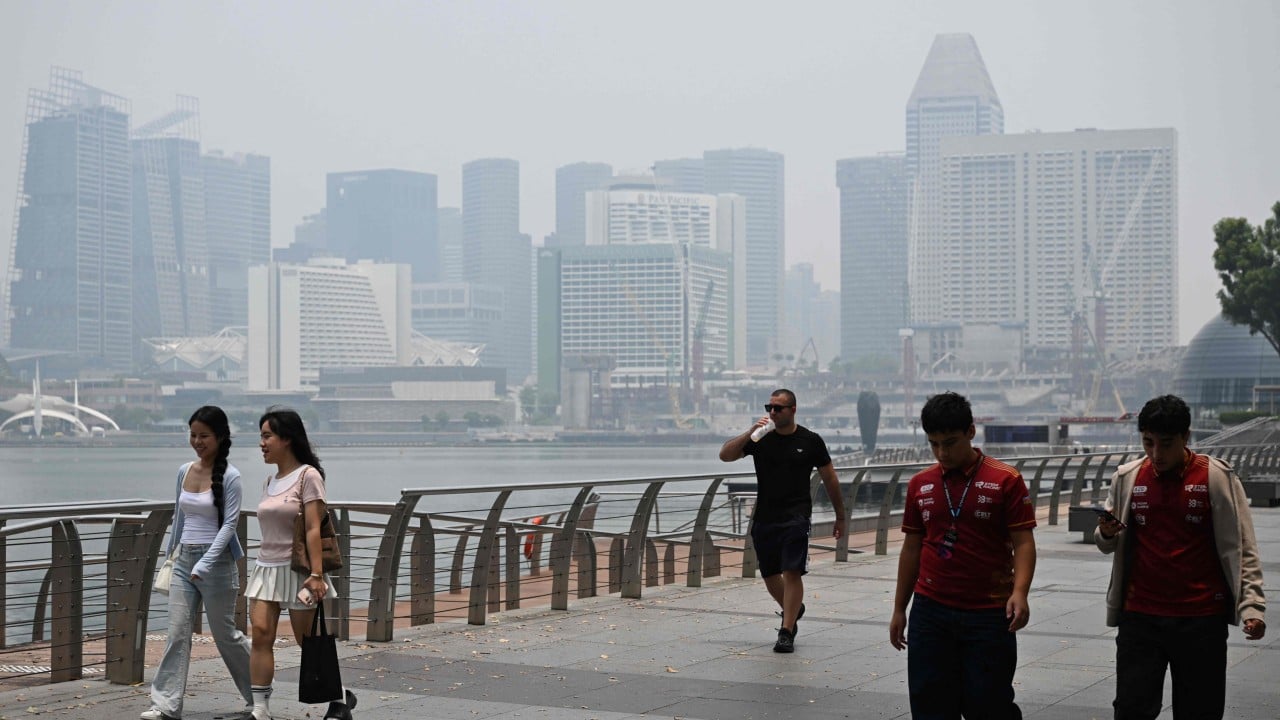
Every single dry season, the headlines write themselves. Southeast Asia panics, schools shut down across Malaysia, and Singapore checks its pollutant standards index with white-knuckled dread. The narrative is fixed. It is a predictable morality play about greedy agricultural conglomerates burning down ancient rainforests, choking urban populations with smoke, and thumbing their noses at environmental stewardship.
Except it is mostly wrong.
I have spent years looking at particulate matter dispersal models and industrial telemetry across the Strait of Malacca, and the conventional wisdom surrounding the transboundary haze is an exercise in theatrical oversimplification. We focus entirely on the dramatic orange skies and the fires across Sumatra and Kalimantan, completely missing the structural mechanics of how regional air actually moves, how urban centers generate their own localized smog independent of any burning peatland, and why closing schools is a comforting political placebo that changes zero atmospheric chemistry.
Let us dismantle the lazy consensus.
The Geography of Panic
The standard story goes like this: slash-and-burn clearing for palm oil plantations sends plumes of smoke across the maritime border, holding hostages in Singaporean boardrooms and Malaysian classrooms. The villains are obvious. The victims are blameless urbanites.
The data tells a far more inconvenient story.
Transboundary transport matters, absolutely. During strong El Nino years, equatorial trade winds push massive smoke plumes northward. But local emissions inside urban airsheds do the heavy lifting for a staggering percentage of poor air quality days. Traffic density, localized diesel particulate emissions, port congestion, and regional power generation trap pollutants in a thermal inversion layer that sits over the Malacca Strait like a glass lid.
When you shut down schools because the PSI hits hazardous levels, you acknowledge the symptom while misdiagnosing the pathogen. You give parents an administrative break while thousands of container ships idle offshore, spewing heavy bunker fuel into the same stagnant air mass. It is security theater of the highest order. We punish children with missed education while protecting the logistical machinery that keeps regional trade humming.
The Palm Oil Fallacy
If you want to understand why institutional fixes fail, look at the economics of the supply chain. Activists love to demand total boycotts of palm oil, treating the crop as an ecological sin.
That approach ignores agronomy. Oil palm yields up to ten times more oil per hectare than soybean, rapeseed, or sunflower. If the world suddenly banned palm oil to punish the haze emitters, consumer goods manufacturers would switch to alternative oilseeds. The immediate consequence would not be cleaner air; it would be massive land-use conversion elsewhere, requiring exponentially more acreage to produce the same volume of vegetable fat.
The fires are not occurring because bad actors love setting things on fire. They happen because smallholders and concessionaires use the cheapest available tool for land preparation in remote areas where cold-press mechanical clearing is economically impossible without robust infrastructure subsidies. Shouting moral outrage at a Jakarta boardroom does not change the cost curve of land management in rural Sumatra. If you want the fires to stop, you have to subsidize zero-burn mechanical clearing and overhaul rural land tenure laws so that farmers have legal incentives to preserve soil carbon. Until then, punitive fines and angry editorials are just noise.
The Urban Smog Machine We Built
Let us talk about Singapore, the perpetual victim of cross-border winds.
The island nation prides itself on garden-city greenery, efficient public transit, and pristine planning. Yet, urban microclimates do not respect national zoning laws. Singapore’s own localized industrial emissions, combined with the heavy maritime traffic bottlenecked in the world's busiest shipping lane, create an internal soup of nitrogen oxides and sulfur dioxide that reacts with sunlight to form ground-level ozone.
When the Sumatran haze arrives, it acts as a catalyst, mixing with homegrown pollutants to create a toxic cocktail far worse than either source produces in isolation. Blaming the neighbor across the water is politically convenient because it deflects attention from the domestic combustion engines and industrial zones powering the local economy.
Imagine a scenario where regional governments stopped treating air quality as a diplomatic crisis to be managed via press releases and started treating it as an integrated airshed management problem. That means shared real-time telemetry, synchronized maritime emission standards in the Malacca Strait, and penalties for local industrial output that scale dynamically with wind stagnation indexes.
What Actually Works
If you are living through the haze season, stop buying into the helplessness narrative. Air purifiers with true HEPA filters and activated carbon stages work, provided you actually seal your living space instead of treating your home like a screened porch. Disposable paper masks do almost nothing against sub-micron particulate matter, despite what panic-buying crowds at pharmacies suggest.
On a macro level, the policy response requires abandoning the fantasy of pristine isolation. Southeast Asia is an interconnected ecological and atmospheric unit. As long as regional trade policies reward the cheapest possible extraction methods and urban centers refuse to internalize the true cost of their own localized emissions, the smoke will return every dry season.
The next time the skies turn amber and the politicians start shutting down schools, remember what is actually happening. It is not just a forest burning across the water. It is a shared regional addiction to cheap growth, hidden behind a smokescreen of mutual blame.
Clear the air by facing the facts, or keep choking on the politics.