Every major health headline this week treats the first recorded U.S. deaths from a massive cyclosporiasis outbreak as an indictment of our food supply. State health departments panic. News outlets broadcast warnings about imported salad greens. Consumers throw out fresh produce like it’s radioactive waste. It is a masterclass in missing the forest for the trees.
The lazy consensus says we have a supply chain crisis. The data tells a different story.
We do not have a vegetable problem. We have an institutional vulnerability problem. When thousands of cases cascade through states like Michigan and tie themselves to centralized agricultural logistics, blaming a single farm or a head of lettuce is comforting fiction. It lets public health authorities point a finger at an external variable while ignoring the structural fragility of modern food distribution.
The Anatomy Of A False Alarm
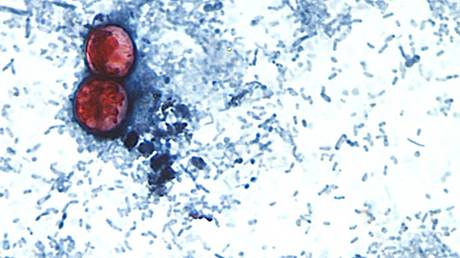
To understand why the panic over Cyclospora cayetanensis is blown entirely out of proportion, look at what the pathogen actually does versus how it is framed. Cyclosporiasis is an intestinal infection caused by a microscopic, single-celled parasite. It spreads exclusively through the fecal-oral route, usually via contaminated irrigation water.
Yet the public reaction assumes a sort of malicious ubiquity. People act as though a single leaf of lettuce is engineered to destroy human health. In reality, the parasite requires days or even weeks in the environment to sporulate and become infective. It cannot spread directly from person to person.
The Michigan Department of Health and Human Services confirmed that the two individuals who tragically lost their lives had significant underlying health conditions that were exacerbated by extreme dehydration. Dehydration is the real killer here, not some exotic biological weapon hiding in the salad bar.
When infectious disease experts like Dr. Joel Kammeyer point out that the illness is relatively easy to treat for an otherwise healthy individual, the media glosses right over it. Why? Because nuance does not drive clicks. Panic does.
The Broken Logic Of The Traceability Hunt
Federal investigators love a good scapegoat. Tracing outbreaks back to specific agricultural operations in central Mexico gives regulators a neat checkbox for accountability. They recall the lettuce. They issue warnings. Everyone feels like action was taken.
Imagine a scenario where every single box of imported greens is scrubbed clean, yet the structural vectors of contamination—such as municipal water runoff management and sub-contracted labor sanitation standards—remain completely unaddressed. You haven't fixed the system. You've just played a high-stakes game of whack-a-mole.
The lazy consensus assumes that if we just find the right farm to shut down, the problem vanishes. But Cyclospora is native to tropical and subtropical regions, and as global trade networks expand, agricultural inputs cross borders faster than regulatory bodies can audit them. Expecting zero-tolerance biological purity in mass-produced fresh food is a delusion.
Stop Trying To Sanitize The Planet And Build Resilience Instead
The conventional playbook demands more recalls, more bans, and more consumer terror. That strategy fails every single time because it treats the symptom while ignoring physiological resilience.
If your body collapses from a bout of watery diarrhea, the failure point is often a systemic lack of baseline health and delayed clinical intervention. Medical records for the recent fatalities noted complex pre-existing vulnerabilities. When vulnerable populations lack immediate access to rehydration therapy and basic diagnostic testing, minor gastrointestinal setbacks become lethal emergencies.
Instead of treating fresh vegetables as public enemy number one, we need to completely rethink how we handle clinical triage during multi-state outbreaks.
- Demand rapid diagnostics: Standard stool samples for Cyclospora often face laboratory backlogs. If detection took hours instead of weeks, localized outbreaks wouldn't morph into continental panics.
- Prioritize hydration education: The public conversation focuses obsessively on what not to eat, rather than how aggressively to rehydrate the moment symptoms manifest.
- Audit the water, not just the crop: Focusing regulatory budgets on downstream packaging plants while upstream irrigation sources remain unmonitored is a structural joke.
The next time a headline tries to terrify you with numbers in the thousands and rare fatalities, remember what is actually happening. The system isn't collapsing because lettuce is dangerous. It's collapsing because we refuse to build a healthcare and food infrastructure robust enough to handle biology doing what biology does. Stop fearing the salad. Fix the safety net.