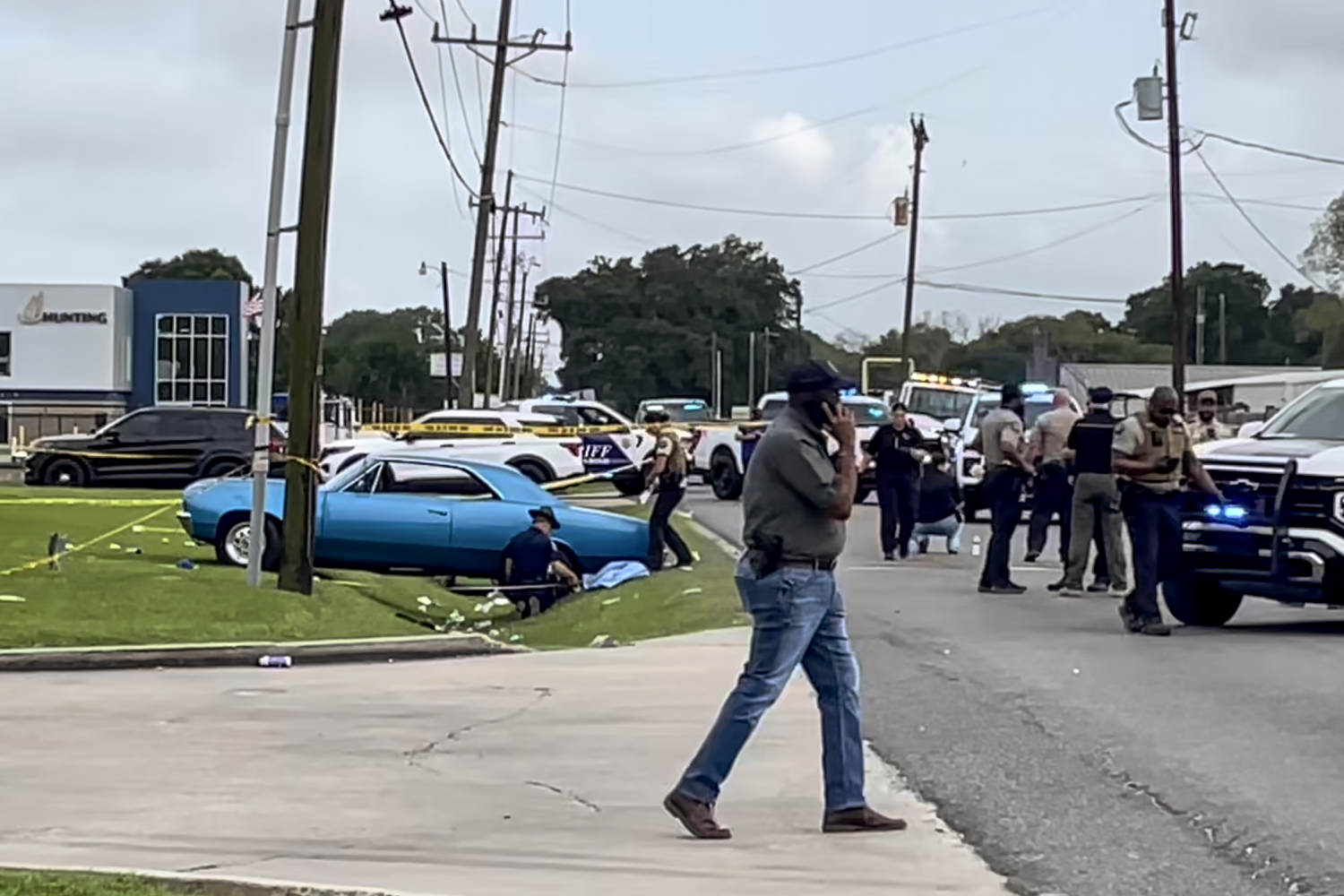
The headlines are predictable. They focus on the carnage, the screaming sirens in Broussard, and the "shocking" nature of a vehicle plowing into a Lao New Year celebration. They paint a picture of a freak accident—a localized tragedy that could have been avoided if only the driver had been more careful or the barricades slightly taller.
They are lying to you.
What happened in Louisiana isn’t a freak occurrence. It is the mathematical certainty of mixing high-density human celebration with two-ton kinetic weapons operated by fallible carbon-based life forms. If you’re looking for a "villain" in the driver or a "failure" in the local police department, you’re missing the forest for the trees. The failure isn't the incident; the failure is the design of the modern American public square.
The Myth of the Freak Accident
Media outlets love the "freak accident" narrative because it sells papers and absolves the system. If it’s an accident, nobody has to change their lifestyle. We just pray it doesn't happen to us.
But let’s look at the physics. When you organize a parade, you are essentially creating a high-pressure corridor of soft targets. You are betting the lives of hundreds of people on the sobriety, mechanical maintenance, and emotional stability of every single driver within a five-mile radius. In any other industry, that level of risk management would be laughed out of the room.
Imagine a factory where heavy machinery moved inches away from unshielded workers every day. OSHA would shut it down in an hour. Yet, we call it "culture" when we do it on a Saturday afternoon in Louisiana. We’ve normalized the proximity of death so thoroughly that we only notice it when the blood hits the pavement.
Why Barricades are a Psychological Pacifier
The "lazy consensus" after these events is always the same: We need more security. We need more police presence. We need better barricades.
None of that works.
Plastic sawhorse barricades are a suggestion, not a shield. Even "heavy duty" water-filled barriers are easily bypassed by a vehicle with enough momentum. Most parade security is theatrical. It is designed to make the public feel safe, not to actually be safe.
If you want to stop a vehicle from entering a pedestrian zone, you need bollards. Real, deep-rooted, steel-and-concrete bollards. But cities don't want to install those because they’re "ugly" or they "impede traffic" during the other 364 days of the year. We prioritize the convenience of the commute over the structural integrity of our celebrations.
I’ve seen municipal planners gut safety budgets because they’d rather spend the money on "beautification" projects. They trade lives for flower beds. When an SUV inevitably jumps a curb, they act like it’s an act of God. It’s not. It’s an act of civil engineering negligence.
The Lao New Year Context You’re Ignoring
Most reporting on the Broussard incident glosses over the specific cultural mechanics of the event. A Lao New Year parade isn't just a walk down the street; it’s a high-energy, sensory-heavy environment. There is loud music, water throwing, and intense crowd density.
This isn't a criticism of the culture; it’s a critique of the integration. When you have an environment where drivers are already distracted by a "party atmosphere," the margin for error evaporates.
The standard response is to blame the driver's intent. Was it a medical emergency? Was it malice?
It doesn't matter.
The outcome is the same. Whether the driver had a heart attack or a temper tantrum, the vulnerability of the pedestrians remained constant. We focus on the "why" of the driver because it’s easier than fixing the "how" of the street. We’d rather prosecute a single individual than admit that our entire approach to urban gathering is fundamentally broken.
The False Idolatry of the Automobile
The real elephant in the room is our pathological refusal to pedestrianize.
We are so addicted to the idea that a car should be able to go anywhere at any time that we allow them to creep alongside children and the elderly during festivals. True safety would mean a total, hard-closure perimeter blocks away from the event—no exceptions, no "resident passes," no "just passing through."
But try suggesting that to a local city council. You’ll be met with screams about "economic impact" and "resident inconvenience."
The hard truth? Your "inconvenience" is the price of not having a dozen people hospitalized. We have decided, as a society, that a three-minute detour for a driver is worth more than the physical safety of a pedestrian. Every time we host an event without permanent, crash-rated infrastructure, we are making a bet. Louisiana lost that bet this week.
How to Actually Fix This (If You Have the Stomach for It)
If you're a city official or a parade organizer reading this, stop looking for "safety tips" and start looking at structural reality.
- Hard Infrastructure Only. If a vehicle can physically fit through a gap, it will eventually go through that gap. Use heavy machinery or permanent bollards to block access points. If you’re using yellow tape, you’re not trying.
- The "Dead Zone" Buffer. Parades should not happen on active thoroughfares. They should happen in designated, sunken, or raised plazas where vehicle entry is physically impossible without climbing a three-foot concrete grade.
- End the "Mixed Use" Delusion. You cannot have a "vibrant street life" and 45-mph traffic on the same asphalt. Pick one. If you want a festival, kill the road for the weekend. Not a partial closure—a total death of the street for cars.
We treat these tragedies as lessons to be learned, but we never actually learn them. We just wait for the news cycle to reset so we can go back to pretending that a 4,000-pound truck and a toddler can occupy the same space in harmony.
The "Lao New Year Tragedy" wasn't a failure of a driver. It was a victory for physics in a world that refuses to acknowledge it.
Stop asking if the driver was distracted. Start asking why the car was there in the first place. Until we stop worshipping at the altar of vehicle access, we are just waiting in line for the next "accident."
Build walls. Move the cars. Or stop pretending you care about the people on the street.