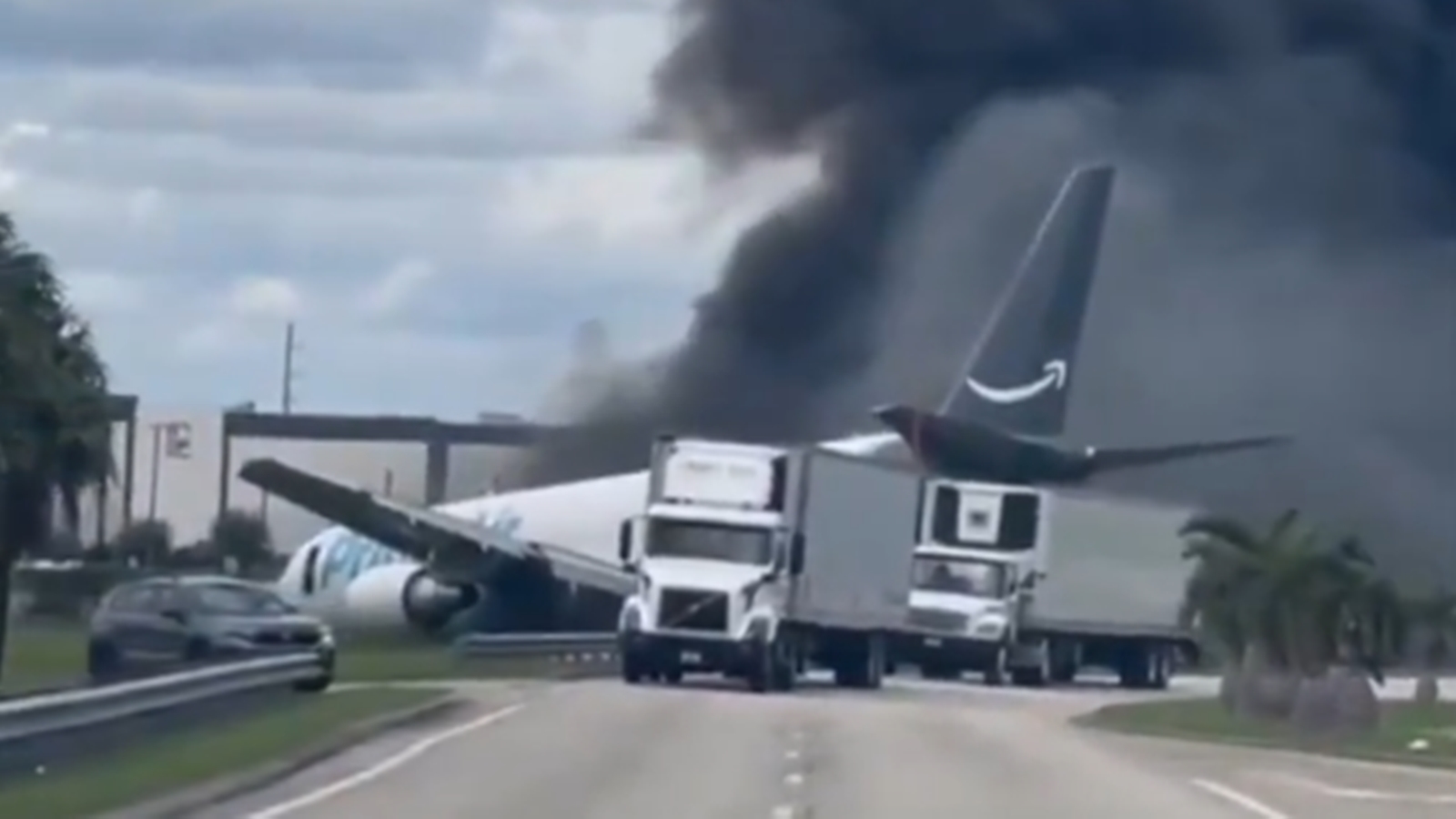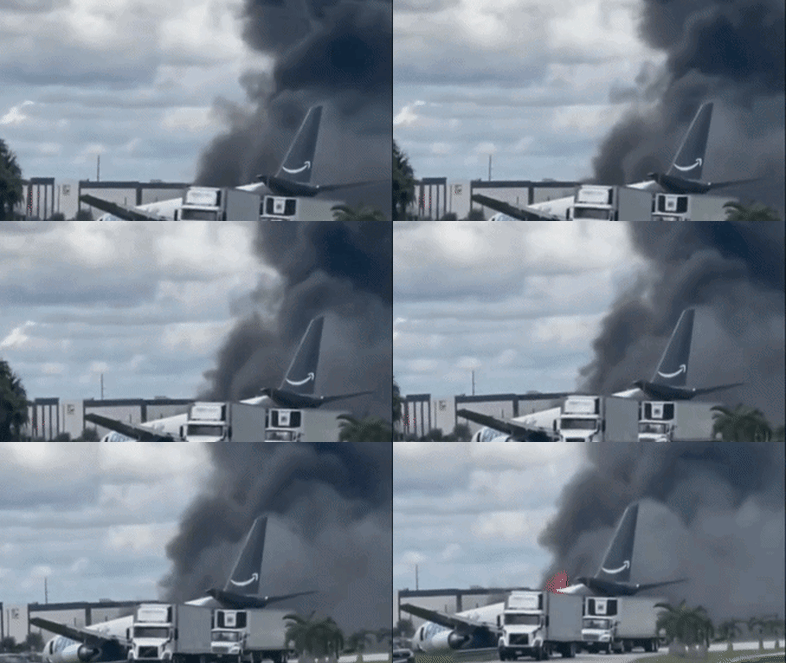
Every single time a cargo jet overruns a runway and erupts into a fireball, the media runs the exact same lazy script. They point the finger at pilot error, weather anomalies, or bad luck. It is a comforting narrative for corporate boards and logistics giants. It keeps the liability neatly tucked away in the cockpit, far away from the executive suites where cost-cutting metrics are actually drafted.
When headlines blared about an Amazon-contracted aircraft plowing through a perimeter fence, hitting ground vehicles, and bursting into flames, the immediate public chorus demanded tighter flight deck training. That reaction is entirely backwards.
I have spent decades watching supply chain conglomerates squeeze every ounce of operational margin out of a system built on razor-thin tolerances. When you push logistics networks to the absolute brink of human and mechanical endurance, crashes are not tragic accidents. They are mathematical certainties.
The Physics Of Corporate Shortcuts
Let us look at the mechanics of runway overruns. Aviation safety experts love to talk about stopping distance margins, wet braking coefficients, and threshold crossing heights. Those variables matter. But they do not exist in a vacuum.
Imagine a scenario where a regional cargo flight is scheduled with back-to-back legs, minimal turnaround windows, and a dispatcher thousands of miles away tracking bonuses tied to on-time departure metrics. The pressure to land rather than divert is invisible on the flight data recorder, yet it dictates every decision made above the clouds.
When a plane overruns a runway, the root cause is rarely a momentary lapse in stick-and-rudder skills by the crew. It is the culmination of systemic fatigue, deferred maintenance schedules, and legacy infrastructure that cannot handle modern cargo volume demands. Municipal airports built decades ago for light commuter traffic are now handling heavy wide-body freighters because regional economic development boards wanted a piece of the e-commerce boom.
The Federal Aviation Administration mandates standard runway safety areas, but thousands of strips across the globe lack engineered materials arresting systems, known as EMAS beds. These beds crush under the weight of an overrunning aircraft and bring it safely to a stop. Why are they missing from high-density cargo hubs? Because installation costs millions, and municipal airport authorities operate on budgets that treat safety upgrades as optional line items until a hull loss forces their hand.
Dismantling The Pilot Error Myth
The lazy consensus in aviation disaster reporting relies on the scapegoat of human error. It is easy. Dead pilots cannot defend themselves against a preliminary National Transportation Safety Board brief.
Accident investigations routinely expose systemic failures masked as pilot mistakes. When a crew faces sudden tailwinds, degraded braking action reports that lag by twenty minutes, and an overweight cargo manifest compiled by third-party warehouse loaders who miscalculated weight distribution, they are set up to fail.
Data from aviation safety databases show that cargo operations suffer higher incident rates than passenger counterparts during non-precision approaches. Why? Passenger airlines maintain strict diversion protocols. If the weather goes south or braking action deteriorates, passengers complain on Twitter, but the flight diverts. Cargo does not tweet. Cargo sits in the hold, and the corporate entity paying the wet-lease contract loses money every minute a jet sits on the tarmac somewhere else.
The financial incentive structure actively encourages risk-taking. When you reward operators for absolute schedule adherence while underfunding ground infrastructure and overworking flight crews, you are engineering a disaster. Pinning the blame on the last link in the chain is an abdication of structural responsibility.
The Infrastructure Blind Spot
We need to talk about the perimeter roads and ground vehicle traffic surrounding modern cargo hubs. Runways do not exist in an isolated bubble; they are flanked by service roads packed with tugs, fuel trucks, and sorting personnel.
When a cargo plane breaks through the threshold, the catastrophe multiplies because ground operations are jammed right up against the safety margins. Logistics parks expanded faster than airport zoning laws could adapt. Warehouses were built closer to taxiways to shave seconds off transit times for pallet transfers.
This is the hidden tax of rapid delivery culture. We traded spatial buffer zones for speed. Every time an e-commerce giant promises two-day or same-day shipping, somewhere down the line, a safety buffer gets compressed to accommodate another truck dock or a wider sorting hangar.
Fixing The Wrong Problem
If you want to stop cargo jets from turning into fireball spectacles, stop looking at the cockpit instrumentation. Start looking at the procurement contracts.
Regulators need to strip away the liability shields that protect third-party logistics brokers who outsource flight operations to the lowest bidder. When an aircraft flying under a major corporate brand name goes down, the parent company walks away with a public relations statement about thoughts and prayers, while the actual operating certificate holder absorbs the bankruptcy filing.
Mandate EMAS beds at every commercial cargo facility regardless of traffic volume. Tie airport federal funding directly to runway safety area compliance rather than passenger enplanement metrics. Force logistics conglomerates to internalize the actual cost of safety instead of externalizing it onto the crews flying aging airframes through midnight storms.
The next time a freight liner overruns a tarmac and the pundits start dissecting the flare height or the flap setting, remember what is actually happening. It is not a failure of the human hand on the yoke. It is the inevitable collision between unbridled corporate acceleration and the unforgiving laws of physics.