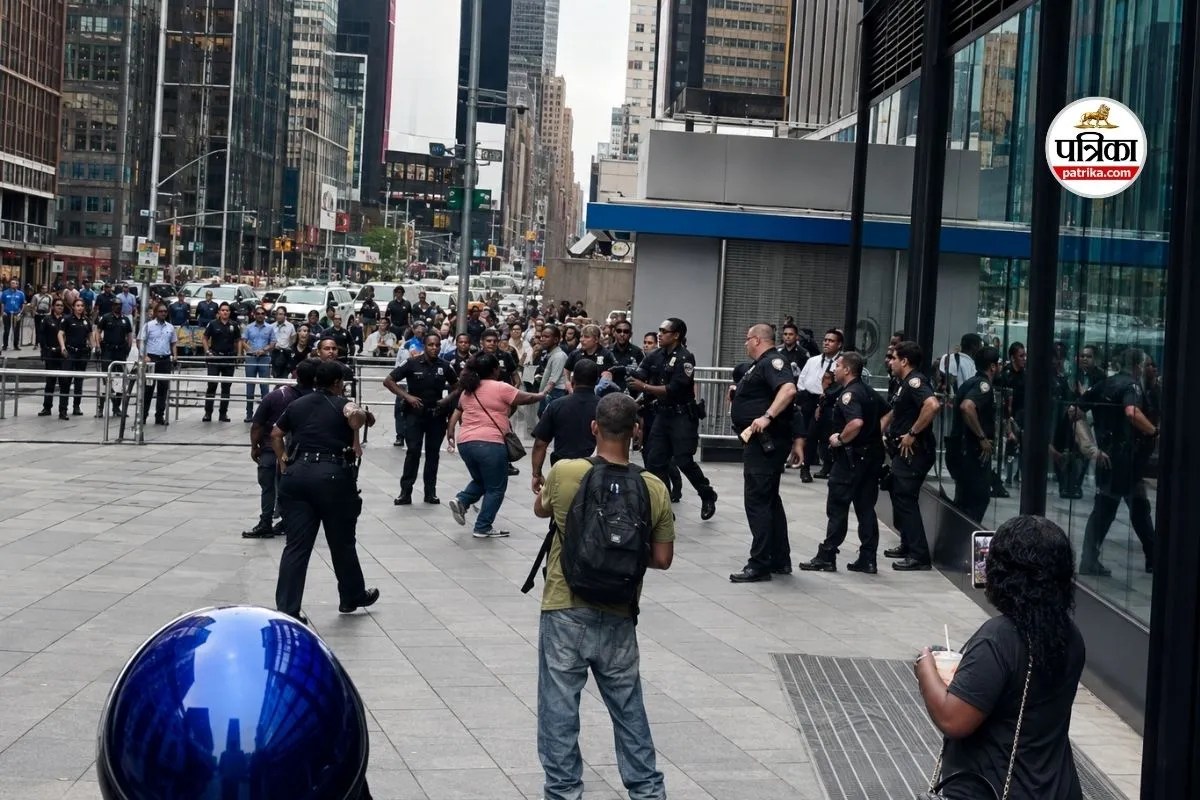
The headlines following the latest bloodletting in Midtown treat the asphalt of Seventh Avenue like a crime scene in a vacuum. A woman brandishes steel, lives end on the pavement, and the municipal apparatus responds with the predictable script of flashing lights, sirens, and immediate calls for more boots on the ground. Commentators rush to microphones to bemoan the state of public safety, pointing blindly at statistics as if spreadsheets could block a blade. Everyone wants to talk about police response times and precinct staffing levels. Everyone is asking the wrong question.
The lazy consensus in modern urban journalism treats sporadic violence in high-density tourist hubs as a policing failure. This is pure intellectual laziness. When an individual snaps under the weight of acute psychological crisis in the middle of the world's most hyper-stimulated human mixing bowl, the breakdown occurred months earlier across a thousand fractured institutional touchpoints. Focusing strictly on the intervention at the turnstile or the curb ignores the mechanics of how we design, manage, and abandon public spaces. Building on this idea, you can also read: The Night the Sky Split Open Over Tehran.
Look at the anatomy of Midtown Manhattan on any given afternoon. It is an engineered pressure cooker. We pack hundreds of thousands of disoriented tourists, aggressive street vendors, desperate panhandlers, and overworked commuters into narrow pedestrian corridors flanked by towering walls of corporate neon. We strip away the organic friction of community and replace it with corporate spectacle. Then, when the inevitable pressure release valve blows in the form of a violent episode, we act surprised.
The public debate routinely gets bogged down in false binaries. One side screams for hyper-militarized policing of every square foot, turning the commercial heart of the city into an armed camp. The other side demands total laissez-faire tolerance, pretending that chronic untreated mental illness and violent volatility are simply authentic expressions of urban freedom. Both positions are bankrupt. Both fail to account for the physical and psychological reality of living at scale in tight quarters. Experts at The New York Times have provided expertise on this trend.
Street-level violence of this nature is rarely a sophisticated criminal enterprise. It is a symptom of systemic abandonment. I have walked these blocks late at night when the neon starts to hum differently and the crowds thin out into shadows. You can feel the infrastructure straining. When social service networks dissolve into bureaucratic voicemail trees, the streets become the default asylum.
To understand why these tragedies keep repeating, we have to dismantle the myth of the safe zone. There is no magic threshold of police density that stops a desperate person from pulling a weapon when every other safety net has already snapped. Trust in our municipal systems is eroded not because there are too few officers on patrol, but because the baseline environment feels predatory and alienating to everyone who crosses through it.
Consider a scenario where we stop viewing public safety as a reactive military exercise and start treating it as an environmental design challenge. We pump billions into hardware, turnstiles, and metal detectors. We treat the symptoms with heavier armor while the underlying rot spreads unchecked. If a building's foundation is shifting, painting the walls does not stop the collapse.
The uncomfortable truth is that modern cities love the economic engine of Times Square while neglecting the human collateral damage it generates. We want the foot traffic, the tax revenue, and the global branding, but we refuse to resource the intensive, unglamorous stabilization work required to keep vulnerable people from falling through the cracks of the concrete.
Blaming the individual perpetrator provides clean closure for the 6 o'clock news. It allows the machine to absolve itself. But every time we reduce a complex urban failure to a simple story of good versus evil on the pavement, we guarantee the next headline.
Fixing this does not start with another deployment order or a reactive press conference from city hall. It starts by admitting that our current model of public space management is structurally obsolete. Until we reconcile the human cost of hyper-densification with actual, functional support infrastructure, the sirens will keep wailing, and the blood will keep washing into the storm drains.

