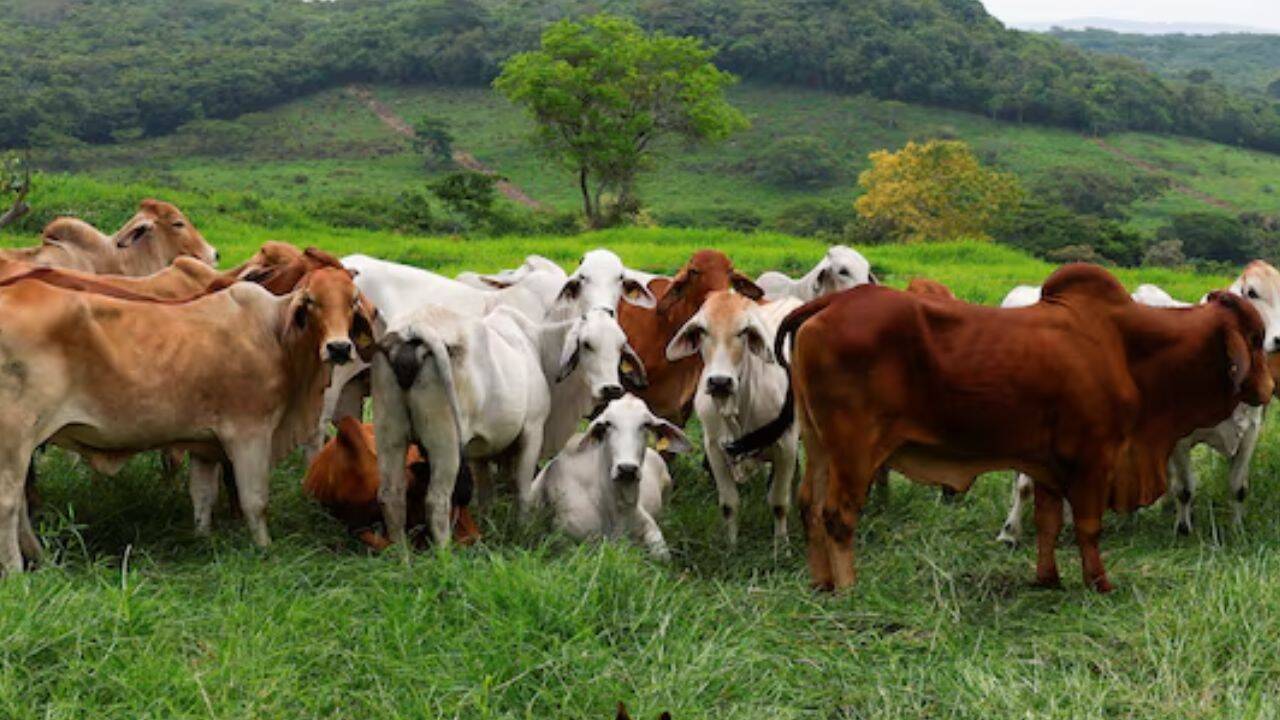
The headlines practically write themselves. A dam collapses, floodwaters surge through war-torn regions, and suddenly the international community is inundated with panicked warnings about "biological terrorism" and imminent anthrax outbreaks. It is a narrative designed to trigger primal fears. Pathogens weaponized by geopolitics, dormant spores rising from ancient burial pits to ravage populations.
It is also an absolute masterclass in scientific illiteracy.
When media outlets regurgitate accusations of intentional biological warfare based on the disruption of historical animal burial grounds, they miss the entire point of biosecurity. They substitute cinematic horror for boring, systemic reality. Disturbing ancient anthrax graves during a military conflict is not a sophisticated biological attack. It is a predictable, tragic consequence of infrastructure collapse. By conflating public health failures with active weaponization, the defense establishment and the media are focusing on the wrong threat entirely.
The Physics of Weaponization vs the Reality of Mud
To understand why the current panic is misplaced, you have to look at the microbiology. Bacillus anthracis is a soil-dwelling bacterium. It forms incredibly resilient spores that can survive in dirt for decades, sometimes centuries, resisting heat, desiccation, and standard disinfectants. Eastern Europe is littered with thousands of historical animal burial sites, colloquially known in the region as skatogomila. These sites hold the carcasses of livestock that died during outbreaks in the 19th and 20th centuries.
When a flood occurs, or when heavy artillery churns up the earth, these spores can be uncovered and shifted. This is an environmental hazard. It is not, by any definition of modern warfare, a bioweapon.
True weaponization of anthrax requires intense engineering. The spores must be milled to a highly specific size—typically between one and five micrometers—so they can remain suspended in the air and penetrate deep into the human respiratory tract. They must be treated with anti-caking agents like silica to prevent them from clumping together in the moisture of the natural environment.
Floodwaters do the exact opposite of weaponization. They mix spores with millions of tons of mud, silt, and debris. They dilute the pathogen concentration across vast geographical areas. A human or an animal does not get inhalation anthrax—the highly lethal form associated with biological weapons—by swimming in muddy water or standing near a wet riverbank. They get cutaneous anthrax through open wounds, or gastrointestinal anthrax by consuming contaminated, unpasteurized meat from livestock that grazed on tainted pastures.
I have spent years analyzing biosecurity frameworks and evaluating threat vectors in post-Soviet states. The absolute obsession with turning every localized outbreak into a Dr. Evil-style plot blinds us to the actual, grinding reality of public health degradation in conflict zones.
The Grinding Reality of the Endemic Footprint
Anthrax is endemic to Ukraine and wide swaths of the surrounding region. It does not require a secret laboratory or a malicious command decision to appear. It merely requires the absence of a functioning veterinary surveillance system.
Before the escalation of hostilities, local agricultural authorities maintained strict registries of these burial sites. They managed routine vaccination rings for cattle, sheep, and goats. This routine, unglamorous veterinary work is the only line of defense against soil-borne pathogens. When war displaces veterinarians, destroys laboratories, and cuts off the electricity required to keep livestock vaccines cold, the natural barrier drops.
Look at the historical data instead of the wartime press releases.
| Variable | Endemic Public Health Risk | Weaponized Biosecurity Threat |
|---|---|---|
| Primary Vector | Cutaneous exposure via soil/livestock | Inhalation of aerosolized dry powder |
| Particle Size | Varied, clumped, bound to soil particles | Uniform, 1–5 microns, treated with anti-caking silica |
| Dissemination | Passive environmental washing or grazing | Active mechanical dispersion (sprayers, cluster munitions) |
| Mitigation | Veterinary vaccination, carcass burning, soil capping | Broad-spectrum antibiotics, heavy air filtration, specialized decontamination |
When a state accuses its adversary of creating an anthrax risk by destroying infrastructure, it is using the language of the Biological Weapons Convention to describe a conventional war crime or a collateral environmental disaster. This distinction matters. If we treat every flooded graveyard as a biological attack, we render the term completely meaningless.
The Dangerous Geopolitical Cost of Crying Wolf
There is a distinct tactical utility in claiming your opponent is unleashing biological agents. It visualizes the enemy as uniquely monstrous, breaking the ultimate taboos of warfare. But this rhetorical strategy carries a severe long-term penalty.
When international bodies are repeatedly forced to investigate sensationalized claims of biological warfare that turn out to be routine, climate-driven, or war-induced public health emergencies, a dangerous fatigue sets in. The mechanisms designed to enforce the Biological Weapons Convention are fragile. They rely on consensus, rigorous chain-of-custody sampling, and high diplomatic stakes.
If the global community spends its diplomatic capital investigating mud-borne spores that pose a low-level risk to local livestock, it will look away when a genuinely novel engineered pathogen emerges. We are burning our early-warning capital on predictable agricultural hazards.
Consider the baseline math of an endemic spike versus an attack. In a normal year, sporadic cases of anthrax occur naturally across the steppe environments of Eurasia. If an area experiences a sudden cluster of five cutaneous cases after a massive flood, that is a direct consequence of physical displacement. It is an indictment of the destruction of local water infrastructure. It is not evidence of a state actor deploying a biological payload.
Dismantling the Prevalent Mythologies
Let us address the questions that inevitably dominate the public discourse whenever these accusations surface, stripped of wartime propaganda.
Does the disruption of old animal burial sites pose a catastrophic regional threat?
No. It poses a localized veterinary emergency. The primary victims of disturbed soil spores are grazing herbivores. If cows and sheep ingest the spores, they develop acute septicemia and die. If humans then slaughter those animals in unregulated settings or handle the hides, they contract the disease. This is controlled through rapid quarantine, burning the carcasses on-site, and vaccinating surviving herds. It does not spread from person to person like influenza or smallpox. The threat is self-limiting if basic veterinary protocols are enacted.
Can floodwaters transport anthrax to major urban centers and contaminate drinking water?
Water treatment facilities utilizing standard flocculation, sedimentation, and chlorination or filtration cycles are highly effective at removing large bacterial spores from municipal water supplies. The real risk is in rural, off-grid communities relying on shallow, unprotected wells that are directly inundated by surface runoff. Even then, the risk is gastrointestinal infection, which, while severe, is treatable with standard, widely available antibiotics like ciprofloxacin and doxycycline. It is a crisis of clean water access, not a plague.
The Actionable Strategy for Real Biosecurity
If we want to actually mitigate the risk of anthrax in conflict zones instead of just scoring points in the media, the playbook needs an immediate overhaul. Stop looking for hidden bioweapon factories and start fixing the boring stuff.
- Establish Demilitarized Veterinary Corridors: International pressure must be applied to allow independent veterinary teams to access flooded or disputed regions specifically to administer livestock vaccinations. Preventing the amplification of the pathogen in cattle is infinitely easier than managing an environmental cleanup.
- Deploy Ring-Vaccination Cordon Sanitaires: Rather than attempting to decontaminate thousands of square kilometers of mud—an impossible task—authorities must establish a geographic ring of vaccinated livestock around the affected zones to block the economic and biological transmission pathways.
- Distribute Point-of-Care Diagnostic Assays: Local field clinics require lateral flow immunochromatographic strips that can identify Bacillus anthracis in livestock carcasses within minutes, preventing farmers from accidentally processing infected meat.
- Decouple Public Health Reporting from Military Intelligence: Epidemiological data from war zones must be funneled through neutral channels like the World Health Organization rather than defense ministries. This strips the geopolitical theater away from what is fundamentally a sanitation issue.
The downside to this approach is obvious: it requires admitting that the threat is mundane. It demands cooperation on basic human needs amid a brutal war. It forces both sides to stop using the specter of biological terror as a cheap rhetorical cudgel.
But continuing down the current path is untenable. When we view every broken pipe and flooded pasture through the lens of unconventional warfare, we lose the capacity to manage actual crises. We trade effective epidemiology for sensational headlines, and in the process, we leave the door wide open for the real health disasters that thrive in the shadows of our ignorance.