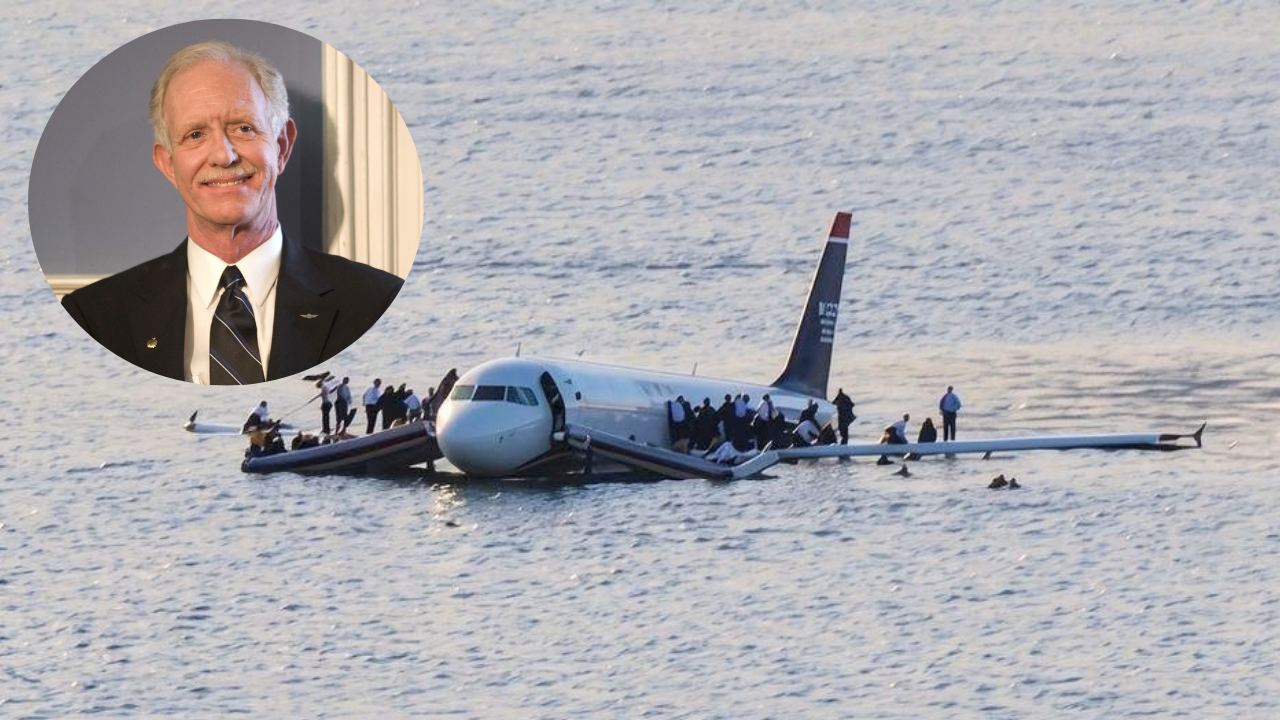
The media loves a fairy tale. Give them a narrative featuring a quiet-spoken pilot, a flock of geese, and a smooth strip of freezing urban water, and they will baptize it a miracle. For over a decade, the cultural consensus on US Airways Flight 1549 has remained frozen in amber: Captain Chesley Sully Sullenberger as an infallible secular saint who performed a once-in-a-history divine intervention, plucking 155 souls from the jaws of certain death through pure grit and exceptional moral fiber.
It is a comforting myth. It is also fundamentally lazy, analytically bankrupt, and dangerous to how we understand high-stakes risk management. Discover more on a related issue: this related article.
Let us strip away the Hollywood varnish and look at the telemetry. The event was not a miracle. It was an exercise in cold, procedural risk mitigation executed by a trained professional using an exceptionally well-designed aircraft. More importantly, the cultural elevation of Sully into a singular icon obscures the uncomfortable systemic truths about commercial aviation, simulator biases, and the actual mechanics of crisis execution.
The Cult of the Solo Hero Hides Systemic Engineering
When people repeat the phrase "Miracle on the Hudson," they attribute the survival of everyone on board to one man's lightning-fast intuition. This narrative is an insult to the engineers at Airbus and the structural realities of modern commercial aviation. More analysis by NPR delves into related views on the subject.
The Airbus A320 is a marvel of flight control law protection and computer-augmented stability. When the dual-engine bird strike occurred, the aircraft’s airframe design, dual-engine redundancy loss behavior, and predictable glide characteristics did the heavy lifting. Sullenberger did not hand-fly a rickety biplane through a wind shear using sheer willpower. He managed an energy state on a transport-category aircraft built to withstand catastrophic subsystem failures.
By framing the outcome as a magical display of individual heroism, we commit a cognitive error. We teach the public that safety depends on finding mythical prodigies rather than building bulletproof systems, rigorous checklists, and redundant fail-safes. If a corporate organization relies on a "hero" to save them from disaster, that organization has already failed. True reliability is boring, systemic, and distributed. It lives in the cockpit resource management (CRM) shared between Sullenberger and First Officer Jeff Skiles—a dynamic that the myth often sweeps under the rug to make room for a bronze statue of the captain.
Dismantling The NTSB Simulator Controversy
To understand the absurdity of the "miracle" narrative, we have to look back at the National Transportation Safety Board (NTSB) investigation and the subsequent friction that inspired a cinematic villain where none truly existed.
During the investigation, simulator tests suggested that a return to LaGuardia or a diversion to Teterboro might have been technically feasible if the pilots immediately executed a turn instead of spending precious seconds processing the engine loss. The media framed this as the cold, bureaucratic NTSB trying to smear an American hero.
The reality is far more nuanced and damning to both sides of the argument.
The simulator runs proved a vital principle of human factors engineering: reaction time trumps theoretical capability. In the sterile environment of a simulator, test pilots knew their engines were going to fail at a precise second. They experienced zero cognitive surprise. When real-world human factors—such as startle effect, decision latency, and checklist navigation under pressure—are factored in, the "return to airport" option becomes a high-probability death sentence.
Sullenberger made the correct operational decision not because he possessed supernatural foresight, but because he correctly calculated the immediate risk vector: a low-altitude glide over a densely populated metropolis leaves zero margin for error. Turning back toward a runway requires energy management that a dead-stick A320 simply cannot guarantee without altitude. The river was the widest, flattest, most obstruction-free emergency runway available. It was an exercise in risk elimination, not a leap of faith.
Why We Desperately Crave Miracles
Why do we cling so tightly to the myth of the miracle? Because accepting the truth requires confronting random chaos.
Acknowledging that Flight 1549 was a masterclass in standard operating procedures, disciplined checklist execution, and structural engineering strips away the romance. People do not want to hear that successful outcomes are the byproduct of relentless, unsexy preparation, thousands of hours of collective simulator training, and redundant safety protocols written in the blood of past aviation disasters. They want a movie script. They want a savior.
When leaders look at high-stakes business environments or crisis management, they often wait for a Sully moment. They look for inspiration instead of infrastructure. They gamble on individual talent rather than institutional resilience. This mindset destroys companies every single day.
What You Should Do Instead
If you want to apply the actual lessons of January 15, 2009, to your business, your operations, or your life, throw away the self-help books on leadership mysticism and adopt these rules:
- Engineer out the need for heroes. If your operational survival relies on someone being exceptionally brilliant under sudden stress, your architecture is broken. Build systems that function even when people panic.
- Account for the human startle factor. When reviewing emergency protocols, never test them under conditions of perfect foreknowledge. Assume your people will freeze, hesitate, or misread telemetry for the first crucial thirty seconds. Design your fail-safes around that latency.
- Respect the glide path. Recognize when a recovery strategy requires impossible variables (like turning a crippled asset back into a headwind toward a crowded runway) and aggressively choose the boring, predictable alternative that preserves your baseline safety.
Stop waiting for a miracle. Build a better airframe.