Every time an armed convoy ambushes a politician in Central America, the international press dust off the exact same template. They report the body count. They quote a shocked interior minister promising a thorough investigation. They frame the tragedy as another grim symptom of a lawless, chaotic region spiraling out of control.
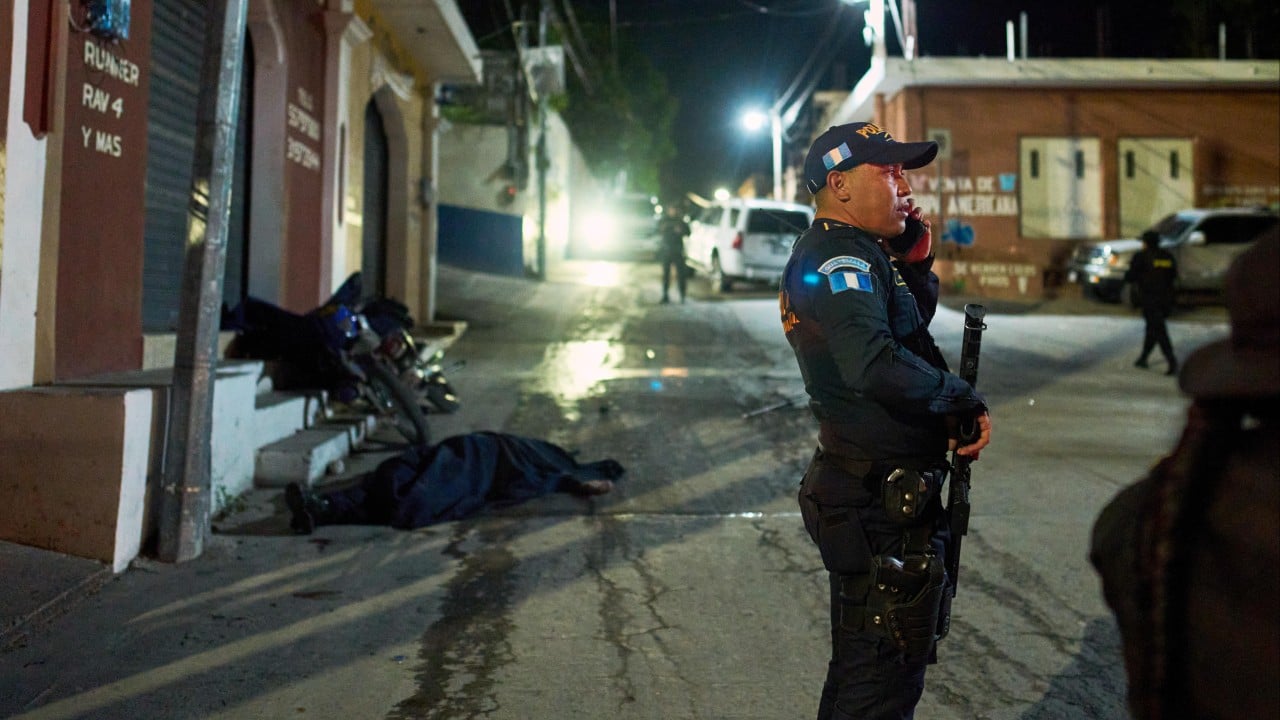
When a Guatemalan lawmaker and three police officers are gunned down in a coordinated ambush, the lazy consensus calls it senseless violence.
That narrative is dangerously wrong. There is nothing senseless, random, or chaotic about a tactical hit that wipes out an elected official alongside an armed police escort. Calling it random violence obscures the cold, rational mechanics of modern state capture. When you treat a targeted political execution like a common street crime, you fundamentally misunderstand how power actually operates in the Northern Triangle.
The Myth of the Broken State
The standard media framing relies on a comforting fiction: the idea that Guatemala is simply a weak state struggling to contain unruly street gangs and rogue cartels. In this version of reality, the government is the victim, the police are the thin blue line, and violence happens because institutional capacity is too low to stop it.
Spend five minutes looking at the operational reality on the ground, and that illusion shatters.
An ambush capable of neutralizing three trained National Civil Police officers and a sitting congressman requires military-grade intelligence, precise route surveillance, high-caliber weaponry, and—most critically—guaranteed impunity. Street gangs running extortion rackets in Guatemala City do not execute sitting lawmakers on rural highways. Those operations belong to Cuerpos Ilegales y Aparatos Clandestinos de Seguridad (CIACS)—clandestine security apparatuses that have spent decades embedding themselves inside the state's own infrastructure.
As political scientists like Harald Waxenecker and researchers at the Washington Office on Latin America (WOLA) have documented for years, illicit networks in Guatemala do not fight the state from the outside. They operate through it. They fund local campaigns, capture municipal contracts, place loyalists in the judiciary, and use state security forces as private muscle.
When a lawmaker and their police detail end up dead, it is rarely a clash between the good guys and the bad guys. It is almost always a violent market correction between competing factions of the same hybrid power structure.
Why Police Escorts Are Targets, Not Deterrents
To understand why three police officers died alongside a congressman, you have to discard the Western assumption that a uniformed security detail acts as a shield. In functioning democracies, attacking a police escort triggers an existential response from the state. The perpetrators know they will be hunted relentlessly until they are dead or in a supermax prison.
In environments where impunity rates for homicide routinely hover above 90 percent, a police escort signals the exact opposite. It signals value, vulnerability, and an escalating turf war.
I have watched security analysts waste millions of dollars advising international firms and NGOs in Central America to simply hire more armed guards. They assume deterrence is a math equation: add more guns, reduce the risk. On the ground, that logic gets people killed.
When an illicit network decides to eliminate a political rival, a three-man police detail does not deter the hit; it dictates the caliber of the weapons brought to the ambush. The attackers simply scale up their firepower, bring automatic rifles instead of handguns, and box the vehicle in at a chokepoint. The officers assigned to protect the official are often underpaid, poorly equipped, and completely outgunned by syndicates using diverted military hardware. They are not a deterrent. They are collateral damage baked into the operational plan.
What Everyone Gets Wrong About Political Violence in Central America
If you look at search trends whenever an attack like this hits the wire, people immediately ask the wrong questions. They want to know if the country is descending into civil war, or if a specific cartel is taking over the capital. Let us dismantle those misconceptions directly.
Is Guatemala on the verge of another civil war?
No. Civil wars are fought by ideological armies trying to overthrow the central government and replace the constitutional order. Illicit political networks love the constitutional order. They rely on democratic elections, parliamentary immunity, and public works budgets to launder their money and legitimize their power. They do not want to burn the house down; they own the mortgage. Assassinations are used surgically to remove obstacles—a reformist prosecutor, a rival broker, a politician who broke an agreement—without disrupting the broader system that enriches everyone else.
Does deploying the military stop these attacks?
Sending soldiers into the streets is pure political theater. Presidents love declaring states of siege after high-profile murders because it looks decisive on evening television. In practice, militarizing domestic policing fails every single time. Soldiers are trained to destroy an enemy on a battlefield, not to conduct forensic accounting, trace shell companies, or flip mid-level informants inside a prosecutor's office. Worse, deploying the military often hands illicit networks new, heavily armed partners to corrupt.
Why didn't the victims' political immunity protect them?
In Guatemala, antejuicio—the legal immunity granted to lawmakers and judges—protects officials from prosecution, not from bullets. In fact, legal immunity often raises the stakes of physical violence. When a corrupt official or narco-linked politician is shielded from the courts by a compromised judiciary, rivals cannot use the legal system to neutralize them. When institutional accountability is completely blocked, physical elimination becomes the only remaining mechanism to resolve a dispute.
The Anatomy of a Modern Political Hit
To see how this actually plays out, imagine a scenario where a regional congressman controls the flow of public infrastructure contracts in a strategic border department. For years, that lawmaker acts as the crucial middleman between central government funds, local mayors, and transport syndicates moving contraband across the border. Everyone gets paid. The system runs quietly.
Then, the political winds shift. A new alliance forms in the capital, or a rival trafficking group offers local mayors a better cut to divert those exact same contracts. The sitting lawmaker refuses to step aside, or worse, threatens to expose the financial trail connecting the new alliance to illicit campaign cash.
At that moment, the lawmaker stops being an asset and becomes a systemic liability.
A contract is issued. The hit team does not need to hack encrypted phones to find their target; they get the lawmaker's itinerary from an insider at the municipal office or a compromised dispatcher within the security apparatus itself. They choose a stretch of highway with zero cell reception and predictable traffic slowdowns. They strike fast, execute the target, neutralize the police escort before they can unbuckle their seatbelts, and vanish across a porous border twenty minutes away.
By the time the national press arrives, the narrative is already locked in. Officials mourn the fallen heroes of the police force. Pundits lament the tragic instability of the region. Meanwhile, the contested contracts quietly change hands, the surviving political brokers adjust their alliances, and the machinery keeps grinding forward without missing a beat.
The Uncomfortable Truth About Reform
The international community has spent decades throwing money at the wrong solutions in Guatemala. Billions of dollars have flowed into judicial training programs, community policing initiatives, and anti-corruption workshops. The underlying assumption is that local institutions lack technical knowledge—that if we just teach them how to run a modern democracy, the violence will stop.
They do not lack knowledge. They lack incentives.
When the United Nations-backed International Commission Against Impunity in Guatemala (CICIG) actually began dismantling these networks by targeting their financial lifelines and prosecuting sitting officials, the political class did not thank them. They united across party lines to expel the commission from the country, dismantled the specialized anti-corruption courts, and forced dozens of honest judges and prosecutors into exile.
You cannot reform a system whose primary beneficiaries are the very people tasked with passing the reforms.
And let us be completely honest about the downside of accepting this reality: it strips away easy optimism. If you admit that political assassinations are rational business decisions executed within a captured state, you have to accept that traditional diplomacy and surface-level aid packages are useless. You cannot fix this with a better police training manual or a strongly worded press release from the State Department.
How to Actually Read the Next Headline
If you want to understand what is happening in Guatemala—or anywhere else where state power and organized crime have fused—stop reading the official condolences and start following the structural incentives.
- Ignore the body count; look at the territory. Where did the ambush happen? Was it on a major narcotics transit corridor, near a disputed mining concession, or in a municipality about to receive a massive public works budget? Geography tells you who stood to profit from the vacancy.
- Track the replacement, not the investigation. Official investigations into high-profile political murders in the region almost never reach the intellectual authors—the autores intelectuales who financed the hit. Watch who steps into the dead lawmaker's committee assignments, who inherits their local political machinery, and which infrastructure bills suddenly pass without opposition three months later.
- Follow the judicial purges. Violence spikes when institutional guardrails collapse. Whenever you see a wave of independent judges fired or anti-corruption prosecutors forced out of the country, mark your calendar. Street-level executions inevitably follow six to twelve months later, because the legal safety valve has been welded shut.
- Separate security theater from structural leverage. Watch how the government responds. If they deploy armored vehicles to the streets while quietly blocking financial transparency laws in Congress, they are protecting the system, not the public.
The murder of a lawmaker and three police officers is a human tragedy, and those officers died wearing a uniform meant to uphold the law. Pretending their deaths were the result of random chaos, however, is an insult to their memory and a gift to the people who ordered the hit.
Stop looking for rogue gunmen in the shadows, and start looking at the ledger books in the capital.