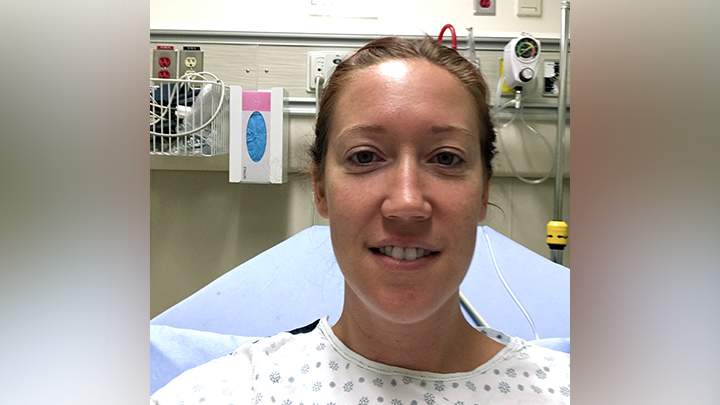
Another headline breaks. An Alberta woman steps forward, knife in hand metaphorically speaking, to hand over parts of her anatomy to complete strangers. The local news stations run the segment with soaring, cinematic strings playing in the background. She is called a saint. She is called a guardian angel. The comment sections flood with weeping emojis and declarations that humanity still has a pulse.
It is a comforting script. It is also a dangerous distraction. For another view, see: this related article.
Every time the media runs a breathless, tear-jerking profile of an altruistic living organ donor, they are masking a profound structural catastrophe. We are looking at a system so sclerotic, so bureaucratic, and so morally bankrupt that it requires everyday citizens to undergo major, elective abdominal surgery just to keep other human beings from dying on a waiting list.
We do not need more heroes. We need a complete teardown and rebuilding of how organs are sourced, managed, and allocated. Further reporting on the subject has been provided by Healthline.
The Comforting Lie of Private Altruism
Let us establish the baseline medical reality before the sentimentality blinds us. Living organ donation is not a minor inconvenience. It is major, invasive surgery. For a kidney donor, it means living the rest of your life with one kidney, facing a lifetime of elevated long-term monitoring, potential chronic pain, and an existential gamble with your own future health. For a liver donor, the risks are significantly higher.
When a hospital system celebrates an individual willing to absorb these personal risks for a total stranger, they are practicing deflection. They are taking a public health failure and wrapping it in the flag of personal virtue.
Imagine a crumbling bridge where cars plunge into a river every single day. A local citizen swims out, day after day, pulling drowning drivers to safety. Do we throw a parade for the swimmer and ignore the city council that refuses to fix the bridge? Do we praise the community for its resilience while the Department of Transportation sleeps?
That is precisely what is happening in modern organ transplantation. We applaud the swimmer while ignoring the collapsing infrastructure.
The Waiting List Is a Manufactured Scarcity
The lazy consensus in healthcare reporting is that human organs are simply in short supply because people are selfish, or because death is unpredictable. Both claims are absolute falsehoods.
Look at the numbers across North America and comparable jurisdictions. Thousands of people sit on organ waiting lists at any given time. Hundreds die every year waiting for a phone call that never comes. Yet, every single day, healthy organs are buried or cremated because the procurement apparatus fails to capture them.
The bottleneck is not a lack of available tissue. The bottleneck is institutional inertia, archaic legal frameworks, and a risk-averse medical bureaucracy that treats potential donors like legal liabilities rather than lifelines.
Consider how death is managed in modern hospitals. Brain death determination protocols vary wildly from province to province, hospital to hospital, and doctor to doctor. In many facilities, emergency room staff lack the training, the incentive, or the institutional backing to approach grieving families at the exact, delicate window required to secure viable organs.
Instead of fixing the machinery of death and recovery inside our hospitals—training dedicated procurement specialists, standardizing protocols, and streamlining family consent laws—we rely on emotional blackmail. We tell citizens that if they do not sign donor cards, or better yet, if they do not volunteer their own living bodies, people will die. That is not healthcare. That is extortion.
The Spanish Model Proves the Status Quo Is a Choice
If you want to see how a functioning system operates, look outside North America. Spain remains the global gold standard for organ procurement. They did not achieve this by running heartwarming human-interest stories in the local press or begging citizens to become living donors.
Spain implemented a systemic shift: the presumed consent model, paired with a massive, professionalized network of in-hospital coordinators whose sole job is to identify and manage potential donors. In a presumed consent system, you are an organ donor by default unless you explicitly opt out.
When Spain introduced this framework, their donation rates skyrocketed. They stopped waiting for altruism and started building logistics. They treated organ procurement like an urgent supply chain problem rather than a moral crusade.
Meanwhile, in North America, we cling to an opt-in system rooted in libertarian romanticism, mixed with a deeply broken healthcare administrative apparatus. We cling to a system that produces a trickle of living donors while tens of thousands languish. When an Alberta woman steps up to give a kidney to a stranger, it is treated as a triumph of the human spirit. In reality, it is a glaring indictment of a government and a medical establishment that cannot manage basic human biology.
The Dangerous Ethics of Living Stranger Donation
There is another dark corner of this issue that medical ethicists whisper about in private corridors while public relations departments write press releases: the psychological and systemic implications of non-directed, anonymous living donation.
When someone donates an organ to a family member, the psychological calculus is straightforward. Kin selection is deeply hardwired into human evolution. But when a healthy person donates an organ to a complete stranger, the psychological profile of the donor becomes a variable that hospitals rarely interrogate with enough rigor.
Are these donors receiving adequate, long-term psychological support after the surgery? Often, the medical system showers them with praise for three weeks, labels them heroes on the evening news, and then drops them the moment the incision heals. The emotional crash that many living donors experience when the spotlight fades is well-documented but rarely discussed. They gave a piece of their body for a dopamine hit of societal validation, only to find themselves forgotten once the news cycle moved on to the next tragedy.
Furthermore, relying on living strangers creates a bizarre two-tier psychological burden. It suggests that if you are sick, your survival depends not on the competence of the state or the efficiency of the medical system, but on your ability to inspire profound, saint-like self-sacrifice in a stranger. That is a medieval way to run a healthcare system.
Dismantling the Hero Narrative
Why do politicians and hospital administrators love the living donor hero narrative so much? Because it costs them nothing.
It is much cheaper to orchestrate a press conference featuring a smiling donor and a grateful recipient than it is to overhaul emergency room triage, invest in organ preservation technology, reform brain death protocols, or hire and train dedicated transplant coordinators.
Every time a news outlet frames living organ donation as a heartwarming miracle, they let the health ministry off the hook. They obscure the budget cuts, the administrative bloat, and the institutional negligence that leave our transplant waiting lists clogged with victims of bureaucratic failure.
I have watched healthcare systems blow millions on administrative bloat and PR campaigns while basic clinical infrastructure rots from the inside out. We spend fortunes on marketing wellness while people die because an organ recovery team was understaffed on a Tuesday night.
What Real Reform Looks Like
If we actually cared about saving lives rather than producing feel-good television segments, we would immediately dismantle the current model and replace it with ruthless efficiency.
First, we would move to a national opt-in or presumed consent framework with zero administrative friction. If your heart stops, your viable organs belong to the society that kept you alive, unless you explicitly checked a box on your driver's license stating otherwise.
Second, we would remove the financial penalty for living and deceased donation. Right now, a living donor often has to take unpaid time off work, cover travel expenses, and navigate a labyrinth of employment hurdles just to do a good deed. We punish altruism with lost wages. If we value living donation, we should fully compensate donors for every lost hour of work, every travel receipt, and every medical follow-up for the rest of their lives. Anything less is exploitation disguised as charity.
Third, we would mandate dedicated, professionalized organ procurement teams in every major hospital, completely separate from the clinical teams treating dying patients. The conflict of interest between saving a patient and harvesting their organs must be cleanly severed, but the urgency of recovery must be aggressively professionalized.
The Uncomfortable Truth
We love heroes because heroes require nothing of us. When a woman in Alberta gives away her kidney to a stranger, we can sit back in our armchairs, nod approvingly, and talk about the inherent goodness of humanity.
It is an easy escape hatch. It allows us to ignore the fact that the person next to us on the waiting list died yesterday because a hospital administrator was filling out paperwork.
Stop praising the donors. Start interrogating the system that makes their sacrifice necessary. Until we treat organ procurement as a fundamental logistics failure of the state rather than an opportunity for individual sainthood, people will continue to die in the shadows while we applaud the few who manage to beat the odds.
Stop waiting for saints. Fix the machine.