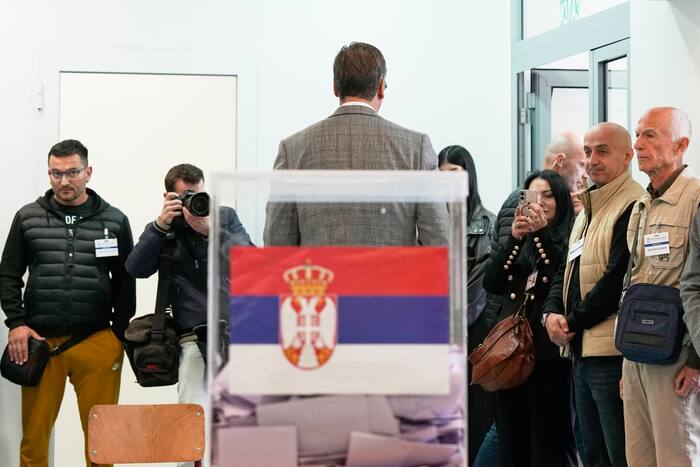
Western commentators love a fairy tale. Give them a crowd of photogenic twenty-somethings waving flags outside a parliament building, follow it with an unexpected electoral upset, and the ink starts flowing before the ballot boxes are even sealed.
They see a clean slate. They see the end of strongman rule. They see the triumph of grassroots democracy over entrenched autocracy.
They are completely blind to how post-authoritarian power actually works.
Look at the prevailing narrative surrounding the fallout in Belgrade. The lazy consensus treats the wave of detentions, rapid-fire resignations, and sudden prosecutorial probes following the student-led electoral shock against Aleksandar Vučić as the death throes of a defeated regime—or worse, as simple administrative housekeeping as the good guys sweep out the bad guys. Both readings are dangerously naive. What is happening in Serbia right now is not the cleanup phase of a successful revolution. It is a chaotic, high-stakes scramble over the levers of a deeply captured state, and the people celebrating in the streets are discovering that winning an election is the easiest part of taking power.
I have watched this exact movie play out across Eastern Europe and the Balkans for two decades. I have seen idealistic movements pour everything into the ballot box, capture the executive branch or the legislature, and then get chewed alive within eighteen months by the permanent bureaucracy they assumed would simply follow new orders. When a leader spends over a decade weaving a ruling party into every courthouse, police precinct, state-owned enterprise, and regulatory agency, you do not dismantle that machine on election night. You merely inherit the cockpit while someone else still controls the wiring.
The Illusion of the Electoral Knockout
To understand why the current wave of probes and detentions in Serbia is so misunderstood, you have to stop treating an election like a boxing match and start treating it like a hostile corporate takeover of a cartel.
In a normal democracy, losing an election means packing your boxes and handing over the keys. In a system of competitive authoritarianism—a term coined by political scientists Steven Levitsky and Lucan Way to describe regimes where formal democratic institutions exist alongside an uneven playing field heavily tilted toward the incumbent—an electoral loss triggers a completely different reflex. The outgoing apparatus does not surrender. It fractures, sheds dead weight, and immediately begins bargaining for survival.
Let us look closely at the three symptoms currently gripping Belgrade:
- The Resignations: Standard coverage frames sudden departures from state institutions and municipal boards as rats fleeing a sinking ship. In reality, early resignations in a captured state are often strategic evacuations. Officials with the most exposure to public procurement scandals, infrastructure contracts, or intelligence abuses step down before new parliamentary committees can subpoena them, scrubbing their digital footprints and converting political capital into private legal defense funds.
- The Probes: Prosecutors who spent ten years ignoring blatant conflicts of interest do not suddenly discover a passion for the rule of law the morning after an upset vote. When entrenched judicial actors launch aggressive investigations immediately after a regime wobble, they are engaging in preventive selective justice. By indicting a handful of mid-level sacrificial lambs from the old order, compromised prosecutors prove their "loyalty" to the incoming winners while protecting the true architects of the patronage network.
- The Detentions: High-profile arrests satisfy the public's hunger for accountability. They generate headlines. They make it look like the system is self-correcting. Yet detentions carried out by an unreformed security apparatus frequently target either expendable operatives or, conversely, become a mechanism for rival factions within the old establishment to settle internal scores using the incoming movement's mandate as cover.
If you read the standard wire reports, you would think Serbia is experiencing a straightforward transition from autocracy to accountability. Look beneath the surface, and you are watching a defensive reconfiguration by a deep state that has every intention of outlasting the students who just humiliated it.
Why Student Movements Struggle to Govern What They Topple
There is an uncomfortable truth that political romantics refuse to confront: the exact qualities that make student movements unstoppable in the streets make them acutely vulnerable inside state institutions.
Horizontal organization. Leaderless consensus. Moral absolutism. Refusal to cut backroom deals.
On the boulevards of Belgrade, Novi Sad, and Niš, those traits are superpowers. A movement without a single hierarchical head cannot be easily decapitated by state security or smeared by tabloid media. When students organize through plenums and direct assemblies, traditional political dirty tricks bounce right off them. You cannot bribe a decentralized network, and you cannot intimidate thousands of young people who have already decided that the status quo offers them no future anyway.
Now move that exact operating model into the Ministry of Finance, the Ministry of Internal Affairs, or the state energy utility.
Governing a modern European state requires vertical command, granular institutional memory, and ruthless prioritization. When an anti-establishment wave hits a entrenched bureaucracy, three immediate friction points emerge:
- The Competence Trap: Years of party-based hiring hollow out the civil service, leaving behind either loyalists or terrified careerists. When the victors demand immediate purges, they often discover there is no qualified bench ready to run complex logistics, customs systems, or grid management on Monday morning.
- The Purity Spiral: Movements built on absolute moral clarity view necessary administrative compromises as treason. The moment newly installed reformers negotiate with a holdover police commander or a deputy minister to keep basic services running, the street fractures into factions accusing the leadership of selling out.
- Information Asymmetry: Outgoing power brokers know where every skeleton is buried, where every off-budget slush fund sits, and which judges have compromising material sitting in a safe. Incoming outsiders walk into marble offices blindfolded.
Imagine a scenario where a newly empowered reform coalition walks into a major state infrastructure agency on day one. They announce an immediate audit of ten years of no-bid contracts. Within forty-eight hours, three mid-level directors resign, a regional prosecutor launches a narrow probe into a minor subcontractor, and two middle managers are detained on procedural charges. The public cheers. The headlines declare victory. Meanwhile, the primary servers have been wiped, the shell companies have already transferred their assets abroad, and the top tier of the network quietly negotiates immunity in exchange for handing over low-level scapegoats.
That is not justice. That is theater designed to pacify the crowd while the real power brokers rebrand.
Dismantling the Myths Surrounding Serbia's Political Earthquake
When major political tremors hit the Balkans, international observers tend to fall back on the same three lazy assumptions. Every single one of them obscures what is actually at stake.
Myth 1: Winning the Vote Means the Strongman Era Is Over
People love clean endings. They want to believe that once a dominant leader suffers a decisive electoral blow, the political gravity that sustained him evaporates.
Ask anyone who studied Serbia after October 5, 2000, when Slobodan Milošević was finally forced out after mass protests and a disputed election. The euphoria lasted roughly until the winter heating bills arrived. Because the incoming Democratic Opposition of Serbia failed to immediately dismantle the state security apparatus and the financial networks tied to the old regime, the deep state regrouped, hollowed out the reform government from within, and ultimately contributed to the climate that ended with the assassination of Prime Minister Zoran Đinđić in 2003.
Strongmen do not rule alone. They sit atop ecosystems of oligarchs, media barons, security chiefs, and local bosses. Voting out the figurehead leaves the ecosystem intact—and deeply motivated to sabotage the newcomers so voters beg for a return to "stability" within two years.
Myth 2: Rapid Arrests and Probes Prove Institutions Are Working
Western diplomats love seeing handcuffs and press conferences from the prosecutor's office. It allows Brussels and Washington to issue statements praising "institutional resilience" and "progress on rule-of-law benchmarks."
In reality, hyper-active prosecutors in the immediate aftermath of a political shift are often the biggest red flag in democratic transitions. Truly independent judicial institutions move methodically, quietly, and slowly, building airtight evidentiary chains before making arrests. When detentions and probes erupt overnight in direct correlation with shifting political winds, it signals that the judiciary is still operating as a political weathervane—only now it is blowing in a different direction to save its own skin.
Myth 3: External Geopolitical Pressure Will Keep the Transition on Track
Foreign policy analysts routinely argue that European Union accession rules or Western financial oversight will force Serbia's post-election shakeup into an orderly, democratic channel.
This ignores fifteen years of geopolitical reality in the Western Balkans. External actors prioritize predictability, border stability, lithium supply chains, and regional security deals far above messy internal institutional reform. Foreign capitals will applaud the student movement's democratic energy, shake hands with whoever sits in the prime minister's chair, and quietly urge them not to rock the boat too hard lest economic disruption spook investors. If the new reformers rely on external chaperones to protect them from domestic sabotage, they will be left hanging the moment a regional crisis demands pragmatic deals with old power brokers.
What Real Institutional Dismantling Actually Looks Like
If you want to know whether Serbia's post-election upheaval is genuine structural reform or just an elite reshuffle wrapped in revolutionary aesthetics, stop counting arrests and start tracking five unglamorous indicators.
1. Control Over Public Procurement and State-Owned Enterprises
Patronage networks do not survive on ideology; they survive on cash flow. In Serbia, state-owned enterprises and massive state-backed infrastructure projects have long functioned as the primary engines of political financing and voter mobilization.
Watch what happens to the boards of major state utilities, telecom operators, and construction funds. If the incoming reformers merely replace old party loyalists with their own allies, the machine remains intact under new management. True disruption requires immediate, forensic third-party audits of all major contracts signed over the past five years, combined with strict, transparent procurement rules that starve political networks of off-book revenue.
2. Vetting the Judiciary and Security Services
You cannot prosecute systemic corruption using judges and intelligence officials who owed their careers to the system being investigated.
Look at neighboring Albania's vetting process or post-communist lustration laws across Central Europe. Vetting is brutal, slow, and carries immense short-term costs—including crippling court backlogs and fierce pushback from legal associations. Yet without independent vetting of asset declarations and past political interference among senior judges, prosecutors, and security directors, every high-profile detention happening today will collapse on technicalities in appellate courts two years from now.
3. Media Market Demonopolization
Strongman systems maintain dominance not merely through state broadcasters, but through the capture of advertising markets, cable distribution networks, and regulatory bodies that allocate national frequencies.
If the post-election shakeup does not immediately overhaul the regulatory authority for electronic media and break up state-subsidized advertising monopolies, the old establishment retains an asymmetric information weapon. Within six months, that media ecosystem will reframe every economic headwind, every bureaucratic delay, and every growing pain of the new administration as proof that the student-backed reformers are incompetent amateurs.
4. Decentralization of Municipal Budgets
Centralized control over municipal transfers is how dominant parties keep local mayors on a short leash. Reforming fiscal federalism—giving cities and municipalities predictable, formula-based funding rather than discretionary handouts from Belgrade—breaks the back of local clientelism faster than a hundred televised arrests.
5. Protecting Whistleblowers Inside the Bureaucracy
Every captured state contains thousands of mid-level civil servants who hated what they were forced to sign off on, kept copies of the memos, and stayed silent to feed their families.
A smart transitional leadership does not treat the entire civil service as enemies. It creates an immediate, legally ironclad amnesty and protection window for mid-level insiders who turn over hard documentary evidence against top-tier architects. Without insider testimony, forensic accountants spend years untangling shell companies while statutes of limitations quietly expire.
The Hard Truth About the Contrarian Path
There is a massive catch to doing this the right way, and anyone pretending otherwise is selling you fantasy.
Deep institutional surgery hurts. It creates immediate administrative paralysis. When you freeze suspicious contracts, suspend compromised prosecutors, audit state enterprises, and dismantle patronage pipelines all at once, the economy slows down. Infrastructure projects stall. Foreign investors get nervous. Garbage collection or municipal transit might hit snags as old local networks resist or sabotage operations.
And the very citizens who cheered the students in the streets will start asking why nothing is getting built and why prices are still high.
That is the tightrope every genuine democratic breakthrough has to walk. Move too slowly, leave the deep state intact, and accept surface-level resignations and theatrical detentions as victory—and the old system will swallow you whole before the next election cycle. Move too aggressively without a disciplined administrative plan—and you trigger chaos that hands the old guard a narrative of redemption.
Right now, the headlines out of Belgrade are intoxicating. Detentions. Resignations. Probes. The intoxicating theater of an old order cracking under pressure.
Enjoy the spectacle if you want, but do not mistake the noise of a regime shedding its outer skin for the death of the beast underneath. Until the money pipelines are cut, the security files are opened, and the courts are purged of political servants, the people who ran Serbia yesterday are simply waiting for the crowds to go home so they can go back to work.