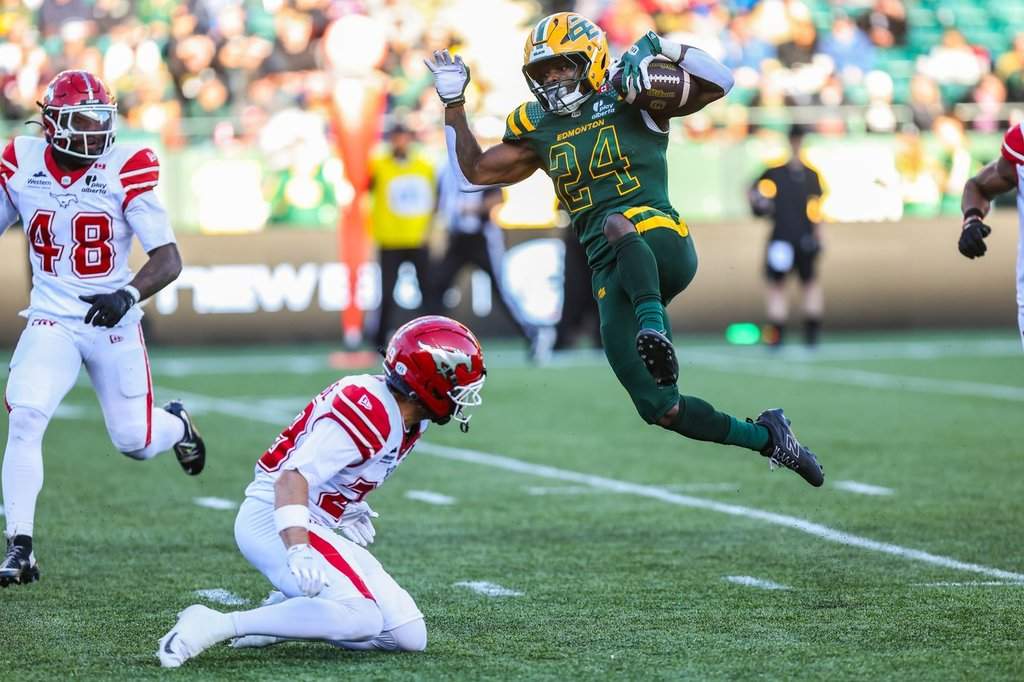
Fifty-three to sixteen. The scoreboard reads like a clinic, a coronation, a franchise turning a corner with ruthless efficiency. The headline writers across the league rushed to crown the Edmonton Elks back-to-back conquerors of destiny after they dismantled the Calgary Stampeders to punch their postseason ticket. Everyone wants to buy into the romantic narrative. A storied franchise shaking off years of organizational dysfunction, riding an offensive explosion straight into the autumn bracket.
It is a complete mirage.
I have spent enough years watching front offices panic-buy veterans and mistake a single outlier performance for a cultural shift to know a false dawn when I see one. A fifty-three point outburst against a depleted, checked-out roster does not prove championship pedigree. It masks structural rot under a mountain of garbage-time statistics. If you evaluate this team based on a single afternoon where everything bounced their way, you are falling for the oldest trap in professional sports.
Let us look at the underlying mechanics instead of drinking the local media Kool-Aid. Championship football is built on defensive consistency, third-down efficiency under pressure, and a sustainable run-game geometry that travels into hostile environments. What Edmonton actually displayed against Calgary was an unsustainable shooting percentage from beyond the arc, metaphorically speaking. They feasted on defensive breakdowns that any disciplined playoff unit will seal off by the second quarter.
The lazy consensus is that momentum carries teams deep into November. Momentum is just a synonym for the next game starting zero-zero.
Consider how the Elks constructed those scoring drives. Explosive plays are fun for the highlight reels, but they are volatile. When an offense relies on blown coverages and missed assignments to move the chains, they expose themselves the moment they run into a defense that actually communicates. Calgary's secondary looked like strangers sharing an elevator on a Sunday morning. Give credit to Edmonton for executing, sure, but do not mistake a defensive collapse for an offensive masterclass.
What happens when the Elks run into a front seven that stops the first-down rush? Against elite competition this season, their interior protection has fractured under standard four-man rushes. They required maximum-protect looks just to keep their quarterback upright against middle-tier opponents two months ago. One blowout against a floundering divisional rival does not rewrite the entire body of work from a grueling eighteen-game schedule.
We need to talk about the defensive side of the ball too, because the sixteen points allowed tells a very polite lie. Calgary moved the ball between the twenty-yard lines with alarming ease during the first half, only to stall out due to self-inflicted execution errors and dropped passes from receivers who looked like they were ready for their exit interviews. Against an offense with a pulse, those drives turn into touchdowns, and suddenly a blowout victory transforms into a desperate, fourth-quarter nail-biter.
Coaches love to talk about peaking at the right time. The danger is that peaking in mid-October often means you have already played your best football before the games actually matter. Teams that surge on an emotional high wave often find themselves emotionally hollowed out when the intensity ratchets up in a single-elimination playoff format.
Edmonton clinched a playoff spot. That part is on the ledger. Nobody can take that away from them. But treating them as legitimate contenders based on a fifty-three point anomaly is an insult to everyone who understands how math and variance work in professional athletics. They have major vulnerabilities on the perimeter, their special teams coverage units remain a liability waiting to flip a field position battle, and their coaching staff has a history of conservative second-half adjustments when teams blitz their primary read.
Do not buy the hype. Do not plan the parade route based on an afternoon where the opponent simply stopped fighting back. Real contention leaves a paper trail of disciplined, ugly, repeatable victories against top-tier opponents. Edmonton has played that kind of football for about twelve minutes total this season.
The playoffs do not care about your blowout win last week. They care about whether you can protect the football when the rain starts falling and the crowd is screaming so loud the quarterback cannot hear his own cadence. And if you think the Elks are ready for that, you have not been paying attention.