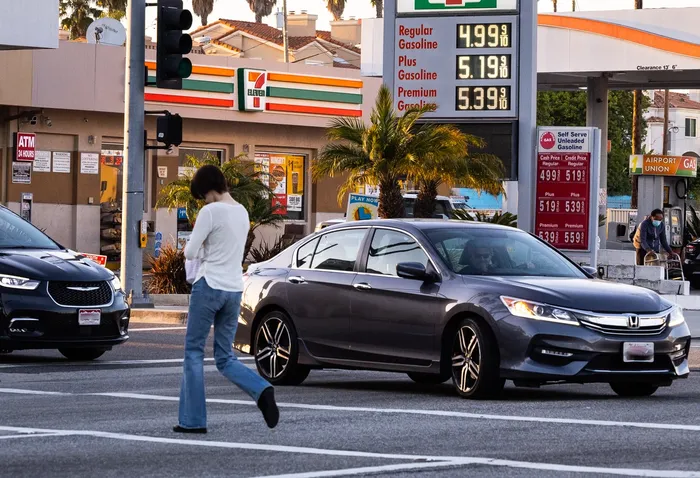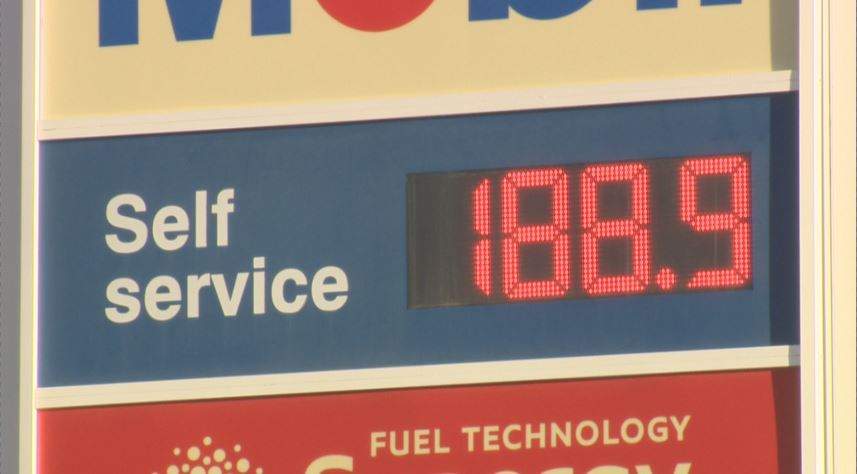
Winnipeg is currently in a collective meltdown because the numbers on the digital signage at the local Co-op or Shell just ticked up a few cents. The standard media narrative is as predictable as the sunrise: market volatility, refinery maintenance in the northern United States, and the "greedy" retailers squeezing the honest commuter. It is a lazy, surface-level take that ignores the fundamental mechanics of energy economics.
You are being told that you are a victim of a price spike. You aren't. You are actually the beneficiary of a structural market inefficiency that keeps Canadian fuel artificially cheap compared to its global utility. If you want to understand why your wallet feels light, stop looking at the gas station and start looking at your own refusal to understand how energy is actually priced.
The Myth of the Local Price
The average Winnipeger believes that because Alberta is "right next door," gas should essentially flow from the ground into their tank for the price of a Tim Hortons double-double. This is the first great delusion. Gasoline is a global fungible commodity. The molecules in a tank on Kenaston Boulevard are indistinguishable from the molecules in a tank in Minneapolis or Chicago.
Retailers in Manitoba don't set prices based on their "costs" plus a fair markup. They set prices based on replacement cost. If a station owner sells you a liter of fuel for $1.40 today, but it costs them $1.45 to buy the next liter to refill their underground tank, they are effectively subsidizing your commute while driving themselves into bankruptcy.
The "spike" people see is simply the market correcting a lag. Local prices often move slower than the New York Mercantile Exchange (NYMEX) or the Chicago CBOE. When you see a sudden 10-cent jump, you aren't seeing a "hike"; you are seeing the end of a period where the retailer was likely losing money on every liter sold.
The Refinery Maintenance Excuse is a Distraction
Every spring and fall, the news cycle blames "seasonal maintenance" at refineries in the PADD 2 region (U.S. Midwest). It’s a convenient scapegoat. While it’s true that taking a refinery offline for a "turnaround" reduces supply, the market prices this in months in advance.
The real volatility isn't coming from a wrench being turned in Illinois. It’s coming from the crack spread. For the uninitiated, the crack spread is the pricing difference between a barrel of crude oil and the petroleum products refined from it.
Right now, we are seeing a disconnect where crude prices might be stable, but the capacity to turn that crude into "finished" 87-octane is at a premium. Winnipeg is at the mercy of the Enbridge Mainline and the limited throughput of regional refineries like the one in Regina. We aren't paying for oil; we are paying for the privilege of processing. When you complain about the price, you are complaining about the fact that Western Canada has failed to build significant new refining capacity in decades. We chose this bottleneck.
Why Your "Commuter Rage" is Numerically Illiterate
Let’s do the math that the evening news avoids because it ruins the outrage.
Imagine a scenario where gas jumps from $1.50 to $1.65. For a standard 50-liter tank, that is an increase of $7.50 per fill-up. If you fill up once a week, you are looking at $30 a month. In the context of a household budget where housing costs have spiked by 30% and grocery bills are up by 20%, the obsession with gas prices is a psychological tick, not a financial crisis.
We fixate on gas because it is the only commodity in the world where the price is displayed in six-foot-tall glowing numbers on every street corner. It is "price transparency" turned into a mental illness. You don't see the price of milk or lumber fluctuating on a billboard while you drive to work, so you don't notice the 15% swings in those markets. If you spent half as much time auditing your subscription services as you did hunting for a station that is two cents cheaper, you’d be significantly wealthier.
The Carbon Tax Red Herring
In Manitoba, the political theater surrounding the federal carbon tax is deafening. Critics claim it is the sole reason for our "unaffordable" lifestyle. This is a comforting lie.
The carbon tax is a fixed, predictable increment. It does not cause volatility. Market swings of 15 cents in a single week have absolutely nothing to do with a tax that increases by a fraction of that once a year. By focusing on the tax, we ignore the real culprit: our total dependence on a fragile, long-haul supply chain.
We live in a province with some of the cheapest hydro-electric power on the planet, yet we remain tethered to an internal combustion infrastructure that requires moving liquid fuel thousands of kilometers via rail and pipe. The "high price" is the market screaming at you to diversify your energy consumption. If you aren't listening, that's on you.
The Retailer's "Margin of Misery"
I have seen independent station owners walk away from the business because the margins are so razor-thin. After you strip away the wholesale cost of the fuel, the federal and provincial taxes, the transportation fees, and the credit card processing fees (which are often percentage-based and rise as the price rises), the station is lucky to clear a few cents per liter.
The gas station isn't a fuel business. It’s a convenience store that uses fuel as a loss leader to get you to buy a $4 bottle of water and a bag of chips. That is where the profit is. When you boycott a station because their price went up, you aren't "fighting the man"—you are likely bankrupting a local franchisee who has less control over the price of Brent Crude than you do over the weather.
Stop Asking the Wrong Questions
The "People Also Ask" sections of the internet are filled with queries like "When is the best time of day to buy gas?" or "Will gas prices go down next week?"
These are the questions of the defeated.
The real question is: Why are we so vulnerable to a 10% shift in a single commodity?
The answer is our refusal to adapt. We buy oversized vehicles for "utility" that we use 2% of the time, then act shocked when it costs $140 to fill the tank. We build sprawling suburbs that require a 40-minute crawl down Pembina Highway, then demand the government "do something" about the cost of that transit.
The Truth About "Market Volatility"
Volatility is just another word for "reality." The era of cheap, stable, abundant energy was an anomaly, not a birthright. The "spikes" in Winnipeg are not a glitch in the system; they are the system functioning exactly as intended. Supply and demand are meeting at a point of friction, and because we have built a society that cannot function without this specific liquid, we have zero leverage.
If you want lower gas prices, you don't need a government inquiry or a tax holiday. You need a massive global recession to kill demand, or a massive technological shift to render the product obsolete. Since nobody wants the former, start working on the latter.
The next time you see the price jump at the Husky, don't look for someone to blame. Look in the rearview mirror. You’re the one who bought the ticket for this ride. Pay the fare and move on.