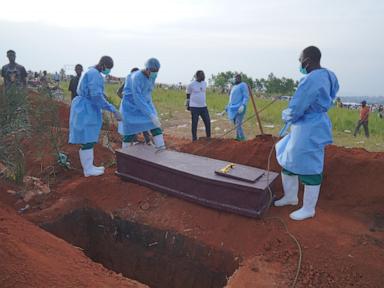
The headlines scream about six thousand infected and three thousand dead. International desk reporters hyperventilate over exponential curves, warning that the eastern provinces of the Democratic Republic of Congo are turning into a biological graveyard. Global health bureaucrats demand emergency funds, dispatching suited delegations to hotel conference rooms hundreds of miles away from the actual red zone.
Everybody has the panic strategy down to a science. Everybody is wrong.
Focusing exclusively on the raw case tally of the Bundibugyo ebolavirus strain currently tearing through Ituri and North Kivu misses the structural failure defining this crisis. The lazy consensus of mainstream public health reporting frames this entirely as a medical emergency requiring more isolation tents and foreign aid checks. That framing is a dangerous delusion. The death toll climbing past twenty-nine hundred is not just a function of a pathogen’s virulence; it is the direct byproduct of a broken social contract, heavy-handed top-down interventions, and an institutional response that treats local populations like vectors rather than human beings.
When response teams drop into a conflict-scarred zone with armed escorts and biohazard suits, they do not project safety. They project an occupying army. Decades of state abandonment, militia warfare, and systemic corruption have left communities in eastern Congo with zero baseline trust in central authorities or international NGOs. Pretending that this crisis can be solved by ignoring that context is institutional malpractice.
Let us define terms clearly. The Bundibugyo strain carries a distinct epidemiological footprint compared to the infamous Zaire strain. Its case fatality rate hovers around forty-eight percent, terrifying on paper, yet manageable under optimal clinical conditions. But conditions in zones controlled or contested by fractured armed groups are far from optimal. The real obstacle to driving down mortality is not a lack of scientific knowledge about filoviruses; it is the total friction preventing sick people from seeking care early.
When a community fears the treatment center more than the disease, the disease wins. I have seen public health programs blow millions of dollars on high-tech diagnostic gear while basic community engagement remains underfunded, distrusted, and staffed by outsiders who cannot speak the local languages or respect traditional burial customs.
Consider a scenario where every single foreign epidemiologist and international agency packs up and leaves eastern Congo for thirty days. The immediate panic-driven reporting would spike. Yet, strangely enough, survival rates might actually stabilize in areas where local red cross volunteers and indigenous health workers—the ones who actually understand the terrain—are allowed to take total control without bureaucratic oversight from Geneva.
Mainstream coverage loves to blame community resistance on ignorance and superstition. This is a lazy cop-out used by technocrats to shield themselves from their own operational failures. People are not resisting because they are primitive; they are resisting because medical response teams have historically brought forced quarantines, separated families, and stripped away dignity at the exact moment a grieving family needs it most.
The World Health Organization notes that tracking contacts is slipping in several hot zones, while thousands of suspected cases go unrecorded because patients actively hide at home to die away from foreign medical personnel. That is not a failure of viral containment. That is a failure of empathy and design.
If you want to understand why this outbreak is expanding faster than previous ones, look at the economics of the response itself. Massive influxes of emergency aid create perverse local incentives, inflating prices, drawing desperate workers away from baseline healthcare infrastructure, and turning epidemic management into a localized corporate gold rush. While international organizations argue over vaccine trials and experimental therapeutics for a strain that currently lacks an approved silver bullet, basic infection prevention and control inside local clinics remains dangerously under-resourced.
We need to stop asking how to lock down provinces faster. We need to stop pretending that military-style cordons and heavy-handed enforcement will ever work in a region that has survived decades of predatory governance.
The playbook must flip entirely.
- Hand over the keys immediately: Stop parachuting foreign coordinators into remote health zones. Fund local primary care networks directly, putting cash and decision-making power straight into the hands of Congolese doctors and nurses who live in the affected villages.
- Decentralize treatment: Massive, prison-like Ebola treatment centers inspire terror. Shift toward smaller, community-integrated care units where family members can maintain contact and traditional mourning practices can be adapted safely rather than banned outright.
- Dismantle the security theater: Remove armed guards from health response teams. Medicine delivered at the barrel of a gun or under the shadow of a riot shield will always be met with flight or hostility.
The numbers reported by authorities are a symptom, not the disease. Until the global health apparatus learns that trust scales faster than viral transmission, no amount of funding or case tracking will stop the bleeding. Stop treating the population as the problem to be managed. They are the only solution that matters.