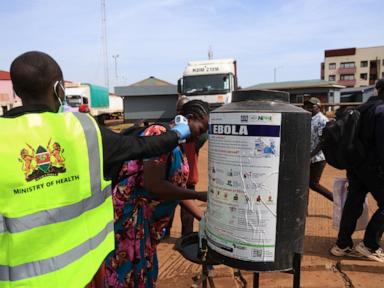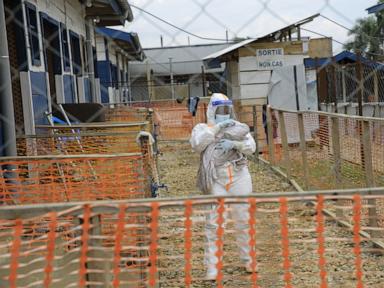
Eleven thousand cases. Deadliest outbreak in Congolese history. Second-worst on record.
Every major newsroom on earth ran that exact headline when the 2018–2020 Kivu Ebola epidemic crossed its grim five-digit milestone in the Democratic Republic of the Congo. Reporters treated the raw body count like a scoreboard for an unstoppable biological monster.
They missed the entire story.
Focusing on the case count as a triumph of viral inevitability is lazy journalism. The 11,000 cases in North Kivu and Ituri were not proof that the Zaire ebolavirus had suddenly evolved into a super-pathogen. They were a ledger of institutional hubris. For the first time in medical history, responders entered an outbreak armed with an effective experimental vaccine, rVSV-ZEBOV, and two breakthrough monoclonal antibody treatments, mAb114 and REGN-EB3. Yet the death toll kept climbing for nearly two years.
Why did an epidemic persist for 22 months when science had already handed responders the tools to extinguish it in 22 weeks?
Because the international health apparatus treated a complex political insurgency like a routine clinical trial. You cannot vaccinate your way out of an active war zone using armored Land Cruisers and foreign mercenaries while ignoring the people dying of malaria next door.
The Body Count Fallacy
Mainstream coverage loves a clean, terrifying number. Eleven thousand sounds apocalyptic. It generates clicks, triggers emergency donor pledges, and reinforces the tired narrative of "darkest Africa" helplessly succumbing to tropical plagues.
Here is the math those headlines buried.
During the exact same 22-month window in the DRC, measles killed over 6,000 people—mostly children—and infected more than 300,000. Malaria routinely kills tens of thousands of Congolese every single year. Cholera tore through the same provinces unchecked.
Yet the international response funneled hundreds of millions of dollars into an isolated, hyper-militarized Ebola fortress while local clinics ran out of basic antibiotics and paracetamol.
I have watched global health task forces burn through eight-figure budgets on logistical theater while missing the obvious human reality on the ground. In Beni and Butembo, residents watched fleets of brand-new white SUVs roar past flooded clinics to chase a single hemorrhagic fever case. If you are a father in North Kivu whose child is dying of untreated malaria, and an international NGO refuses to give you a five-dollar antimalarial because their mandate only covers Ebola, you do not see a savior. You see a predator.
When you build a gold-plated vertical health program on top of a collapsed primary care system, you do not build trust. You manufacture paranoia.
Why the "Super-Virus" Narrative Fails Basic Epidemiology
Let us clear up a fundamental biological misconception that sensationalist reporting routinely exploits.
Ebola is not an airborne respiratory virus like SARS-CoV-2 or influenza. Its basic reproduction number, the R0, typically hovers between 1.5 and 2.5 in unmitigated outbreaks. Compare that to measles, which boasts an R0 of 12 to 18. Ebola does not spread across a crowded market because someone coughed. It spreads through direct contact with the bodily fluids of someone who is already visibly, catastrophically sick—or through traditional burial practices involving washing the corpse.
Epidemiologically, Ebola is fragile. Standard infection prevention and control—gloves, bleach, isolation, and safe burials—stops transmission cold.
During the 2014–2016 West African epidemic, which infected over 28,000 people across Guinea, Liberia, and Sierra Leone, responders lacked approved vaccines and targeted therapeutics. Even then, community-led behavioral changes broke the chains of transmission before the vaccine trials even finished.
Fast forward to the 2018 DRC outbreak. By August 2019, the PALM clinical trial proved that REGN-EB3 and mAb114 slashed mortality rates from roughly 67 percent down to under 30 percent—and down to roughly 10 percent if patients arrived early. Simultaneously, ring vaccination with Merck's rVSV-ZEBOV showed over 97 percent efficacy.
The science was solved. The biology was cornered.
Yet the outbreak dragged on until June 2020, claiming 2,287 lives out of 3,470 confirmed and probable cases—wait. Stop right there. Look at those two numbers side by side.
Why did the competitor headline scream "11,000 cases" while the World Health Organization's final tally for the 2018–2020 Kivu epidemic stood at 3,470?
Because the "11,000" figure cited in panic-driven headlines either conflated suspected cases under investigation with confirmed positives, or mashed together the West African totals with historical Congolese outbreaks to manufacture a bigger scare. In epidemiological surveillance, a "suspected case" is anyone in an outbreak zone with a high fever and a headache—symptoms identical to malaria, typhoid, and yellow fever. Counting every febrile patient in Central Africa as an Ebola statistic is scientific malpractice.
The Militarization Trap
If the virus is slow and the drugs work, why did the 2018–2020 Kivu response fail for so long?
Look at the security perimeter.
North Kivu and Ituri are not peaceful rural districts. They are the epicenter of a decades-long resource war involving over 100 armed militias, including the Allied Democratic Forces (ADF), alongside the Congolese national army (FARDC) and United Nations peacekeepers.
When Ebola hit Mangina and Beni in August 2018, the World Health Organization and the Congolese Ministry of Health made a fatal strategic error. They integrated the public health response with armed military escorts.
Doctors arrived at villages flanked by soldiers carrying assault rifles.
Imagine a scenario where foreign officials show up at your door flanked by the exact same military forces accused of massacring your neighbors three months ago, demanding to take your sick mother away in a sealed ambulance to a tent you cannot see inside. You would throw rocks too. You would hide your sick in the forest too.
Attacks on Ebola treatment centers in Katwa and Butembo in early 2019 were widely reported in Western media as irrational "community resistance" fueled by backward superstition and fake news.
That diagnosis was pure arrogance.
Anthropologists working on the ground, including teams from the Social Science in Humanitarian Action Platform, documented the exact opposite. The violence was a rational political reaction to the militarization of healthcare and the exclusion of local leaders. Furthermore, just months before the outbreak peaked, the Congolese government canceled the December 2018 presidential elections in Beni and Butembo—opposition strongholds—citing the Ebola outbreak as the official excuse.
To the local population, Ebola instantly ceased to be a medical emergency. It became a weaponized political tool used by Kinshasa to disenfranchise them, funded by Western millions that flowed into the pockets of outside contractors while local nurses went unpaid for months.
What People Get Wrong About Outbreak Response
When readers search for news on the Congo Ebola crisis, they usually ask the wrong questions because the media frames the problem backward.
Is Ebola mutating to become more contagious?
No. Genetic sequencing conducted by the Institut National de Recherche Biomédicale (INRB) in Kinshasa, led by Dr. Jean-Jacques Muyembe-Tamfum—the man who co-discovered the virus in 1976—repeatedly confirmed that the virus remained genetically stable. The extended transmission chains were driven by human movement across porous borders and distrust of treatment centers, not viral evolution.
Why don't international teams just vaccinate everyone?
First, global stockpiles of rVSV-ZEBOV during the Kivu outbreak were strictly limited, forcing responders to rely on "ring vaccination"—immunizing contacts and contacts of contacts. Second, a vaccine inside a cold-chain vial at -70 degrees Celsius does nothing if armed groups ambush the vaccination team or if residents refuse the needle because they believe it is a government sterilization plot. Supply is irrelevant without consent.
Are Ebola Treatment Centers (ETCs) death traps?
In the early months of an outbreak, yes, they look like them. When fear keeps patients home until they are bleeding out and in multi-organ failure, even the best monoclonal antibodies cannot reverse systemic shock. High mortality inside ETCs creates a vicious feedback loop: communities see neighbors enter the tents and leave in body bags, confirming their worst suspicions and driving the next wave of patients underground.
The Unconventional Blueprint That Actually Broke the Chain
The Kivu outbreak did not end because the WHO bought more armored trucks. It ended when the response finally swallowed its pride, fired the armed escorts, and handed the steering wheel to the communities it had alienated.
By late 2019, operational leadership shifted away from top-down command centers toward localized, decentralized engagement. Here is what actually worked—and what global health bureaucrats still hate admitting:
- Decouple medicine from the military immediately. Removing armed FARDC escorts from contact-tracing teams reduced violent incidents within weeks. Public health relies on radical transparency, which is incompatible with the barrel of a gun.
- Treat what the community actually dies from. Mobile clinics stopped operating as Ebola-only checkpoints. When teams began treating malaria, respiratory infections, and maternal emergencies free of charge alongside Ebola screening, utilization skyrocketed. You earn the right to swab someone for hemorrhagic fever by curing their kid's malaria first.
- Hire local, pay local, and step back. Importing expat epidemiologists at $1,000 a day while paying local contact tracers a pittance bred massive resentment. Shifting hiring to trusted local youth, traditional healers, and religious leaders—and paying them fairly and on time—transformed hostile neighborhoods into active surveillance networks.
- Redesign the treatment center. Transparent walls replaced opaque tarps. Families were allowed to see their relatives through clear plastic barriers, talk to them, and witness the care they received. Removing the mystery destroyed the rumor mill faster than any radio public service announcement ever could.
The Honest Downside of Community-First Containment
Let us be candid about the trade-offs. Handing control of an epidemic response over to local actors in a conflict zone is messy, slow, and terrifying for donors accustomed to strict audit trails.
Decentralized responses suffer from higher administrative leakage. When you distribute funds across dozens of hyper-local networks rather than funneling them through a single UN agency in Geneva, receipts go missing. Local political factions will inevitably try to capture jobs and contracts for their own patronage networks.
Furthermore, stepping away from military protection exposes frontline health workers to genuine physical danger from splinter militias that care nothing for community consensus. Eleven health workers were murdered during the Kivu response, including Dr. Richard Valery Mouzoko Kiboung, a WHO epidemiologist killed during a hospital meeting in Butembo.
Accepting local ownership means accepting operational chaos and security vulnerability. It requires global institutions to surrender control over both the narrative and the purse strings.
Stop Worshiping the Pathogen
The next time a hemorrhagic fever flares up in Central Africa—and given deforestation, bushmeat trade, and climate pressures, it will—watch how the headlines are written.
If the coverage obsesses over case counts, viral mortality rates, and heroic Western doctors in yellow hazmat suits, you are reading propaganda disguised as public health reporting.
Viruses do not sustain two-year epidemics on their own. Broken health systems, tone-deaf foreign interventions, and militarized aid do. Until international health agencies stop treating local populations as biohazards to be managed and start treating them as partners with legitimate grievances, the body counts will keep rising—no matter how many miracle drugs sit in the freezer.