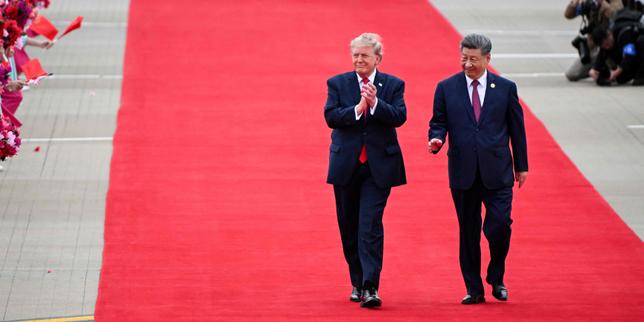
Mainstream political coverage treats state banquets like the climax of a geopolitical thriller. A handful of global heavyweights—Donald Trump, Vladimir Putin, Xi Jinping, and Peng Liyuan—walk down a red carpet, shake hands under blinding camera flashes, and sit down to an immaculate dinner. Instantly, the media machine goes into overdrive. Commentators dissect the seating chart like ancient runes. Pundits analyze every micro-expression for signs of an impending world war or a historic peace treaty.
They are falling for the oldest trick in the diplomatic playbook. In similar news, read about: Anatomy of the Abby Choi Criminal Trial and Defense Strategy.
If you believe that real international policy is forged over Peking duck and crystal stemware, you have completely misunderstood how modern statecraft works. These lavish dinners are not the engine of foreign policy. They are the exhaust fumes. By the time leaders arrive at a banquet hosted by Xi Jinping and Peng Liyuan, the actual work is already finished, shelved, or dead on arrival.
The Anatomy of a Diplomatic Distraction
Let us look at what actually happens when leaders like Trump, Putin, and Xi gather in the same room. The standard media narrative frames these arrivals as dramatic, high-tension confrontations where the fate of global trade, territorial disputes, or nuclear treaties hangs in the balance of a single toast. The New York Times has analyzed this fascinating topic in great detail.
That is pure theater.
Having spent years watching how bilateral agreements and multinational summits are actually constructed behind closed doors, I can tell you that the people who matter most rarely sit at the head table. Real diplomatic breakthroughs happen six months prior in windowless conference rooms, negotiated by mid-level bureaucrats, trade representatives, and deputy foreign ministers who drink lukewarm coffee and argue over punctuation marks in seventy-page memorandums.
When presidents and premiers show up for a banquet, they are executing a carefully choreographed public relations campaign designed for their respective domestic audiences.
- For Xi Jinping and Peng Liyuan: Hosting a grand banquet projects stability, cultural dominance, and global centrality. Peng Liyuan's presence softens the hard edges of Chinese state power, utilizing soft-power aesthetics—traditional music, bespoke cuisine, and impeccable hospitality—to signal that Beijing is the gracious host of the modern world order.
- For Donald Trump: Arriving at a high-profile summit is about optics of strength and unpredictability. It feeds a narrative of personal deal-making prowess, signaling to voters back home that he can walk into the lion's den, command the center of the frame, and bend world leaders through sheer force of personality.
- For Vladimir Putin: Standing shoulder-to-shoulder with the leaders of the world's two largest economies is an immediate, visual refutation of Western isolation efforts. He does not need to sign a single document at dinner to win the night; the photograph itself is the victory.
None of these objectives require actual diplomatic progress. In fact, real progress often gets in the way of good television.
Why Seating Charts Are a Waste of Your Attention
Every time a major summit occurs, analysts spend hours obsessing over protocol. Who walked in first? Who stood next to whom during the group photo? Did Trump and Putin exchange a private word before taking their seats?
This obsession with diplomatic body language—often referred to in foreign policy circles as "Kremlinology" or "Pekingology"—is a relic of the Cold War that refuses to die. Back when information was scarce and state media was completely opaque, observers had to guess internal power dynamics based on who stood closest to the premier during a military parade.
Today, we are drowning in data, yet commentators still cling to parlor-trick psychology.
Protocol is rigid for a reason: it prevents accidental insults. Diplomatic corps spend weeks measuring the exact distance between chairs, calibrating the height of flags, and balancing the number of courses served so that no single nation can claim superiority or suffer humiliation. When you see Putin and Trump seated a specific distance apart, it is not a subtle geopolitical message coded by Xi Jinping. It is the result of an exhausted protocol officer following a three-hundred-page manual to ensure nobody walks out before dessert.
Reading deep strategic intent into a handshake or a toast is like trying to predict the stock market by looking at the shoes worn by Wall Street executives. You are looking at noise and calling it a signal.
The Real Currency of the State Banquet
If these banquets do not produce treaties, why do nations spend millions of dollars hosting them? Because in international relations, signaling is just as important as substance, even if the two are rarely the same thing.
Political scientists like Thomas Schelling and James Fearon spent decades explaining how nations communicate resolve and intent without going to war. A state banquet is what experts call a "costly signal" in terms of prestige, though a cheap one in terms of policy. By rolling out the red carpet, a host nation grants legitimacy to its guests.
Consider the sheer geopolitical weight of having Trump, Putin, and Xi under one roof. Even if they spend the entire evening discussing the weather, their mutual friends, or the quality of the wine, the visual broadcast sends an unmistakable message to allies and adversaries alike: We are the peers who decide the rules.
This creates a massive blind spot for casual observers and mainstream journalists alike. They ask, "What deal did they strike at dinner?"
That is the wrong question. The right question is: "Who needed the photograph more, and what did they pay to get in the frame?"
In high-level diplomacy, the banquet is often the reward given to a leader for making a quiet concession weeks earlier. A country might agree to drop a tariff, abstain from a United Nations vote, or delay a military exercise in exchange for the domestic political boost of a prime-time state dinner with the leader of a superpower. The dinner is the receipt, not the transaction.
Dismantling the "Personal Chemistry" Myth
One of the most persistent delusions in foreign policy journalism is the belief that personal chemistry between world leaders drives history. We are constantly told that if Trump and Xi "get along," trade wars will magically evaporate, or that if Putin and Trump share a laugh, European security architecture will be rewritten overnight.
This is a fundamentally naive view of how nation-states operate.
Leaders are not absolute monarchs operating in a vacuum; they are the heads of massive, entrenched bureaucracies with rigid structural interests. Donald Trump faces congressional pushback, intelligence community skepticism, and corporate lobbying. Xi Jinping answers to the standing committee of the Chinese Communist Party, economic realities, and strict ideological guardrails. Vladimir Putin navigates a complex web of security apparatchiks, oligarchs, and wartime economic pressures.
Personal rapport can lubricate a negotiation that is already aligned with national interests. It can make a phone call during a crisis slightly less hostile. What it cannot do is erase fundamental conflicts of interest.
China wants regional hegemony in the Indo-Pacific and technological self-sufficiency. The United States wants to maintain global primacy and protect its alliance network. Russia wants a buffer zone in Eastern Europe and the dismantling of Western sanctions. No amount of vintage Moutai liquor or five-star culinary diplomacy can reconcile those competing objectives.
When pundits claim that a warm banquet atmosphere signals a "reset" in relations, they are confusing politeness with alignment. Diplomats are trained to smile while holding a knife behind their back. Mistaking their hospitality for friendship is a rookie error.
The Hidden Dangers of Summit Theater
There is a massive downside to this obsession with high-profile dinners, and it rarely gets discussed: summit theater actively degrades real diplomacy.
When media coverage turns a state banquet into a championship boxing match, it boxes leaders into corners. Because every camera is rolling and every word is amplified across social media within seconds, leaders become terrified of looking weak. They cannot float trial balloons. They cannot admit fault. They cannot explore creative compromises.
Instead, they perform. They stick to rigid talking points designed to play well on cable news back home or state television in Beijing and Moscow.
Furthermore, the expectation of a "grand bargain" forces diplomats to rush half-baked agreements just so their bosses have something to announce before the toast. I have watched negotiated frameworks collapse within months because they were rushed to meet the artificial deadline of a summit photo-op. When you prioritize the spectacle of the arrival over the boring, granular work of enforcement mechanisms, you end up with empty promises that breed deeper distrust when they inevitably fail.
Even worse, this style of diplomacy sidelines smaller nations. When the leaders of the US, Russia, and China gather in an exclusive setting, it reinforces a nineteenth-century "Great Power" mentality where middle powers and smaller states feel like menu items rather than guests at the table. Allies in Europe and Asia watch these banquets with deep anxiety, wondering what is being traded away behind the curtain, even when nothing is actually happening.
How to Actually Read a State Summit
If you want to understand what is truly happening the next time world leaders arrive at a grand banquet, stop watching the red carpet. Turn off the cable news commentary dissecting the handshakes. Instead, apply a ruthless, insider filter to the event:
- Follow the Sherpas, Not the Principals: Look at who arrived three days before the leaders. Track the movements of the National Security Advisors, the Trade Representatives, and the Foreign Ministers. If they didn't stay up past midnight hammering out text, the leaders aren't signing anything real.
- Read the Joint Statement—Specifically What Is Missing: Diplomatic communiqués are exercises in omission. If a banquet ends with a statement praising "mutual respect" and "continued dialogue," it means the meeting was a complete stalemate. Look for specific timelines, dollar amounts, and verification mechanisms. Without them, it is pure fluff.
- Watch the Domestic Press, Not the International Feeds: To understand why a leader showed up, look at how their own state or partisan media covers the event. Notice which camera angles they use and which quotes they highlight. That tells you the exact political vulnerability the leader is trying to cover up at home.
- Track Post-Summit Actions at the 30-Day Mark: Ignore the rhetoric from the banquet hall. Watch what happens to tariffs, troop deployments, visa restrictions, and sanctions thirty days later. Bureaucracies move slowly, and real policy shifts only show up in the operational data weeks after the dishes have been cleared.
The Reality Behind the Curtain
The image of Trump, Putin, and Xi arriving at a banquet hosted by Xi and Peng Liyuan is undeniably cinematic. It captures the raw concentration of global power in a single frame. It gives journalists an easy narrative and gives citizens the comforting illusion that the world's most dangerous problems are being handled by adults sitting down to a civilized meal.
Do not buy the ticket to that show.
State banquets are magnificent monuments to diplomatic vanity. They are expensive, meticulously staged distractions designed to project control in a world that is increasingly chaotic and multipolar. While the cameras focus on the clinking of glasses and the elegance of the venue, the real tectonic shifts of global power—the supply chain decouplings, the cyber skirmishes, the currency realignments, and the quiet military buildups—continue unabated in the dark.
Stop watching the dinner table. Start watching the exits.