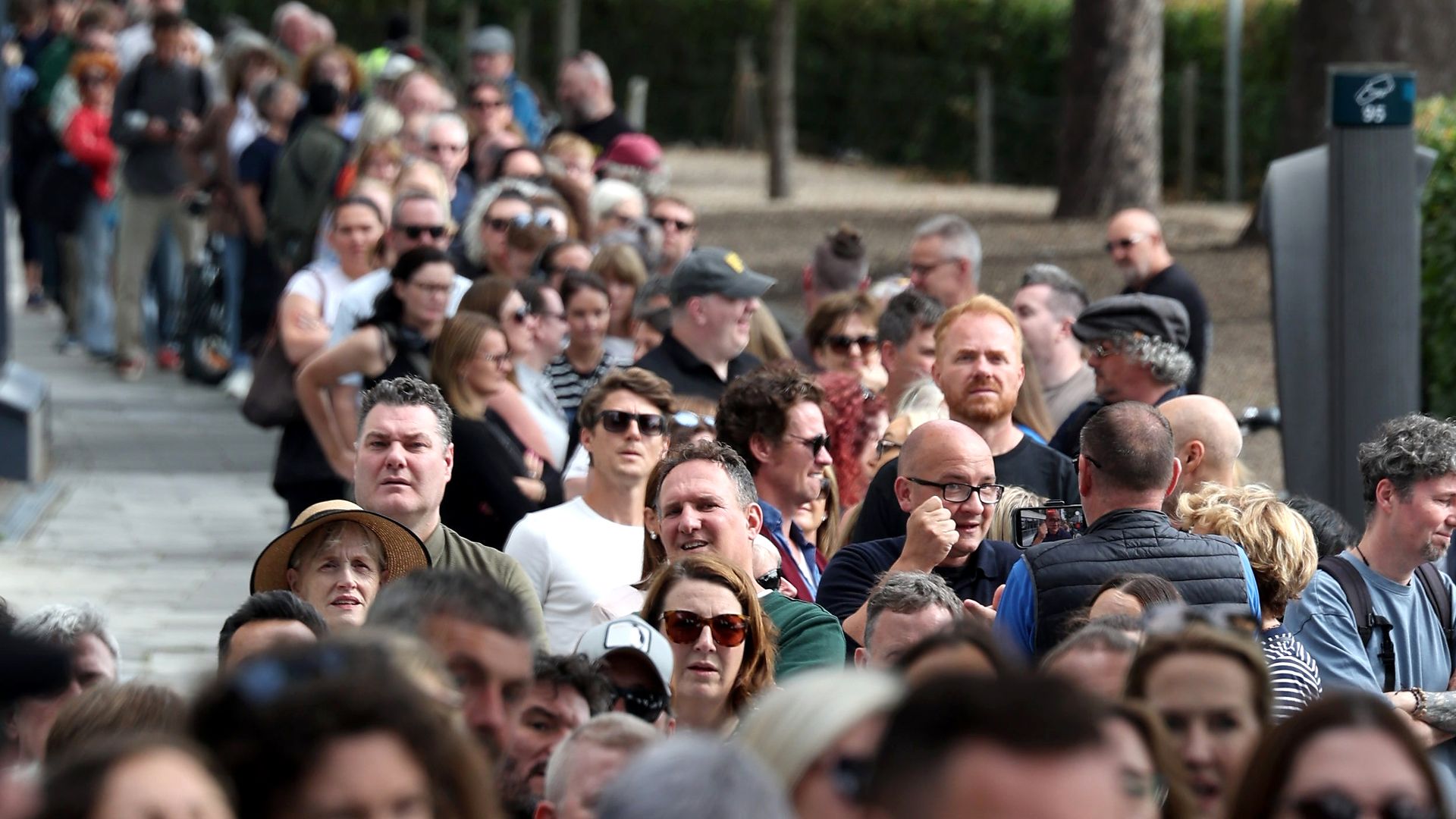
Thousands of people flood the streets to weep for a stranger. They hold up phones, buy cheap flowers, and post black-and-white photos on social media with captions about how a Hollywood icon "changed their life."
Let us be honest about the theater of public grief.
The lazy consensus in every mainstream newsroom is that massive public memorials represent a profound community bond, a shared cultural loss, and a testament to the unifying power of art. When an Oscar-winning actor and singer passes away, the media machinery kicks into overdrive to tell you that a light has gone out in the world. They frame mass mourning as a noble civic duty.
It is not. It is parasocial escapism wrapped in emotional tourism.
I have spent years watching the entertainment industry manufacture grief, packaging the death of wealthy celebrities into high-rating broadcast events that monetize collective melancholy. The media wants you to believe that crying over a celebrity you have never met makes you empathetic. It does not. It makes you a consumer of manufactured tragedy.
The Economics Of Renting Your Emotions
Nobody wants to admit why we really show up for celebrity wakes. It feels good to belong to a crowd, even if the only thing holding that crowd together is a shared subscription to Netflix or Spotify.
When a famous artist dies, people project their own unlived lives onto the corpse. You are not mourning the human being who ate breakfast, paid taxes, and had bad days just like anyone else. You are mourning the fictionalized version of them that starred in your favorite movie during a breakup, or sang the song you played in high school. You are mourning your own youth.
That is not connection. That is consumption.
Consider the mechanics of the modern memorial. Agencies coordinate with PR teams to maximize visibility. Candlelight vigils are meticulously staged for morning talk shows. Flowers are piled neatly where cameras can capture the highest emotional yield. It is a spectacle designed to keep you hooked on the narrative long after the credits roll.
The Fallacy Of The Trailblazer Label
Every obituary uses the exact same vocabulary. Every deceased star is a trailblazer, a pioneer, or a once-in-a-generation talent.
Words lose their meaning when applied to everyone with a SAG card and a publicist. True disruption means changing the structural reality of an industry. Winning an Academy Award or topping the Billboard charts makes you a high earner in a competitive market. It does not make you a revolutionary.
When we label every famous person who dies a trailblazer, we cheapen the actual grueling labor of people who fought real institutional barriers without a makeup trailer waiting in the wings. An actor reciting lines written by a team of screenwriters under studio lights is executing a craft, not breaking chains. We confuse scale with significance. Just because millions of people watched someone perform does not mean that performance shifted the trajectory of human rights or scientific progress.
Why We Hide Behind Parasocial Mourning
It is easier to cry for a dead celebrity than it is to check on your neighbor.
This is the uncomfortable truth behind the thousands of people standing behind police barricades at a wake. Public grief carries zero personal cost. You do not have to compromise, apologize, or do the messy, unglamorous work of showing up for people in your immediate circle. You get all the dopamine hit of being a compassionate person while sitting safely behind the protective shield of a massive crowd.
Imagine a scenario where every hour spent refreshing a celebrity death feed or standing in a rain-soaked memorial line was instead redirected toward local community support, mentoring a kid down the street, or caring for an aging relative. The cultural landscape would transform overnight.
Instead, we choose the easy option. We buy into the narrative that paying homage to a millionaire who never knew our name somehow elevates our own character.
The Prescription For Real Connection
Stop outsourcing your emotional depth to the entertainment industrial complex.
If an artist's work genuinely moved you, honor that impact by creating something of your own, supporting local creators who are struggling to find an audience, or simply being more present for the people who actually share your daily reality.
Real life is messy, unscripted, and devoid of dramatic orchestral scores. That is precisely why we run away from it and into the arms of celebrity worship.
Put down the phone, walk away from the televised parade, and pay attention to the world directly in front of you.