Dumping concrete into the Caribbean is not saving the ocean. It is feel-good theater masquerading as marine biology.
Every few months, a viral story makes the rounds about well-meaning divers stacking cinder blocks, sinking decommissioned subway cars, or dropping concrete pyramids onto a barren seabed. The narrative is always identical. A lifeless desert of sand gets a few stacks of cheap masonry. Suddenly, fish appear. Corals attach. Nature heals. Everyone pats themselves on the back and shares the heartwarming photos on social media.
The viral story about divers placing simple cinder-block pyramids on a Caribbean seabed in 2013 follows this exact script. It peddles a dangerous, oversimplified myth: that marine restoration is just a construction project.
It is not.
If you drop a structure into the ocean, fish will swim around it. That does not mean you created life. You just built an underwater apartment complex and attracted tenants from the surrounding neighborhood. In marine ecology, this is known as the attraction versus production debate, and the concrete-dumping crowd consistently gets it wrong.
The Illusion of the Concrete Oasis
I have watched millions of dollars in corporate ESG funds and government grants disappear into poorly planned artificial reef projects. The pitch is always seductive because concrete is cheap, visible, and photogenic. A donor can look at a photograph of a cinder-block pyramid covered in algae and juvenile grunts and feel like they bought a piece of a restored planet.
They bought an illusion.
When divers place cinder blocks on a sandy Caribbean seafloor, the immediate explosion of marine life is almost entirely aggregation, not production. Fish are hardwired to seek out structural complexity—what ecologists call rugosity—to hide from predators and rest out of strong currents. A pile of concrete provides instant shade and crevices. Pelagic and reef-associated fish from miles around converge on the new structure within weeks.
To a recreational diver with an underwater camera, the site looks booming. To a population ecologist, the total biomass of the region has not changed by a single gram. Worse, by concentrating scattered fish populations into a single, easily mapped GPS coordinate, poorly managed artificial reefs become fish-aggregating devices (FADs) that make it effortless for commercial and recreational fishermen to wipe out local stocks. You did not build a sanctuary. You built a buffet.
Dr. James Bohnsack of the National Oceanic and Atmospheric Administration (NOAA) spent decades dissecting this exact phenomenon. His research established that while artificial structures provide localized shelter, they frequently fail to increase regional fish production unless the surrounding habitat is genuinely limited by physical space rather than larval supply, water quality, or fishing pressure. In the Caribbean, physical space is rarely the primary bottleneck. The bottleneck is that the water is too hot, too acidic, and choked with agricultural runoff.
Why Cinder Blocks Fail at Actual Reef Building
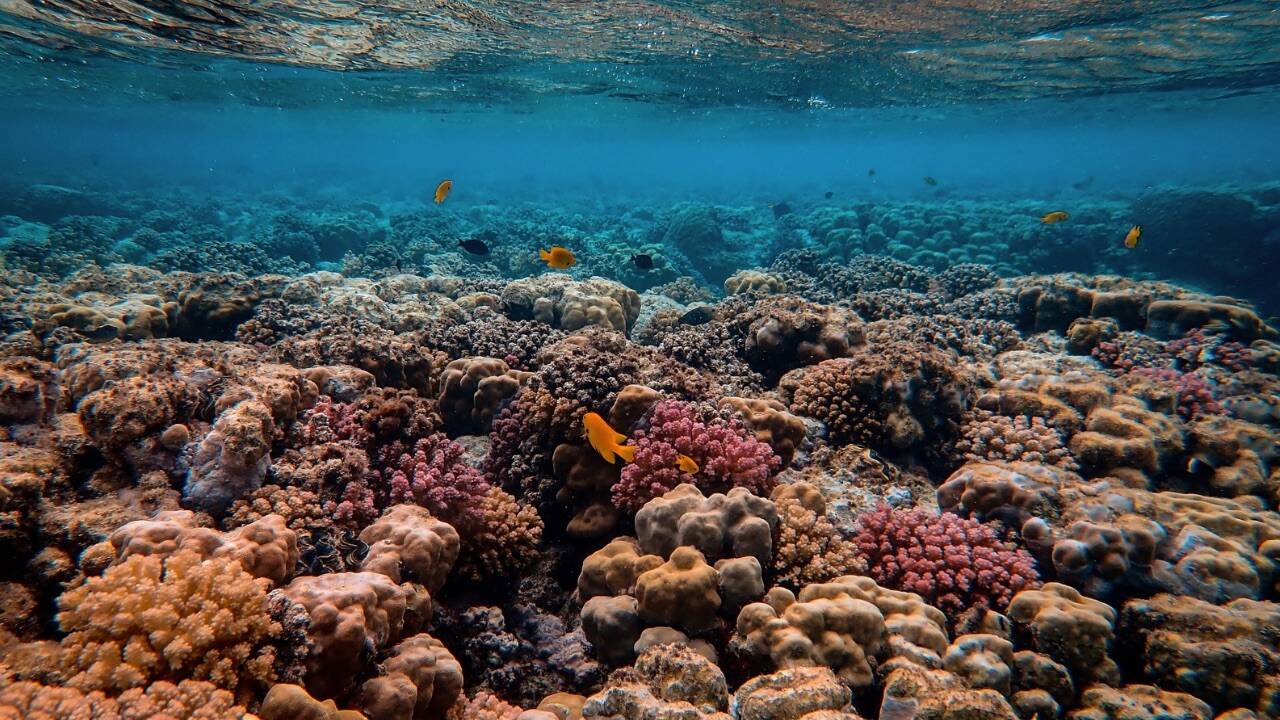
A real coral reef is not just a pile of rocks. It is a living, self-repairing carbonate fortress built over millennia by scleractinian corals (stony corals) and crustose coralline algae (CCA). These organisms pull calcium and carbonate ions from seawater to secrete a limestone skeleton that grows upward, keeping pace with sea-level rise and absorbing up to 97% of wave energy before it hits the shoreline.
Cinder blocks do none of this.
Standard construction-grade concrete is made with Portland cement, which has a surface pH around 12 or 13. Natural seawater sits at a pH of roughly 8.1. That extreme alkalinity leaches out of the blocks for months, actively repelling the microscopic coral larvae—called planulae—that drift through the water column looking for a place to settle.
Even when the concrete finally cures and the surface pH drops, cinder blocks offer the wrong micro-topography. Coral larvae do not want flat, porous masonry designed for building strip malls. They rely on chemical cues emitted by specific species of crustose coralline algae to know a surface is safe for settlement. Cinder blocks instead get colonized rapidly by fast-growing turf algae and sponges, which smother any lucky coral polyp that manages to attach.
- Chemical mismatch: High-alkalinity Portland cement inhibits early larval settlement compared to natural calcium carbonate substrates.
- Structural fragility: Hollow cinder blocks have thin walls that shatter during Category 4 and 5 hurricanes, turning a supposed reef into underwater shrapnel that pulverizes surviving natural corals nearby.
- Zero self-repair: Natural reefs calcify and heal after storms; concrete only erodes, shedding microplastics and heavy metals depending on the aggregate used in the mix.
Imagine a scenario where a coastal town in Mexico or Belize loses half its natural barrier reef to a bleaching event. In a panic, local operators drop 500 cinder-block pyramids 200 meters offshore. For three years, dive tourists love it. Snapper and damselfish dart through the holes. Then, a major hurricane rolls through the Yucatán Channel. The storm surge picks up those hollow, unanchored concrete blocks and tumbles them across the seabed like bowling balls, grinding down the few remaining brain and elkhorn corals that had survived the heatwave.
This is not hypothetical. It happened repeatedly across Florida and the Caribbean following Hurricanes Irma and Maria. Poorly engineered artificial structures became battering rams.
Are We Asking the Wrong Question About Ocean Restoration?
When people search online for how artificial reefs work or whether sinking concrete helps the ocean, they are asking the wrong question entirely. They are asking, "How do we build a new reef?"
The real question is: "Why did the original reef die, and what is stopping it from coming back on its own?"
Coral reefs are astonishingly resilient when we stop actively poisoning and overheating them. A healthy reef produces millions of larvae every year during mass spawning events. The ocean does not lack baby corals. It lacks clean, cool water and herbivorous fish to keep algae from suffocating the seabed.
If you dump cinder blocks into water polluted by untreated coastal sewage and agricultural fertilizer, you are not restoring a reef. You are building an underwater algae farm. Nutrients like nitrogen and phosphorus trigger explosive algal blooms. Normally, parrotfish and sea urchins graze that algae down, leaving clean limestone for baby corals to settle on. In a Caribbean ecosystem depleted of parrotfish by overfishing and stripped of Diadema sea urchins by disease, algae wins every single time. Putting concrete into that environment just gives the algae more surface area to grow on.
What Actually Works (And Why It Isn't Sexy)
Real coral restoration is slow, expensive, and deeply unglamorous. It does not look good in a 30-second viral video because you cannot finish it in a weekend dive trip.
If we want reefs that actually survive the next fifty years, we have to abandon cheap masonry and focus on three brutally difficult interventions:
1. Genetic Resilience Over Concrete Volume
Organizations like Mote Marine Laboratory and SECORE International have moved entirely past the "drop blocks and pray" model. Instead of focusing on the substrate, they focus on the biology. Scientists are identifying thermally tolerant coral genotypes—the individuals that survived recent marine heatwaves—and cross-breeding them in land-based nurseries.
Through micro-fragmentation, pioneered by Dr. David Vaughan, researchers cut slow-growing massive corals like boulder star coral into tiny, thumbnail-sized pieces. This triggers a wound-healing response that causes the coral to grow up to 25 to 50 times faster than normal. When these genetically hardy fragments are outplanted onto existing dead reef skeletons, they fuse together into a sexually mature colony in years rather than decades. You do not need cinder blocks when the dead limestone skeleton of the original reef is already sitting right there.
2. Geochemical Engineering Instead of Dumb Concrete
When an artificial structure is genuinely necessary—such as rebuilding a collapsed reef crest to protect a vulnerable coastline from storm surge—engineers have ditched standard cinder blocks for pH-neutral, biomimetic substrates.
Projects using Biorock (mineral accretion technology) run a low-voltage electrical current through submerged steel frames, causing dissolved minerals in seawater to crystallize onto the metal. The resulting material is pure calcium carbonate—identical to natural coral limestone. Corals attached to these structures grow significantly faster because they do not have to expend energy fighting water acidity to build their skeletons.
Similarly, specialized marine concrete formulations infused with silica fume, fly ash, or crushed oyster shells drop the surface pH down to match seawater and recreate the microscopic pits and grooves that coral larvae actually prefer.
3. Watershed Management and Fishing Bans
The most effective reef restoration tool on earth never touches the ocean. It happens on land.
Upgrading coastal wastewater treatment plants, enforcing buffer zones around agricultural land to stop fertilizer runoff, and establishing strict no-take marine protected areas (MPAs) do more for coral recovery than a million cinder blocks ever could. When you protect parrotfish populations and clean up the water, natural coral recruitment skyrockets. The reef rebuilds itself for free.
The Uncomfortable Truth About Artificial Reefs
To be fair, artificial structures are not universally useless. Sinking a massive, structurally sound vessel like the USS Spiegel Grove off Key Largo creates a premier dive site that pulls tens of thousands of tourists away from fragile, over-loved natural reefs. That diversion relieves physical pressure on living corals, which is a massive net positive for local conservation.
In areas where dredging, ship groundings, or coastal development have completely obliterated the seafloor down to shifting sand, engineered reef modules can stabilize the substrate and jumpstart benthic colonization.
The problem is not the tool. The problem is the delusion that a stack of hardware-store masonry equals an ecosystem.
Calling a pile of cinder blocks a restored coral reef lowers the bar for environmental accountability. It lets coastal developers destroy centuries-old, irreplaceable reef systems and claim they "mitigated" the damage by dropping some concrete blocks a mile away. It lets politicians cut ribbons and claim victory over climate change while coastal sewage pipes continue pumping untreated waste straight into the surf.
Nature spent ten thousand years engineering the Caribbean reef system through intricate biochemical symmetry. You cannot replicate it with a trip to the building supply store. Stop applauding underwater landfills and start demanding the hard, unglamorous work of keeping the ocean cool, clean, and wild enough to heal itself.