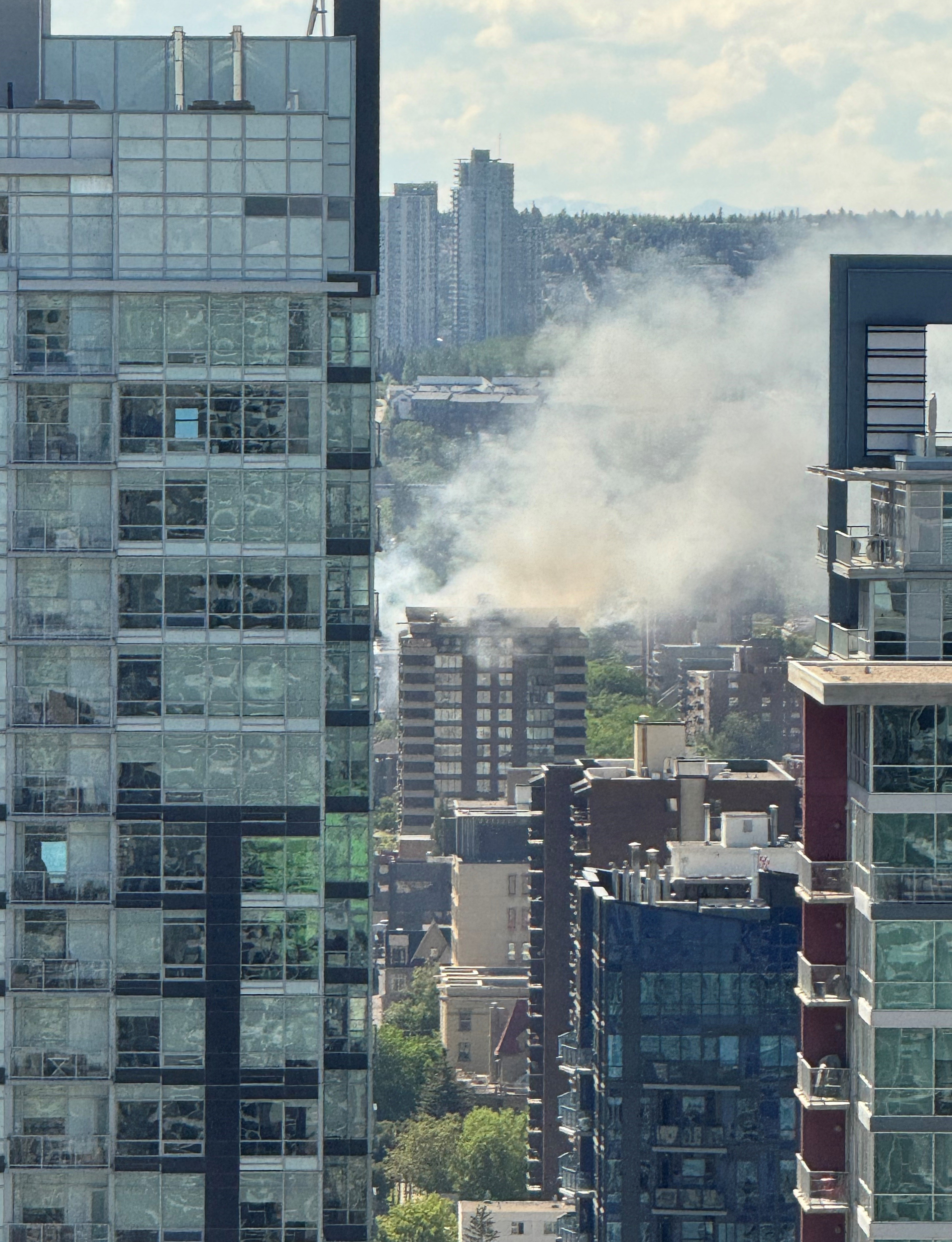
The headlines are always the same. "Dozens Flee Downtown High-Rise Fire." "Terrified Residents Evacuate Calgary Tower." They want you to feel the heat, smell the smoke, and praise the heavens for a narrow escape. It is classic disaster porn designed to generate clicks through fear.
But here is the reality that no one in the legacy media wants to touch: The fire isn't the failure. The evacuation is.
When a crowd of people pours out of a modern skyscraper in a panic because of a localized electrical fire or a kitchen mishap, the building has failed its primary mission. We have been conditioned to believe that "getting out" is the only metric of safety. In reality, the frantic scramble down forty flights of stairs is often more dangerous than the fire itself. We are clinging to a 19th-century understanding of fire safety while living in 21st-century vertical machines.
The Calgary incident is a textbook example of how we prioritize optics over engineering logic.
The Compartmentalization Lie
Modern high-rises are designed to be a series of concrete boxes. If a fire starts on the 12th floor, the 14th floor should be the safest place in the city. This is the principle of compartmentalization. Fire-rated assemblies—walls, floors, and doors—are engineered to contain a blaze for two to four hours.
If the system works, the fire stays in its box. The fire department arrives, hooks up to the standpipe, and kills the beast.
Yet, the moment a smoke detector chirps, we see mass exodus. Why? Because developers and property managers have failed to educate residents on "Defend in Place" protocols. They find it easier to let everyone clog the stairwells than to explain the complex physics of fire-rated concrete. By forcing a mass evacuation, they create a "chimney effect" risk. Every time a panicked resident leaves their unit and fails to ensure the door latches, they are effectively feeding the fire oxygen and creating a path for smoke to migrate.
An evacuation is often a sign of a collapsed safety culture, not a successful rescue.
The Myth of the Heroic Exit
We love the image of people streaming out of a lobby. It feels like a win.
I have spent years looking at building codes and forensic engineering reports. Do you know what kills people in high-rise fires? It isn't usually the flames. It is the smoke inhalation and the physical toll of the evacuation. For an elderly resident or someone with a heart condition, descending thirty stories of stairs in a state of high adrenaline is a life-threatening cardiac event.
The "lazy consensus" says: Fire = Leave.
The engineering reality says: Fire = Stay put unless your specific compartment is compromised.
When we see "dozens flee," we are seeing a failure of communication. We are seeing a building management team that hasn't run a single drill that didn't involve a mindless sprint to the sidewalk. We are seeing a city that builds up but thinks at ground level.
Your Building Is a Machine Not a Shelter
If you pay $3,000 a month for a "luxury" suite in a downtown core, you aren't just paying for the view. You are paying for an integrated life-safety system.
The Components You Ignore:
- Pressurized Stairwells: These are designed to push air out so smoke can’t get in. The moment a hundred people start propping doors open to catch their breath, the pressure drops. The safety feature is neutralized.
- Automatic Dampers: These are supposed to snap shut in the HVAC ducts. If they aren't maintained, your "luxury" ventilation becomes a smoke delivery system.
- Fire Pumps: The silent engines in the basement that ensure water reaches the top floor.
The Calgary fire wasn't a "near miss." It was a diagnostic report. If the building had functioned perfectly, and the residents were properly trained, the news story would have been: "Small Fire Contained on 10th Floor; Residents Continued Their Dinner on the 11th."
But that doesn't sell ads.
The Real Estate Industry's Dirty Secret
Developers hate talking about fire safety because it reminds buyers that they are living in a giant tinderbox-potential environment. They would rather talk about quartz countertops and "smart" appliances.
But a "smart" building that can’t manage its own occupancy during a minor fire is an expensive pile of bricks. We see "dozens flee" and we think of the fire department’s bravery. We should be thinking about the mechanical engineers who failed to design a system that keeps people calm and stationary.
I’ve seen buildings where the fire alarm is so loud and jarring it induces immediate shock. That is lazy design. A sophisticated system uses zoned voice evacuation—telling the fire floor to move and telling the others to stay put. If your building just screams at everyone until they run, you are living in a low-tech relic with a high-tech price tag.
Stop Asking if Everyone Got Out
The "People Also Ask" section of your brain is stuck on the wrong question. You keep asking, "Is the building safe to live in now?"
The question you should be asking is: "Why was the building so terrifying that everyone felt they had to leave?"
If the fire was small enough to be "contained," then the mass evacuation was a symptom of a psychological failure. We have built towers that we don't trust. We have traded the security of the ground for the prestige of the sky, but we haven't updated our instincts.
The Cost of the Panic
Every time a downtown core is paralyzed by a high-rise evacuation, there is a massive economic hit. Emergency services are tied up. Productivity vanishes. Traffic is snarled.
If we treated fire safety like we treat cybersecurity, we would realize that "quarantine" (compartmentalization) is always better than a "system shutdown" (evacuation). But we don't. We treat it like a 1950s schoolhouse drill.
The next time you see a headline about people fleeing a tower, don't look for the smoke. Look for the exit signs. If everyone is using them at once, someone in an office somewhere failed to do their job.
Safety isn't a dash to the street. Safety is the ability to sit in your living room while the floor below you burns, knowing the engineers were smarter than the flames. If you can’t do that, your building is just a vertical parking lot for human beings.
Stop praising the evacuation. Start demanding buildings that make evacuations unnecessary.