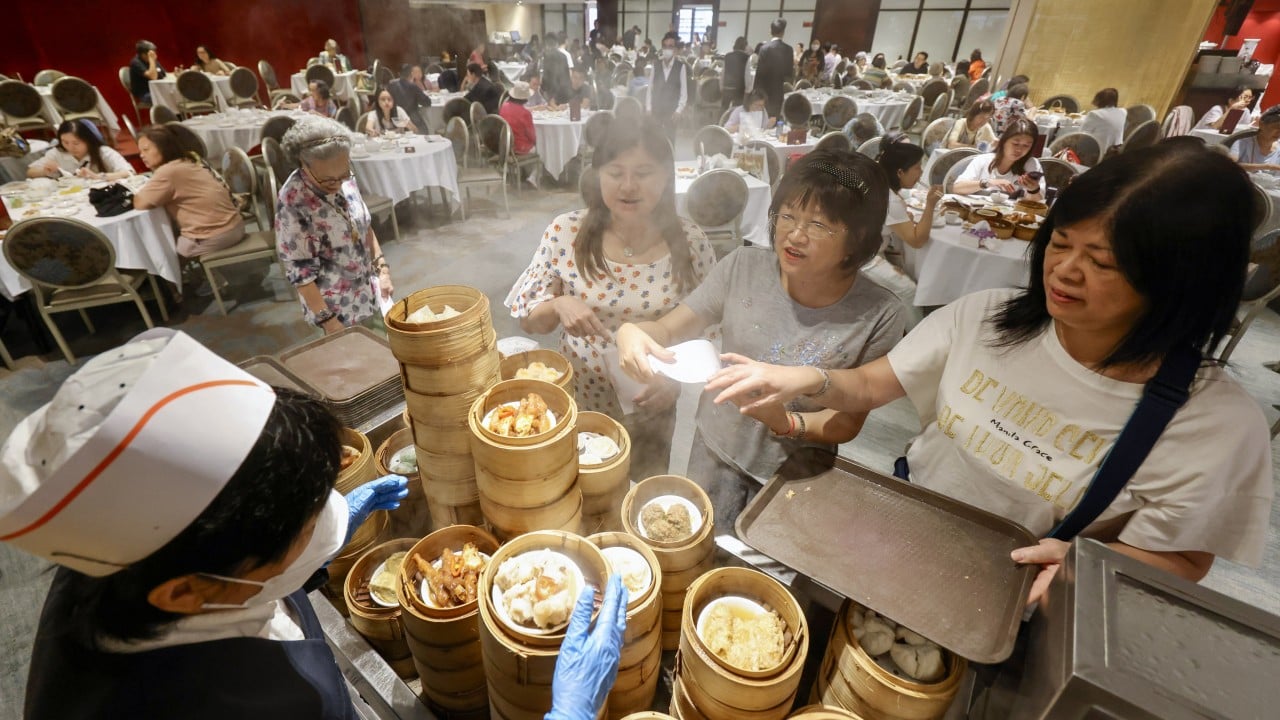
The lazy consensus among Hong Kong’s culinary elite and policy advisors is as predictable as it is exhausting. Faced with a devastating slump in the local food and beverage sector—specifically targeting traditional Cantonese restaurants—the immediate reflex is to cry for a cultural export drive. The narrative goes like this: if the locals aren't spending, we must package Cantonese fine dining, ship it abroad, and use gastro-diplomacy to rescue a bleeding industry.
It is a comforting fantasy. It is also financially illiterate.
Exporting a food culture does not save the restaurants dying on the ground in Central, Mong Kok, or Tsim Sha Tsui. In fact, doubling down on the "cultural preservation" argument is precisely what is accelerating the demise of Hong Kong’s culinary dominance. The hard truth nobody wants to admit is that the traditional Cantonese restaurant model, in its current iteration, is structurally broken. It cannot be subsidized, exported, or romanticized out of a structural economic shift.
The Fatal Flaw of Gastro-Diplomacy
Proponents of the "export the culture" strategy point to Thailand’s "Global Thai" program or South Korea’s soft-power culinary push as blueprints. They argue that by projecting Cantonese culinary prestige globally, benefits will somehow trickle back down to the mom-and-pop dim sum joints and high-end banquet halls of Kowloon.
This ignores basic economic geography.
When a government promotes its cuisine abroad, it benefits global supply chains and overseas operators. It does absolutely nothing to lower the crippling real estate costs or solve the severe labor shortages plaguing operators inside Hong Kong. If a diner in London or New York falls in love with elevated char siu at a local trendy hotspot, that revenue stays in London or New York. It does not pay the rent for a struggling restaurateur on Nathan Road.
Worse, Cantonese cuisine is uniquely ill-suited for the rapid, standardized global expansion that built empires for sushi or Korean fried chicken. Authentic Cantonese cooking relies heavily on huo hou (wok heat/control), highly specialized skilled labor, and hyper-fresh, live ingredients. You cannot easily scale a cuisine that demands a master chef spend decades learning how to balance the temperature of a roaring companion wok. When you try to franchise it globally without that talent pool, the quality plummets, the brand dilutes, and the cultural prestige evaporates anyway.
The Real Killers: Rent, Shenzhen, and Structural Inertia
To understand why Cantonese restaurants are hitting a wall, we have to stop blaming "the slump" or "shifting consumer tastes" as if they are abstract, unavoidable weather patterns. The wounds are entirely structural and self-inflicted.
1. The Asymmetric Real Estate Trap
For decades, Hong Kong restaurateurs operated under a delusion fueled by a real estate bubble. They assumed that high foot traffic would always justify astronomical rents. But when consumer behavior shifted post-2023, landlords refused to blink. I have seen operators pour millions into exquisite dining room build-outs, only to be choked out within three years because their occupancy cost ratio exceeded 25% of gross revenues. In a healthy restaurant ecosystem, that number needs to sit below 10% to 15% to survive economic volatility.
2. The Shenzhen Exodus is Rational, Not Treasonous
The local industry laments the weekends when hundreds of thousands of Hong Kong residents cross the border to Shenzhen to spend their dining dollars. The industry calls it a lack of local loyalty. Let’s call it what it actually is: rational consumer arbitrage.
Shenzhen restaurants offer massive spaces, hyper-attentive service, and identical or superior ingredient quality at a third of the price. The Hong Kong model relies on packing diners into tight spaces, turning tables every 45 minutes, and charging a premium for the privilege of being rushed out the door by overworked staff. You cannot compete on nostalgia when the value proposition is that fundamentally broken.
3. The Specialized Talent Drought
The traditional kitchen hierarchy in Cantonese dining is archaic. It is built on a grueling apprenticeship system that younger generations quite reasonably reject. Why would a young person stand over a 500-degree wok station for twelve hours a day, six days a week, for a stagnant wage, when they can earn a comparable living in gig work or less abusive service sectors? The talent pipeline is dry. Without the labor, the execution suffers. When execution suffers, the customers leave.
The Cost of the Counter-Intuitive Approach
If the goal is to actually save Hong Kong’s status as a culinary capital, the solution is not to look outward with expensive marketing campaigns. The solution is a brutal, internal restructuring.
The downside to this contrarian view is painful: many legacy restaurants must be allowed to die.
Protecting underperforming, stubborn legacy brands through government grants or sentimental tourism campaigns creates a zombie ecosystem. It chokes out innovation and keeps commercial rents artificially inflated. Only through a wave of creative destruction will landlords be forced to reckon with reality and lower rents to a level where new, experimental concepts can survive.
+-------------------------------------------------------------+
|               THE CULINARY REBOOT BLUEPRINT                 |
+-------------------------------------------------------------+
|  1. DE-ESCALATE THE BANQUET MODEL                           |
|     Ditch the 12-course, high-overhead format. Move to lean,|
|     high-margin, focused menus.                             |
|                                                             |
|  2. AGGRESSIVE OPERATIONAL MODERNIZATION                    |
|     Implement central kitchens for prep work to cut on-site |
|     footprint requirements and reduce labor pressure.       |
|                                                             |
|  3. REJECT THE "TRADITION" SHACKLES                         |
|     Allow flavors and formats to evolve. Hybridization isn't|
|     heresy; it's survival.                                  |
+-------------------------------------------------------------+
Stop Romanticizing the Past
The premise that Cantonese cuisine must remain frozen in time to be authentic is killing it. Look at how the global wine industry evolved. When old-world producers insisted things could only be done one way, new-world producers ate their market share by simplifying the message and focusing on consistency and accessibility.
Consider a thought experiment: Imagine a restaurant group that takes the core flavor profiles of classic Cantonese roasting—the balance of maltose, five-spice, and soy—and completely decouples it from the traditional sit-down banquet format. No white tablecloths. No massive tanks of live seafood requiring immense energy costs. No army of specialized floor staff. Just a hyper-efficient, stripped-back service model focused on flawless execution of three core items.
That isn't a degradation of culture; it is an optimization of survival.
The operators winning right now in Hong Kong are not the ones crying for export subsidies or historical preservation status. They are the ones treats dining as a strict manufacturing and hospitality equation. They are downsizing their floor plans, renegotiating predatory leases with a willingness to walk away, and radically simplifying menus to reduce reliance on a disappearing class of specialized chefs.
Stop asking the government to export the culture. Stop asking consumers to buy into nostalgia out of a sense of civic duty. The market does not care about feelings, history, or past glory. If Hong Kong dining wants to reclaim its throne, it needs to stop looking at the world stage and start fixing its own floor plan.