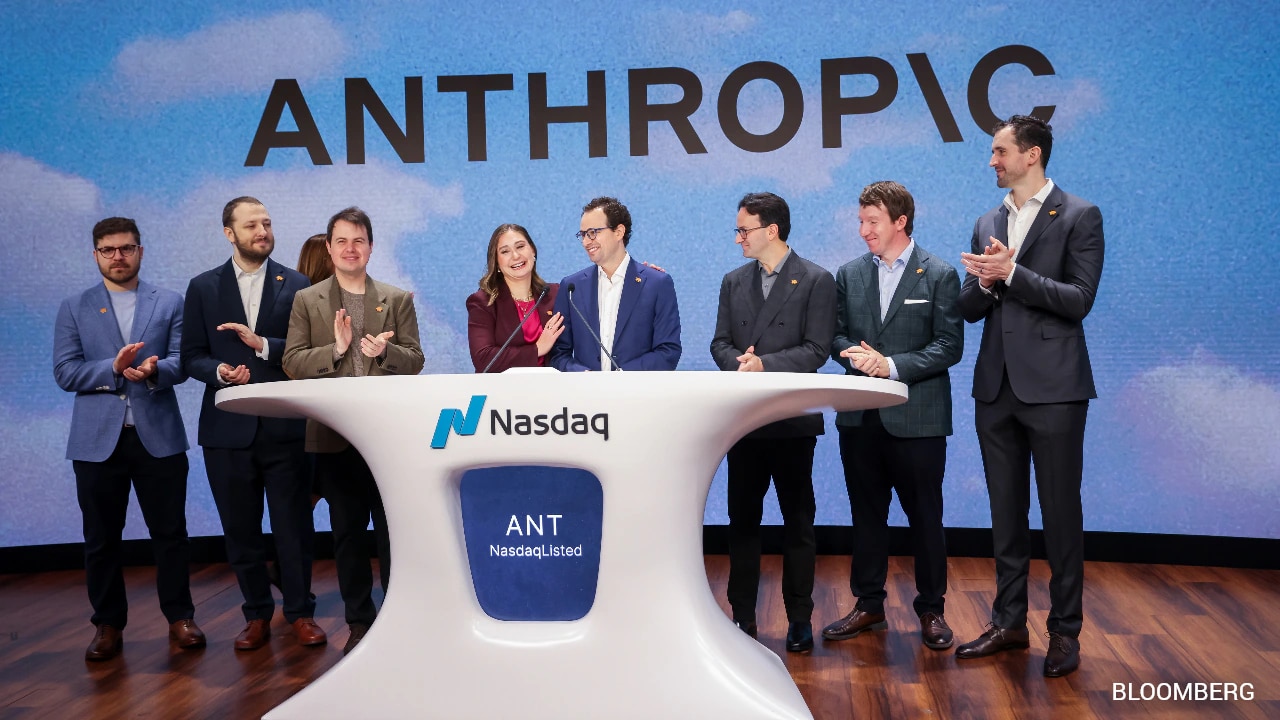
Hand-wringing op-ed writers have a brand-new boogeyman to hyperventilate over.
They look at Anthropic—the artificial intelligence lab valued in the tens of billions of dollars—and they see seven co-founders sitting on paper fortunes that put them squarely in the billionaire class. Dario Amodei, Daniela Amodei, Tom Brown, Chris Olah, Jared Kaplan, Sam McCandlish, and Jack Clark. The pundit class takes one glance at that cap table, connects a few lazy dots, and declares a brand-new kind of existential hazard. Their argument is predictable: massive personal wealth inevitably rots the soul, corrupts safety-first missions, and turns idealistic researchers into ruthless monopolists who will cut corners to protect their net worth.
It sounds righteous. It reads well in a Sunday editorial column. And it completely misunderstands how capital, corporate governance, and frontier AI development actually work in the real world.
The conventional wisdom assumes that making AI researchers billionaires creates a dangerous conflict of interest. The truth is the exact opposite. In an industry where training a single frontier model burns through hundreds of millions of dollars in compute, having founders who are independently wealthy—and structurally insulated from short-term cash grabs—is one of the few things standing between safe AI deployment and a reckless race to the bottom.
The Myth of the Impoverished AI Saint
Critics love the romantic fantasy of the penniless academic lab. They imagine a world where researchers in rumpled sweaters build artificial general intelligence on government grants, completely untainted by venture capital or equity upside.
I have spent years watching technical founders try to navigate the collision between idealistic missions and brutal capital requirements, and I can tell you what actually happens when builders have no equity leverage. They get crushed. When engineers and researchers do not own the upside of their work, the people who do own it—usually traditional institutional investors, private equity funds, or legacy tech conglomerates—call every single shot.
Frontier AI is not an open-source weekend project. It requires gigawatts of data center power, tens of thousands of high-end GPUs, and multi-billion-dollar infrastructure commitments years in advance. You cannot fund that with bake sales or university endowments. The money has to come from somewhere.
When critics complain that Anthropic’s seven co-founders became billionaires, they are complaining about the exact mechanism that kept the founders in control of the company. High valuations diluted early outside investors less than a low valuation would have, allowing the founding team to retain voting power and board influence. Would the critics prefer a scenario where Anthropic raised the exact same capital at a fraction of the valuation, leaving the founders with two percent of the company while sovereign wealth funds and growth-equity sharks owned the rest? Because that is the alternative. You do not get to eliminate the capital requirement; you only get to choose who holds the steering wheel when the checks clear.
Why Paper Billions Are Not What Pundits Think They Are
Let us dismantle the most basic financial illiteracy baked into the "seven billionaires" panic.
Editorial writers treat a startup founder’s paper net worth as if Dario and Daniela Amodei have piles of gold coins sitting in an underground vault, or as if they can liquidate their shares tomorrow morning to buy mega-yachts. They cannot. Illiquid private equity in a frontier AI lab is not cash. It is a locked bet on a decade-long technological outcome.
More importantly, Anthropic is structured as a Public Benefit Corporation (PBC) governed by a Long-Term Benefit Trust. Unlike a standard Delaware C-corp, where directors have a strict fiduciary duty to maximize shareholder value above all else, a PBC legally empowers—and requires—leadership to balance financial returns against a stated public benefit. In Anthropic's case, that benefit is the responsible development and maintenance of advanced AI for the long-term benefit of humanity.
Furthermore, the Long-Term Benefit Trust holds a special class of shares that gives an independent body of trustees the power to appoint and remove members of Anthropic's board of directors. These trustees hold zero financial stake in the company. They do not get rich if Anthropic’s valuation doubles, and they do not lose money if Anthropic delays a profitable product launch to run extra safety evaluations.
When you combine an independent trust structure with founders whose personal financial needs were already solved the moment their early equity vested, you eliminate the single biggest driver of corporate recklessness: desperation.
Think about how corporate malfeasance actually happens in Silicon Valley. Companies do not cut safety corners because their founders are too rich on paper. They cut safety corners because they are running out of runway, because their VCs are demanding a liquidity event, or because executives are desperate to hit a quarterly revenue target so their underwater stock options finally pay out. A founder who already has generational wealth on paper does not need to rush an unvetted model to market just to afford a house in Atherton.
Answering the Wrong Question About AI Risk
If you search online for debates around AI leadership and wealth, you run straight into a wall of flawed questions. People ask whether billionaire founders can be trusted to regulate themselves, or how much money is "too much" for an AI safety researcher to make.
Both questions miss the mark entirely.
First, nobody in the AI industry—not Anthropic, not OpenAI, not Google DeepMind—should be trusted to regulate themselves. Self-regulation is a fairy tale regardless of whether the CEO makes fifty thousand dollars a year or fifty billion. Safety requires external red-teaming, third-party audits, compute governance, and clear liability standards. Focusing on the personal net worth of seven founders distracts from the actual structural bottlenecks of AI safety, which are algorithmic transparency, mechanistic interpretability, and hardware-level monitoring.
Second, asking how much money an AI founder is "allowed" to make ignores basic market physics. If top researchers like Chris Olah—who pioneered much of our current understanding of mechanistic interpretability, the science of looking inside neural networks to see how they actually think—cannot build massive value inside a safety-focused lab, where do they go? They get poached by legacy tech giants or unconstrained competitors offering nine-figure compensation packages with zero safety guardrails attached.
The uncomfortable reality is that talent flows to capital. By creating a vehicle where safety-oriented researchers could capture massive equity upside without abandoning their research standards, Anthropic kept some of the sharpest minds in machine learning from being absorbed into purely commercial ad-tech and cloud-monopoly engines.
The Real Hazard Nobody Wants to Talk About
If we want to talk about real hazards in the AI ecosystem, let us look at where the actual danger lies. It is not in seven co-founders holding concentrated equity in a Public Benefit Corporation.
The real hazard is capital asymmetry and compute centralization.
Right now, the cost of training frontier models is scaling exponentially. Only a handful of organizations on Earth can afford to play at the absolute cutting edge. When critics attack the valuation and founder wealth of independent labs like Anthropic, they inadvertently cheer for a world where only trillion-dollar Big Tech monopolies—companies like Microsoft, Google, and Meta—can afford to build frontier AI.
Look at the incentive structures of those trillion-dollar incumbents:
- Ad-driven engagement loops: Legacy tech giants built their empires on capturing human attention and monetizing user data. When they deploy AI, their native institutional instinct is to maximize engagement, stickiness, and ad inventory.
- Bundling and lock-in: Cloud hyperscalers do not care if a model is the safest or most aligned; they care about locking enterprise customers into their cloud infrastructure before a rival does.
- Public market tyranny: A publicly traded tech giant faces ruthless scrutiny every ninety days. If a public CEO tells Wall Street, "We are delaying our flagship AI release by six months because our interpretability team found a weird deceptive behavior during red-teaming," the stock drops ten percent before the earnings call ends.
Anthropic, precisely because it is privately held, backed by massive capital, and controlled by wealthy founders alongside an independent trust, can absorb that delay without getting obliterated by public short-sellers.
The Downside of the Billionaire Shield
Pretending this arrangement has zero flaws would be dishonest. Concentrated wealth and founder control come with real, undeniable risks that deserve serious scrutiny rather than lazy moralizing.
The biggest danger is ideological insularism. When a tight-knit group of seven co-founders holds immense wealth and structural authority, they risk creating an echo chamber. They can easily convince themselves that only they possess the moral clarity and technical brilliance to steward humanity into the AI era. That kind of messianic complex is toxic. It breeds secrecy, dismisses valid external criticism as "uninformed," and encourages paternalistic decision-making where seven people decide what millions of users are allowed to read, write, or build.
There is also the problem of golden handcuffs in reverse. When early employees and founders become wildly wealthy on paper, hunger can fade. Startups survive on paranoia and relentless execution. If a lab becomes too comfortable, too bureaucratic, or too obsessed with protecting its valuation rather than pushing fundamental breakthroughs in alignment, it risks turning into a slow-moving research museum while reckless competitors sprint past it.
Finally, massive valuations create massive expectations. Taking billions of dollars from strategic partners like Amazon and Google means Anthropic cannot simply shut down commercial operations if it decides frontier scaling is too dangerous. Even with a Long-Term Benefit Trust, commercial gravity is real. You cannot take ten billion dollars in infrastructure credits and capital and then tell your partners you are pivoting to a non-profit meditation retreat. The commercial treadmill is running, and the founders are strapped to it whether they are billionaires or not.
What Actually Keeps Frontier AI Safe
If you want to evaluate whether Anthropic—or any other frontier AI lab—is becoming a hazard, stop counting the commas in the founders' net worth. Look at operational reality instead.
- Watch the release cadence during moments of competitive panic. When a rival drops a model that tops every benchmark, does the lab rush out an under-tested response to protect market share, or does it hold the line until its Responsible Scaling Policy criteria are met?
- Track the power of internal safety teams. Do alignment and interpretability researchers have genuine veto power over deployment, or are they treated as a public relations department that writes nice blog posts while the product team ships whatever it wants?
- Examine compute allocation. What percentage of the company's priceless GPU clusters goes toward safety research, red-teaming, and interpretability versus pure capability scaling and commercial inference?
Those are the metrics that matter. Not Forbes rich lists. Not envy-driven hit pieces disguised as ethics columns.
Criticizing Anthropic’s seven founders for becoming billionaires is the ultimate midwit take on artificial intelligence. It mistakes the scorecard of startup equity for a moral failing, ignores the brutal economics of modern compute, and pretends that stripping power away from technical founders would somehow hand it to angels rather than Wall Street sharks.
Money in AI is not an automatic poison. In a game where the table stakes are measured in billions of dollars and gigawatts of electricity, wealth is simply armor. The only question that actually matters is whether the people wearing it are using it to protect the mission—or just protecting themselves.


