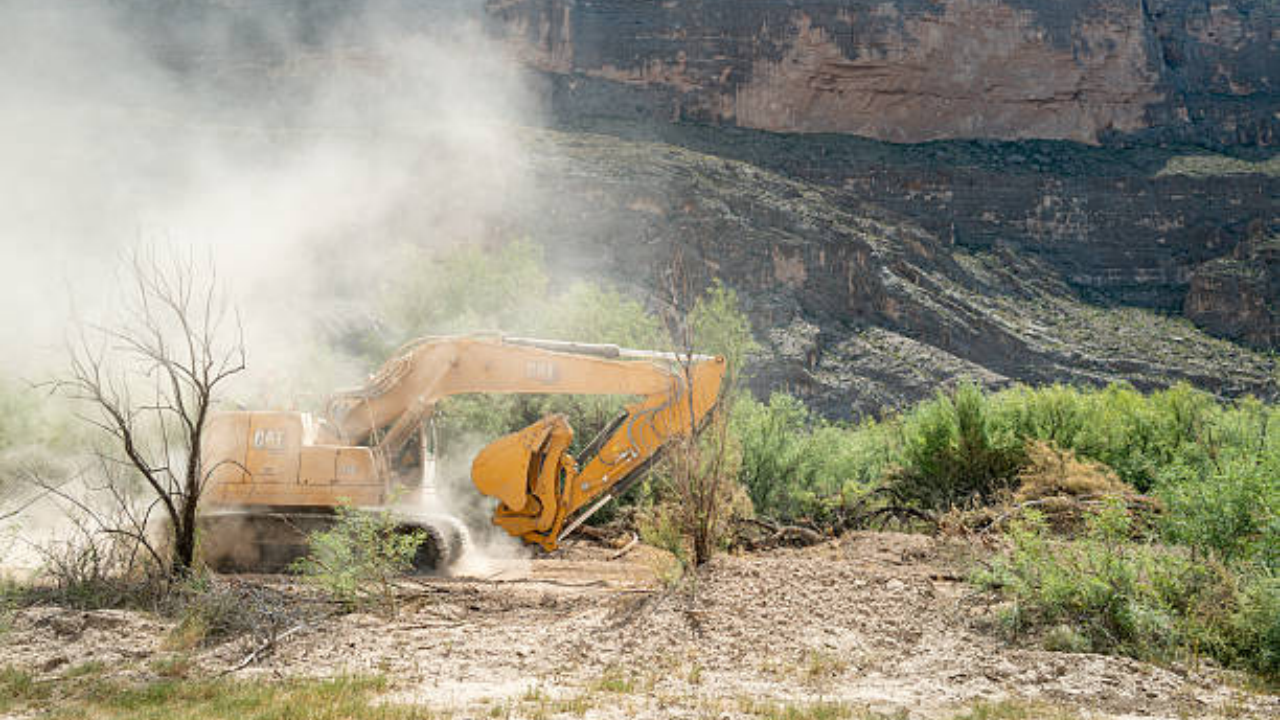
Every single major media outlet framed the judicial block on Big Bend border wall construction as a massive win for property rights and ecological preservation. Landowners celebrated. Environmental groups popped champagne. The narrative writes itself: heroic locals slay the federal Goliath to save their slice of the Rio Grande.
It is a comforting delusion.
I have spent years watching infrastructure projects and property battles grind through federal courts, and I can tell you that the champagne is entirely premature. Halting this barrier does not protect the people living along the river. It abandons them to a lawless vacuum, drives up operational chaos, and creates a perverse economic burden that these very landowners will end up paying for in blood, time, and litigation.
Stop cheering for court injunctions that solve nothing and examine what is actually happening on the ground.
The Convenient Fiction of River Access
The entire legal challenge hinged on a clean, emotional argument: a physical wall would choke off landowner access to the Rio Grande, destroying centuries-old ranching traditions and cutting cattle off from water.
Let us be brutally honest about the geography. Big Bend is not a suburban backyard fence dispute. We are talking about some of the most punishing, remote terrain in North America. Much of the riverbank here is a sheer cliff or choked by impassable thickets of giant cane. The idea that ranchers were strolling down to the water every morning for a leisurely drink is a postcard myth.
More importantly, the lazy consensus assumes that a federal barrier means permanent alienation from your own deeded acreage. Eminent domain is brutal, yes. The federal government's track record of lowballing appraisals is a scandal. But pretending that stopping a wall preserves your property rights ignores the alternative: an open, completely unmonitored international border where cartels treat private ranches as personal transit corridors.
When a judge blocks physical infrastructure, the operational vacuum does not vanish. It expands. The Border Patrol does not suddenly pack up and go home; they simply shift to a reactive posture, which means more high-speed pursuits across private pastures, cut fences, trampled irrigation lines, and zero recourse for property owners seeking compensation for infrastructural destruction. You avoided concrete on the horizon, congratulations. Now enjoy the constant stream of unauthorized foot traffic through your calving pastures.
The Economics of Chaos
Let us talk about the real cost structure of border proximity that mainstream journalism routinely ignores.
When a property sits directly on an international boundary without physical control features, its economic utility plummets. Insurance premiums for ranch operations near unsealed borders are climbing toward absurdity. Try getting a commercial insurer to underwrite remote agricultural infrastructure when property damage claims from illegal crossings are treated as an accepted cost of doing business.
The legal challenge argued that construction devalues property through disruption and visual blight. That is a quaint argument when weighed against the reality of operational abandonment. A secure perimeter—however ugly it might be—creates predictability. Predictability drives asset valuation. Chaos destroys it.
Imagine a commercial warehouse in a high-crime district winning a lawsuit to tear down its security gates because the metal obstructed the view of the street. Would that boost the value of the inventory inside? Of course not. It exposes the asset to unmitigated risk. Yet, when applied to thousands of acres of fragile desert ranchland, people lose their minds and applaud the removal of the gate.
The landowners cheering this injunction are winning the legal battle while losing the operational war. They are trading a federal concrete structure for a permanent, unmanaged security crisis that they will shoulder entirely on their own dime.
Dismantling the Environmental Fallacy
Environmental watchdogs were front and center in this lawsuit, arguing that walls fragment wildlife corridors for black bears, mountain lions, and desert bighorn sheep.
Let's look at the data without the Sierra Club filter. Ecological fragmentation is a real phenomenon, but it is not a binary choice between an impenetrable concrete monolith and pristine wilderness. Modern border infrastructure engineering has evolved past the monolithic designs of twenty years ago. Automated gates, elevated tactical roads, and targeted electronic surveillance can mitigate animal movement far better than a wide-open border zone characterized by constant heavy vehicle patrols, discarded trash, campfires, and high-speed law enforcement chases.
When hundreds of people cross a fragile riparian zone every single day, leaving behind tons of non-biodegradable waste, starting accidental wildfires, and forcing emergency off-road vehicle deployment by federal agencies, the ecosystem takes a beating. A static barrier concentrates movement and reduces the sprawling footprint of interdiction operations.
By blocking the wall, environmentalists did not save the desert. They preserved the sprawling, highly destructive game of cat-and-mouse that tears up riverbeds far more efficiently than any foundation pour ever could.
The Real Question Nobody is Asking
Why are we pretending that judicial injunctions constitute border management?
A courtroom victory in Austin or Washington does not stop the structural pressures driving migration and trafficking. It merely shifts the burden of those pressures onto the people least equipped to handle them: the multi-generational ranch families whose livelihoods are being ground to dust between federal overreach and transnational cartel logistics.
The legal victory in Big Bend is a hollow prize. It protects a view while sacrificing operational security. It preserves a romanticized idea of the frontier while exposing real people to the grinding reality of an unmanaged border.
If you own land on the Rio Grande, your worst enemy isn't the contractor with the bulldozer. It's the lawyer telling you that stopping them is going to save your way of life.