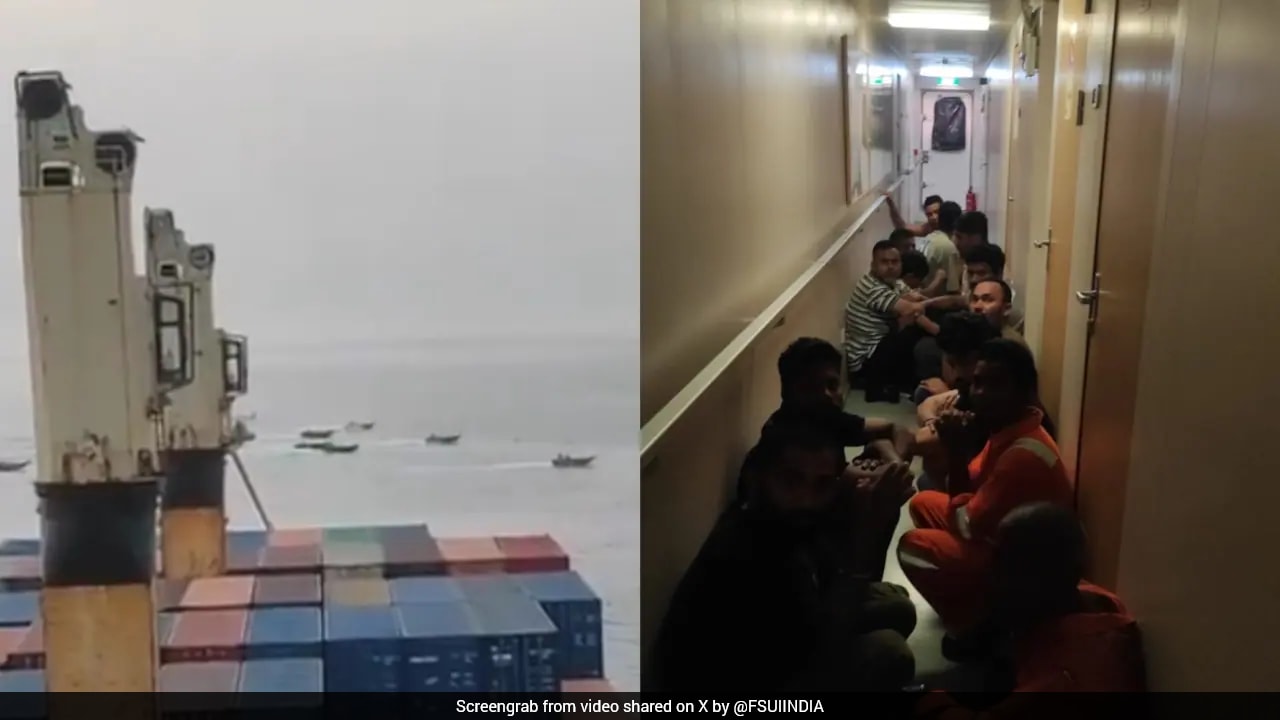
The maritime world is currently navigating a nightmare. If you’re a seafarer, the Strait of Hormuz isn’t just a busy transit point anymore. It’s a combat zone where professional training is often no match for an incoming rocket-propelled grenade. The recent viral footage of Indian sailors taking cover while their vessel came under attack is a brutal reality check. It’s not just a clip for social media; it’s a snapshot of the daily peril faced by thousands of people keeping the global economy afloat.
The Reality Of Maritime Conflict
You’ve likely seen the clips or read the headlines about ships getting fired upon. When you look at the footage of these attacks, the reality is stark. You see small, agile boats swarming a massive container ship. You hear the frantic movement of the crew. They aren't soldiers. They are technicians, cooks, and officers who expected a standard transit.
In April 2026, the vessel Euphoria found itself in this exact situation. With 21 Indian crew members on board, the Panama-flagged ship was targeted by the Islamic Revolutionary Guard Corps (IRGC) during a period of intense regional escalation. It was one of three ships hit that day. The others, MSC Francesca and Epaminondas, faced their own versions of this hell. While the official reports later confirmed that the crew members were unharmed, the psychological toll of being trapped in a conflict zone is something most of us can’t truly fathom.
Why This Matters To You
You might think this is just a geopolitical issue involving tankers and oil. You’d be wrong. India is the world’s second-largest supplier of seafarers. When chaos hits the Strait of Hormuz, it hits Indian families directly. Thousands of Indian sailors are deployed in the Gulf region at any given time. These aren't just statistics; they are parents, children, and spouses who are essentially stuck in a high-stakes standoff.
The Federation of Seafarers and Indian Seafarers Union (FSUI) has been vocal about the limitations of current advisories. Guidelines on a screen don't stop a missile. Their argument is simple: commercial ships need a dedicated naval escort to survive these waters. Relying on "caution" when IRGC boats are actively interdicting vessels is a recipe for disaster.
The Mental Toll Of Being Stranded
It isn't just the fire that kills; it's the waiting. I’ve read accounts from captains who spent months anchored in the middle of a war zone. Imagine sitting on 100,000 tonnes of fuel, missiles flying overhead, listening to the VHF radio for instructions that never feel safe.
- Routine is a lifeline: Maintaining the ship, running drills, and cleaning engines keeps the panic at bay.
- The digital connection: WhatsApp and internet access are the only things keeping crews connected to reality. Without them, the isolation is total.
- The pressure of duty: Many crews stay because they know that if they stop, the global supply chain hits a brick wall. That’s a heavy burden for a 22-year-old rating to carry.
What Real Safety Looks Like
The maritime industry talks a lot about "risk management." But when you’re out in the Gulf, "risk management" looks a lot like luck. Many companies are still pressuring crews to maintain schedules despite the obvious danger. This is where the industry fails its people.
If you’re involved in logistics or have family at sea, you need to demand more than just corporate emails.
- Verify the security protocols: Don't take a company's word for it. Check if there is actual naval support available for your route.
- Push for real-time intel: GPS jamming and transponder spoofing are now standard. If your crew can't trust their own navigation data, they are flying blind.
- Prioritize mental health support: The trauma of a near-miss is real. Post-voyage counseling needs to be mandatory, not optional.
We’ve seen the reports of fatalities. We’ve seen the distress calls. The Strait of Hormuz isn't just a waterway anymore. It’s a place where duty to cargo is increasingly clashing with the basic right to survive. Until the international community stops treating these sailors as collateral in a trade war, nothing will change. Keep your eyes on the actual maritime reports, not just the sanitized press releases. The people on those ships deserve better than a "safe" tag on a government bulletin.
Indian sailors under attack in Hormuz
This video provides a firsthand look at the high-risk environment and the immediate danger faced by merchant crews navigating these contested waters.