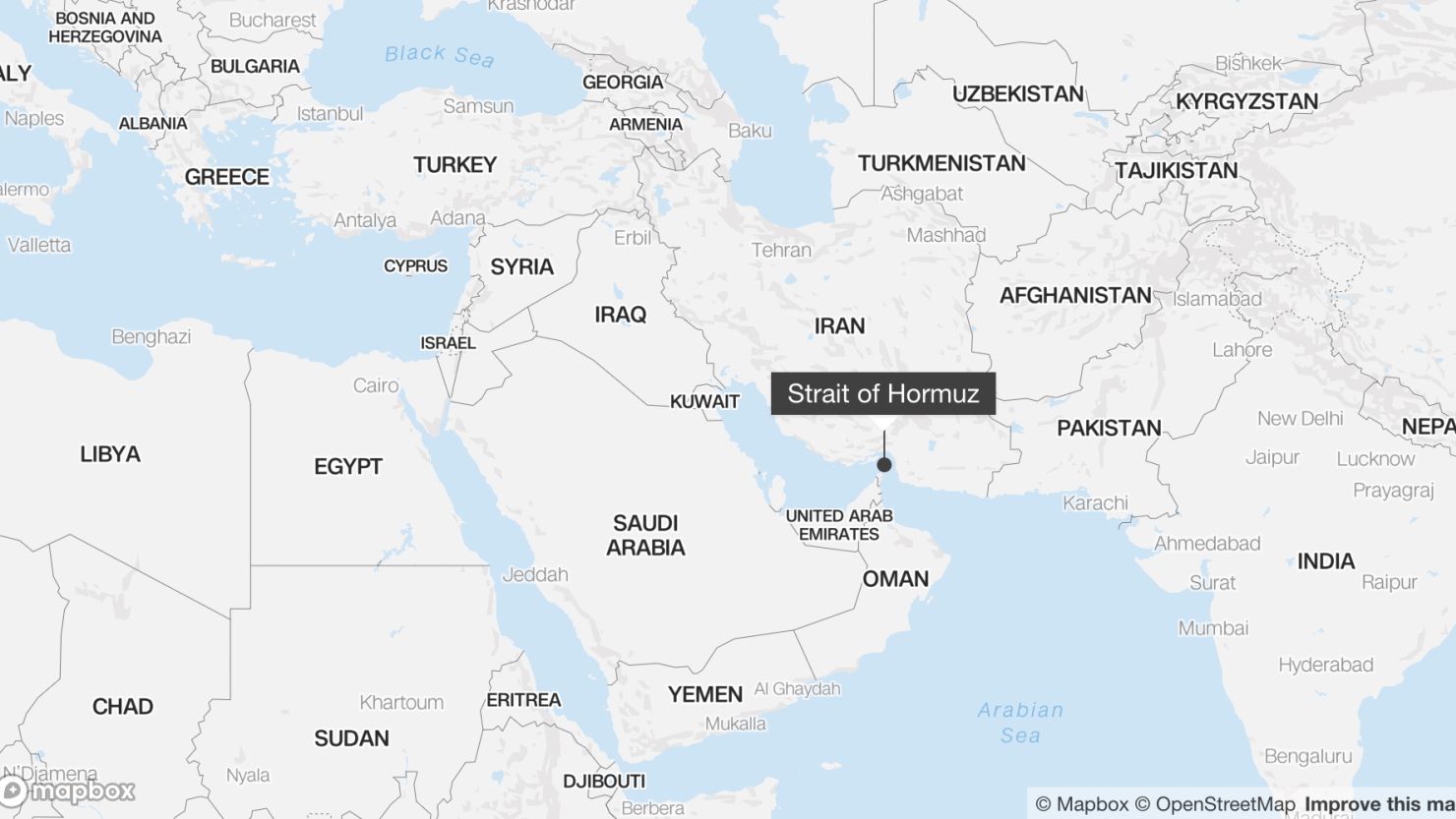
The convergence of a 48-hour ultimatum and the geography of the Strait of Hormuz transforms a regional friction point into a binary risk for global energy markets. While political rhetoric focuses on the immediate threat of "hell raining down," a structural analysis reveals that the true risk lies in the specific kinetic and economic mechanisms of a maritime blockade. The Strait of Hormuz is not merely a waterway; it is a high-pressure valve in the global oil supply chain, where approximately 20% of the world’s liquid petroleum passes daily. An interruption here does not just raise prices—it breaks the physical delivery systems of the global economy.
The Three Pillars of Maritime Interdiction
To understand the 48-hour window, one must categorize the operational threats into three distinct pillars. Each pillar carries a different level of deniability and a different timeline for restoration.
- Asymmetric Naval Harassment: This involves the use of Fast Inshore Attack Craft (FIAC) and unmanned surface vessels (USVs). These assets are designed to swarm larger tankers, forcing them to deviate from established Traffic Separation Schemes (TSS). The goal is to drive up insurance premiums and freight rates rather than sinking vessels.
- Kinetic Infrastructure Strikes: This involves the use of precision-guided munitions or loitering munitions against port facilities or offshore loading terminals. By targeting the "source" rather than the "transit," a belligerent can disrupt supply without technically closing international waters.
- Active Mine Seeding: The most severe tier of interdiction. Modern naval mines are "smart"—they can be programmed to ignore certain acoustic signatures and target others. Clearing a minefield is a slow, methodical process that requires specialized mine countermeasures (MCM) vessels, which are limited in number and move at a fraction of the speed of a standard carrier strike group.
The Cost Function of a Blockade
The NDTV report alludes to an economic catastrophe, but it fails to quantify the cost function. When a deadline expires and kinetic action begins, the market reacts through a three-stage pricing mechanism.
The Risk Premium Phase
This occurs the moment a threat is deemed credible. Brent Crude prices reflect the probability of a disruption. Traders hedge against the loss of 21 million barrels per day (bpd). During this phase, the price hike is driven by paper markets and futures contracts.
The Insurance Chokepoint
The physical flow of oil stops before a single shot is fired if the Joint War Committee (JWC) of the London insurance market declares the Strait a "Listed Area." When hull and cargo insurance premiums skyrocket or coverage is withdrawn entirely, shipowners refuse to enter the Persian Gulf. This is the "Involuntary Embargo."
The Strategic Reserve Depletion
If the Strait remains closed, Western economies rely on the International Energy Agency’s (IEA) coordinated release of Strategic Petroleum Reserves (SPR). The math is brutal: if 20 million bpd are missing, the U.S. SPR—currently at historically low levels—could only bridge the gap for a matter of weeks before structural shortages occur in refined products like diesel and jet fuel.
Strategic Asymmetry and the 48-Hour Deadline
The 48-hour ultimatum serves a specific psychological and operational purpose. In military doctrine, this is the "OODA Loop" (Observe, Orient, Decide, Act) optimization. By providing a clear deadline, the United States forces Tehran to choose between de-escalation and a visible mobilization that can be tracked by Synthetic Aperture Radar (SAR) and signals intelligence (SIGINT).
The geography of the Strait makes it a target for "Anti-Access/Area Denial" (A2/AD). Iran’s coastline along the Strait is mountainous and rugged, providing natural cover for mobile shore-to-ship missile batteries. Conversely, the deep-water channels used by VLCCs (Very Large Crude Carriers) are narrow—only two miles wide in each direction.
A single sunken tanker in the TSS would create a physical and environmental barrier. The cleanup of a millions-of-barrels oil spill in a high-tension combat zone is a logistical impossibility, effectively sealing the Persian Gulf to commercial traffic for months.
Logical Failure Points in Current Defense Doctrines
Standard naval escort missions, such as those seen in Operation Earnest Will or modern task forces, assume a degree of rationality in the aggressor. However, the current escalation cycle introduces two variables that break these frameworks:
- Autonomous Swarm Saturation: Defending a 300-meter tanker against fifty $20,000 drones requires an expenditure of surface-to-air missiles that costs millions. The "cost-to-kill" ratio is inverted, favoring the attacker.
- The Cyber-Kinetic Interface: If the regional power can disable the GPS or AIS (Automatic Identification System) signals within the Strait, the risk of accidental collision or grounding becomes high enough to deter even the most daring maritime operators.
Quantifying the Restoration Timeline
If the 48-hour deadline passes and hostilities commence, the "Return to Normalcy" is not a switch that can be flipped. The restoration timeline follows a decaying exponential curve:
- Air Superiority (Days 1–5): Neutralizing shore-based missile batteries and drone launch sites.
- MCM Sweeping (Weeks 1–4): Ensuring the shipping lanes are clear of bottom-moored and drifting mines.
- Market Stabilization (Months 1–3): Re-establishing the confidence of the global insurance industry.
The Strategic Play for Energy Stakeholders
The immediate tactical requirement for global energy buyers is the diversification of transit. This involves maximizing the utilization of the East-West Pipeline in Saudi Arabia and the Abu Dhabi Crude Oil Pipeline (ADCOP), which bypasses the Strait to reach the Gulf of Oman. However, these pipelines combined have a spare capacity of roughly 6-7 million bpd—leaving a 13-14 million bpd deficit that cannot be mitigated through existing infrastructure.
The terminal move in this geopolitical sequence is the "Total Energy Isolation" of the aggressor. If the Strait is closed, the aggressor loses its own primary revenue stream. This creates a "Mutual Assured Economic Destruction" (MAED) scenario. Analysts must monitor the "Ghost Fleet" of tankers used for illicit exports; if these vessels begin to anchor in neutral waters or disperse, it signals that the regional power has calculated the cost of the blockade and is prepared to absorb the self-inflicted wound to achieve a broader geopolitical objective.
The 48-hour window is the final opportunity to recalibrate the cost-benefit analysis. Beyond this point, the logic of the market is superseded by the logic of kinetic attrition, where the victor is not the one with the most oil, but the one with the most resilient supply chain and the deepest strategic reserves.