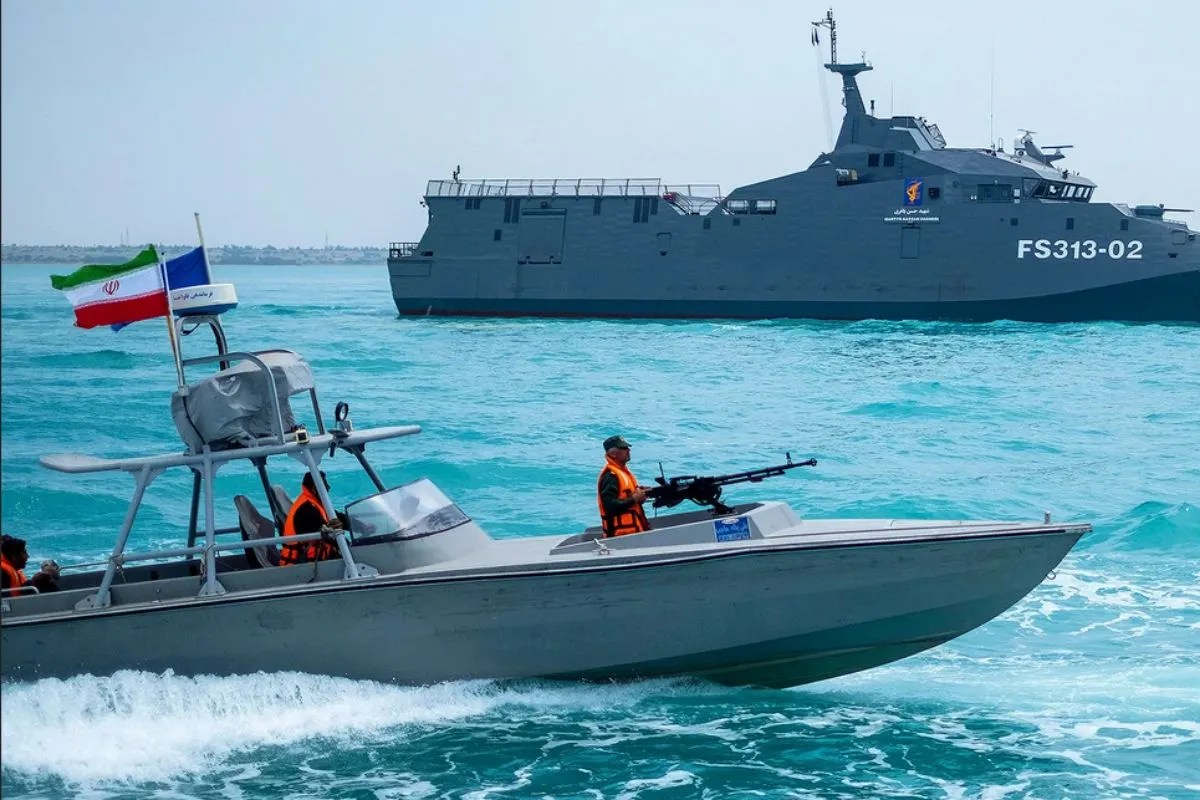
A calculated explosion in the Strait of Hormuz has shifted the geopolitics of the Middle East. Coming at a moment of profound internal transition for Iran—as the nation marks the passing of Supreme Leader Ayatollah Ali Khamenei—the targeting of a commercial tanker is not a random act of regional sabotage. It is a deliberate, high-stakes message directed at the incoming Trump administration. Tehran is signaling that its internal political vulnerability will not translate into external weakness. By striking at the world's most critical oil chokepoint during a period of supreme domestic grief, Iran's security apparatus has made it clear that any attempt by Washington to capitalize on transition-era instability will result in global economic chaos.
The timing tells the real story. Meanwhile, you can find related stories here: Why Saudi Arabia Standing With Morocco Against Terror Plots Matters for Regional Security.
Western intelligence agencies often miscalculate authoritarian transitions. They look for fractures, assuming that a regime mourning its foundational figure will pull inward to secure its domestic borders. The attack in the shipping lanes of Hormuz upends that assumption completely. It demonstrates that the Islamic Revolutionary Guard Corps (IRGC) maintains total operational control and is prepared to use its asymmetric leverage over global energy markets to deter foreign intervention.
The Strategy of Calculated Friction
The mechanics of maritime sabotage in the Persian Gulf rely on deniability. For years, the template has remained the same: limpet mines, low-profile drone strikes, or fast-attack craft harassing commercial vessels just enough to spike Lloyd’s of London insurance premiums without triggering a full-scale military retaliation from the United States Navy. To understand the complete picture, we recommend the excellent article by BBC News.
This latest strike, however, breaks the established pattern.
Executing an operation while the supreme command structure is technically in flux requires a high degree of confidence. The IRGC is not merely reacting to events; it is setting a pre-emptive boundary for the White House. During his previous term, Donald Trump pursued a policy of "maximum pressure," utilizing crushing economic sanctions and ordering the assassination of Qasem Soleimani. By striking a tanker now, Iran is warning the returning president that a resurrection of that playbook will immediately endanger the 20-plus million barrels of oil that pass through the Strait of Hormuz every day.
The economic math is brutal and simple.
A sustained 10% disruption in Hormuz traffic can send global crude prices soaring past $100 a barrel within forty-eight hours. For an incoming American administration focused on domestic inflation and economic stability, that is an unacceptable vulnerability. Iran knows that Washington’s appetite for another prolonged Middle Eastern conflict is non-existent. The tanker strike is a physical manifestation of that leverage. It forces Western policymakers to weigh the costs of escalation against the immediate financial pain of their constituents at the pump.
The Internal Power Play in Tehran
To understand the international provocation, one must look at the internal mechanics of the Iranian state during this transition. The passing of a Supreme Leader creates a dangerous vacuum, at least on paper. The Assembly of Experts is tasked with choosing a successor, a process historical precedents suggest is fraught with intense backroom maneuvering between pragmatic clerics and ideological hardliners.
- The Clerical Faction: Seeks to preserve the economic survival of the state through quiet diplomacy and potential sanctions relief.
- The IRGC Command: Believes that overt displays of military force are the only effective deterrent against Western-backed regime change.
By executing an aggressive operation in the Gulf, the security apparatus effectively locks the domestic political conversation. They create a state of high alert that marginalizes moderate voices. When foreign threats loom, dissent inside Iran is treated as treason. The tanker attack serves a dual purpose: it deters Washington while simultaneously consolidating the IRGC’s grip on the internal succession process, ensuring that whoever takes the seat of the Supreme Leader does so with the full backing of the military elite.
Washington’s Limited Playbook
The American response to this crisis reveals the structural limitations of modern superpower deterrence. Deploying carrier strike groups to the region looks impressive on evening news broadcasts, but it rarely changes the behavior of an adversary committed to asymmetric warfare.
+--------------------------------------------------------+
|             THE STRAIT OF HORMUZ DILEMMA               |
+--------------------------------------------------------+
| US Conventional Power     | IRGC Asymmetric Tactics   |
|---------------------------|---------------------------|
| Supercarriers & Destroyers| Swarm Boats & Limpet Mines|
| Fixed Air Defense Systems | Mobile Drone Launchers    |
| International Coalitions  | Proxies & Low-Cost Sabotage|
+--------------------------------------------------------+
Conventional naval doctrine is poorly equipped to counter low-cost, deniable attacks. A billion-dollar destroyer utilizing multi-million-dollar interceptor missiles to shoot down a ten-thousand-dollar drone is an unsustainable economic equation. Furthermore, aggressive patrolling inside the narrow, congested waters of the Gulf increases the risk of a miscalculation. A single panicked command decision could spark an unintended naval engagement, playing directly into the hands of those who want to see a broader conflict.
Sanctions have also reached a point of diminishing returns. After decades of isolation, the Iranian economy has developed a high tolerance for financial pain, insulated in part by a vast, informal network of oil smuggling that flows primarily to refiners in Asia. There are very few sectors left for Washington to penalize that would cause an immediate change in the regime's strategic calculus.
The Regional Ripple Effect
The reaction from neighboring Gulf states is telling. Riyadh and Abu Dhabi, once the loudest voices calling for a hardline US stance against Tehran, have notably shifted their rhetoric. They have learned the hard lessons of previous escalation cycles, specifically the 2019 drone strikes on Saudi Aramco’s processing facilities at Abqaiq and Khurais, which temporarily knocked out half of Saudi Arabia's oil production.
Those attacks proved that the American security umbrella is not absolute.
As a result, regional capitals are pursuing a policy of cautious de-escalation and direct communication with Tehran. They cannot afford to let their multi-billion-dollar economic diversification projects become collateral damage in a proxy war between Washington and Iran. Their priority is keeping the shipping lanes open at all costs, even if it means tolerating a certain level of Iranian assertiveness in the waterways.
This regional hesitation leaves the United States isolated in its enforcement strategy. Without active, enthusiastic cooperation from local partners, creating a credible maritime security coalition becomes nearly impossible. Shipping companies are left to navigate the hazard alone, passing the increased costs of security and insurance down the global supply chain.
The Myth of the Rational Actor
Western analysis often suffers from the flaw of mirror-imaging—assuming that an adversary views risk through the same lens of economic cost-benefit analysis. For the hardline factions currently directing Iran's regional strategy, a controlled escalation is not a risk; it is a necessity. They view western economic pressure as an existential threat that can only be met with an equally existential counter-threat.
The strike in the Strait of Hormuz is a warning shot across the bow of the incoming US administration. It states explicitly that the cost of trying to break Iran during its period of transition will be paid by the global economy. As Washington prepares for a change in leadership, the reality on the water remains dangerous, volatile, and entirely unforgiving of strategic missteps.