Oil markets are addicted to a ghost story.
Every time a drum beats in the Middle East, the "Hormuz Premium" crawls out of its grave. Analysts at the big banks dust off their maps, draw red circles around the 21-mile-wide choke point, and scream about $200 crude. They tell you that 20% of global oil consumption is one bad weekend away from being erased. Also making news in this space: Why Trump keeps attacking Jerome Powell over his decision to stay at the Fed.
They are wrong. They are lazy. And they are ignoring the cold, hard mechanics of 21st-century energy logistics.
The consensus view—that Iran can "close" the Strait and collapse the global economy—is a fantasy designed to sell volatility. If you are hedging your bets based on the "Three Scenarios" typically peddled by the talking heads, you aren't managing risk. You’re paying a tax on your own lack of imagination. Further details regarding the matter are explored by Harvard Business Review.
The Physical Impossibility of a Total Blockade
Let’s dismantle the biggest myth first: the idea of a physical "plug" in the Strait.
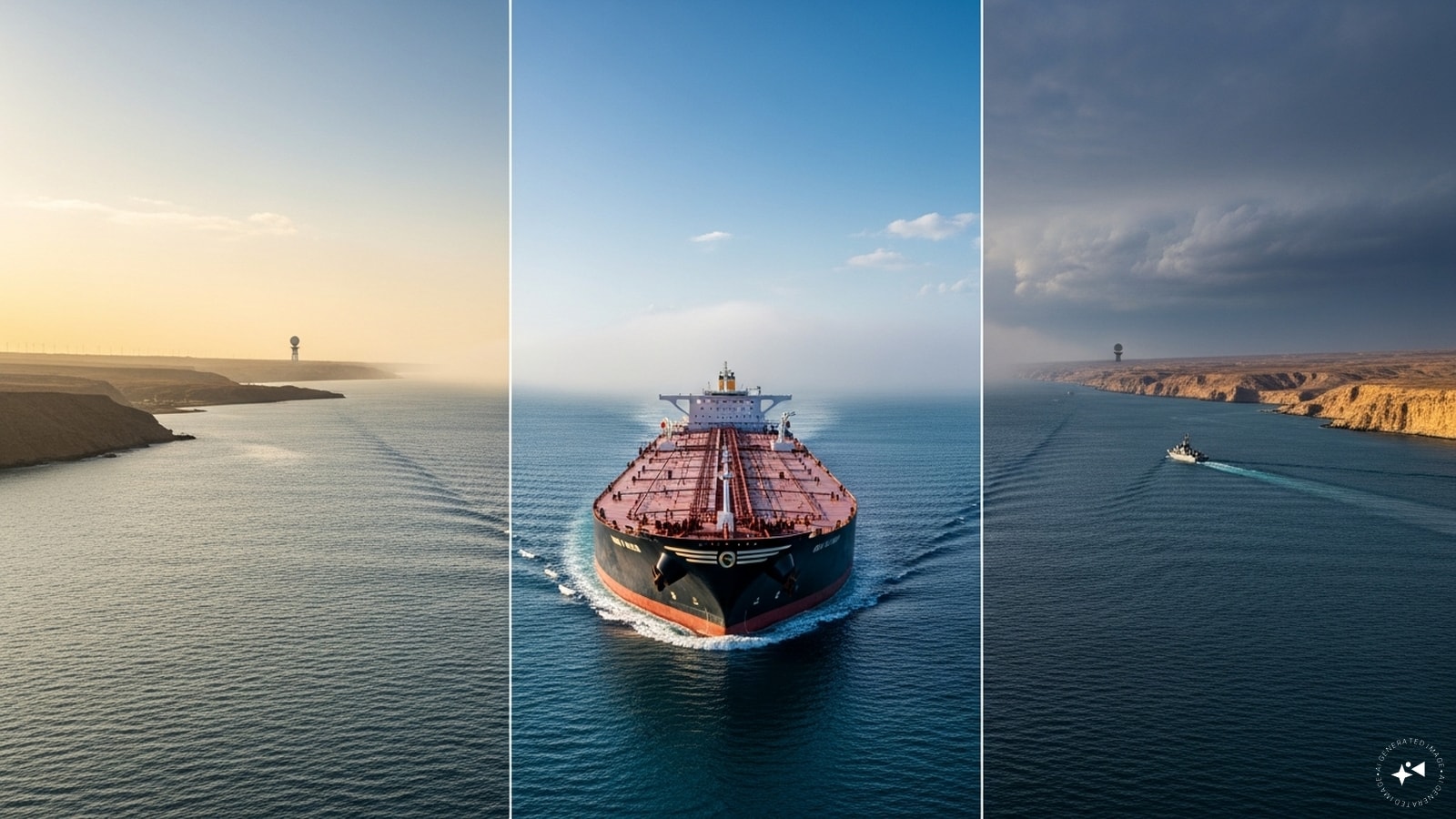
Geopolitical tourists treat the Strait of Hormuz like a garden gate you can simply lock. It isn't. The shipping lanes alone are two miles wide in each direction, separated by a two-mile buffer zone. The water is deep. The traffic is constant.
To actually "close" the Strait, a belligerent power would need to do more than sink a tanker or two. They would need to maintain total sea and air superiority against the combined naval might of the West and, increasingly, the interests of China.
Iran’s military strategy isn't based on a permanent blockade because they know it’s a suicide mission. Their goal is "harassment and delay." Harassment does not stop the flow of molecules; it just makes them more expensive to insure. We saw this during the "Tanker War" of the 1980s. Despite hundreds of ships being attacked, global oil supply didn't evaporate. Production actually increased.
If you're betting on a total shutdown, you're betting on a world where the laws of naval engagement and basic physics no longer apply.
The China Factor No One Mentions
The lazy consensus assumes the U.S. is the only cop on the beat. This isn't 1995.
China is the largest importer of Persian Gulf crude. If the Strait closes, the lights go out in Shanghai, not just Los Angeles. In fact, the U.S. is now a net exporter of petroleum. We have the Permian Basin; China has a massive, unquenchable thirst and a very thin margin for error.
Anyone who thinks Tehran will risk choking off the lifeblood of their only major geopolitical benefactor is delusional. Beijing doesn't do "solidarity" when its industrial base is at stake. The moment a blockade becomes a serious threat to Chinese GDP, the pressure on Iran becomes existential.
The real "scenario" isn't a Western-led intervention. It’s a quiet, brutal phone call from Beijing.
The Myth of the $200 Barrel
"Oil will double overnight!"
I’ve heard this in every trading room I’ve stepped into for two decades. It’s a convenient lie.
When prices spike on fear, demand destruction happens at a speed that AI models still struggle to track. We aren't in the 1970s. The global economy is significantly more energy-efficient. Furthermore, the "spare capacity" held by Saudi Arabia and the UAE isn't just a number on a spreadsheet; it’s a political weapon.
If the Strait is threatened, the incentive for non-Gulf producers to flood the market becomes irresistible. Every shale driller in West Texas is praying for a Hormuz disruption. The "missing" barrels from the Gulf would be partially offset by a massive release from the Strategic Petroleum Reserve (SPR) and an immediate ramp-up in North American production.
The market doesn't move in a straight line. It’s a feedback loop. High prices are the best cure for high prices.
Why the "Insurance Spike" is the Real Scam
If you want to see where the money is actually moving, stop looking at Brent futures and start looking at Lloyd's of London.
The "Hormuz Risk" is a goldmine for maritime insurers. They jack up "War Risk" premiums at the first sign of a speedboat in the Persian Gulf. This cost is passed down the chain, eventually hitting the pump.
This isn't a supply-and-demand issue; it’s a friction issue. The molecules are still moving. They are just moving under a more expensive piece of paper. If you’re trading the "crisis," you aren't trading oil; you’re trading the anxiety of insurance underwriters.
The Alternative Pipeline Reality
The "scenarios" you read in mainstream financial media often ignore that the Gulf states aren't stupid. They’ve spent billions building workarounds.
- The Habshan–Fujairah Pipeline: This allows the UAE to bypass the Strait entirely, moving 1.5 million barrels per day directly to the Gulf of Oman.
- The East-West Pipeline (Petroline): Saudi Arabia can shift roughly 5 million barrels per day toward the Red Sea.
While these don't cover the total volume of the Strait, they provide a massive safety valve. A "blockade" that only blocks 60% of the usual volume isn't a blockade—it's a bottleneck. And bottlenecks are solvable.
The Opportunity Cost of Fear
I have seen investors dump perfectly good equities and flee to "safe haven" assets the moment a headline mentions "Hormuz." This is a mistake.
The real threat to your portfolio isn't a temporary spike in energy costs. It’s the permanent loss of capital that comes from panic-selling based on a geopolitical trope.
The "Hormuz Question" is the ultimate distraction. It keeps you from looking at the real structural shifts in the market: the plateauing of Chinese demand, the rapid electrification of transport in the Global South, and the fact that the U.S. is now the world's swing producer.
Stop Asking "What If It Closes?"
The question itself is flawed. It assumes a binary outcome: Open or Closed.
The reality is a spectrum of "Annoyance."
- Level 1: Rhetoric and drills. (The current state).
- Level 2: Seizing a single tanker for "legal violations." (Market jitters, no real impact).
- Level 3: Limpet mines and "deniable" sabotage. (A 10% price bump that fades in three weeks).
Even in the darkest "Level 4" scenario, the global response would be so swift and lopsided that the disruption would be measured in days, not months.
The Strait of Hormuz is a psychological weapon, not a strategic one. It works because you believe it works. It’s the "boogeyman" of the energy sector—scary in the dark, but remarkably flimsy when you turn on the lights.
If you want to hedge against real risk, look at the crumbling infrastructure of the Russian oil fields or the political instability in Libya. Those are the quiet killers of supply. Hormuz is just theater.
Stop paying the "Fear Tax." The Strait is staying open because the world—including the people threatening to close it—simply cannot afford for it to shut.
Bet on the molecules, not the headlines.