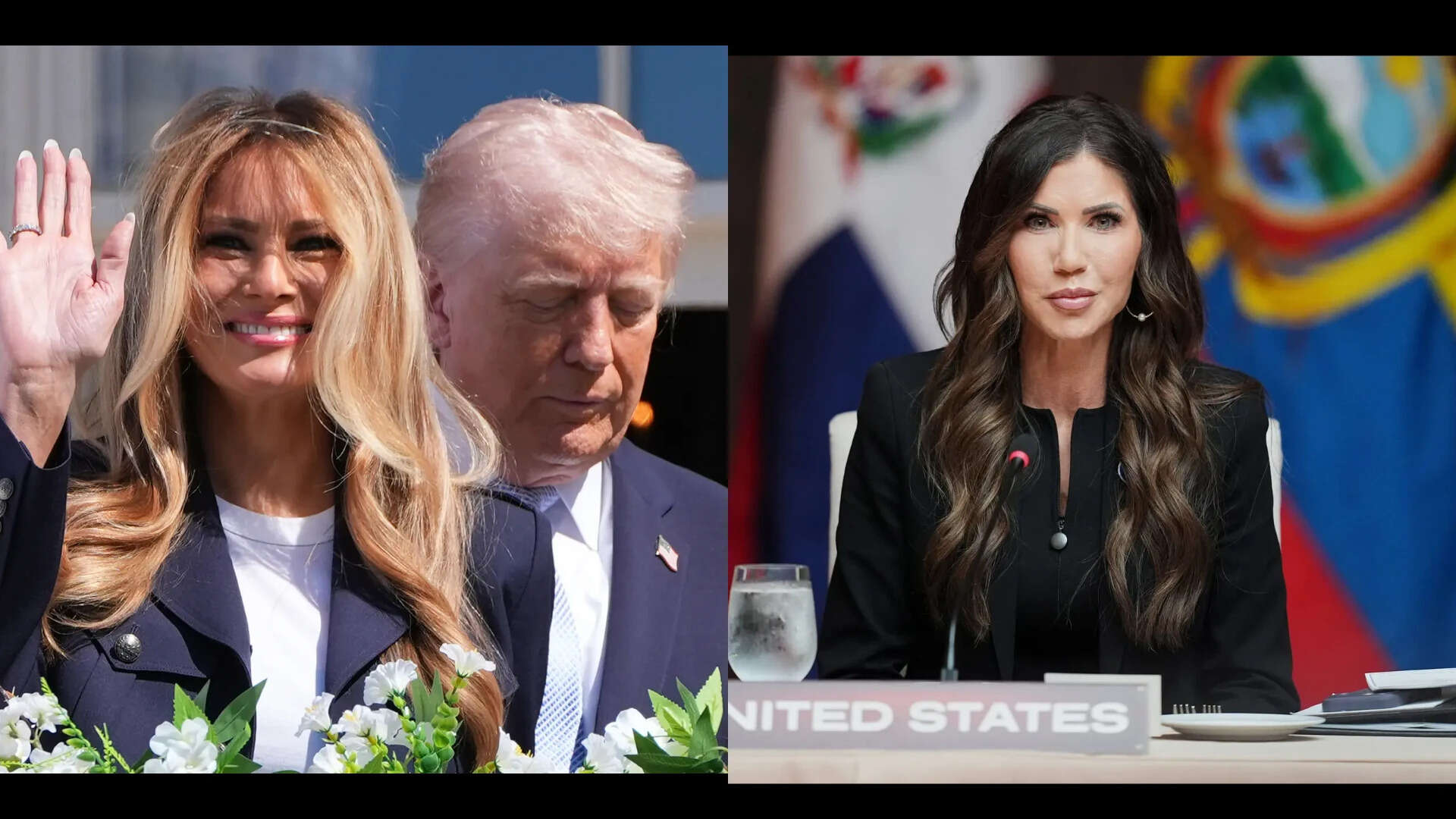
The utilization of a private $70 million Gulfstream G550 by Melania Trump represents more than a logistical convenience; it is a case study in private-sector asset integration within public-facing executive roles. Reports indicating that South Dakota Governor Kristi Noem’s state-owned or donor-supported aviation assets—specifically a high-capacity, long-range business jet—will be leveraged for the First Lady’s travel requirements highlight a shift toward non-traditional executive transport models. This arrangement bypasses standard military-industrial transport protocols in favor of a hybrid public-private logistical framework.
The Economic Architecture of the G550 Asset
A Gulfstream G550 occupies a specific niche in the ultra-long-range aviation market. Understanding the strategic value of this asset requires breaking down its three primary operational pillars: For a different look, read: this related article.
- Range and Global Reach: With a range of approximately 6,750 nautical miles, the G550 can connect city pairs such as New York and Tokyo or Washington D.C. and Dubai without refueling. This eliminates the "time-leakage" associated with technical stops, a critical metric for high-security executive transport.
- Operational Payload: The aircraft typically accommodates 14 to 19 passengers. In the context of a First Lady’s travel, this capacity is not for luxury but for the "Support Tail"—a term used to describe the essential staff, United States Secret Service (USSS) details, and communications specialists required for mobile operations.
- Avionics and Security Integration: The $70 million valuation reflects not just the airframe but the sophisticated PlaneView flight deck and potential for encrypted communication suites. For a First Lady, the aircraft must function as a mobile Secure Compartmented Information Facility (SCIF).
The cost function of operating such an asset is steep. Direct Operating Costs (DOC) for a G550 generally fluctuate between $4,500 and $6,000 per flight hour. This figure excludes the fixed costs of hangarage, insurance, and the specialized pilot training required for the G-V series. When a state executive like Noem provides access to this asset, the financial burden shifts from federal military budgets (which fund C-32 or C-37 aircraft) to a specialized state or donor-funded structure.
Logistics of the Support Tail and Secret Service Integration
The public often focuses on the principal passenger, but the true complexity lies in the integration of the USSS detail. The decision to use a $70 million jet is driven by the volume of personnel required to maintain a secure perimeter around the First Lady. Further insight regarding this has been shared by NBC News.
- The Advance Team: Before the aircraft touches down, a separate logistical chain has already established secure transport and communications at the destination.
- The On-Board Detail: A G550 allows for the segregation of the "Principal" from the "Working Group." This compartmentalization is essential for maintaining operational security (OPSEC) during long-haul flights.
- Technical Surveillance Countermeasures (TSCM): Any non-military aircraft used for First Lady travel must undergo rigorous sweeping for listening devices or unauthorized transmitters. Using a consistent, "friendly" asset like the one associated with the South Dakota executive office reduces the recurring cost and time associated with these security sweeps.
The Regulatory and Ethical Bottleneck
The intersection of state-owned assets and federal executive use creates a complex legal friction point. When a Governor provides an aircraft for a First Lady’s use, several regulatory frameworks collide:
Federal Election Commission (FEC) Compliance
If the travel is deemed political or related to a campaign, the costs must be reimbursed at the "charter rate" rather than the "commercial equivalent." For a G550, the market charter rate can exceed $10,000 per hour. Underestimating these costs creates significant legal exposure for both the donor and the recipient.
State-Level Asset Misuse Statutes
Most states have strict prohibitions against using taxpayer-funded assets for non-state business. The justification for Melania Trump’s use of Noem’s jet likely hinges on "intergovernmental cooperation" or "security necessity." If the aircraft was purchased through private donations to the state or a specific 501(c)(4) organization, the transparency requirements change, yet the optics of "asset sharing" remain a point of scrutiny.
The Gift Rule and Executive Ethics
Federal ethics rules generally prohibit the acceptance of gifts from "prohibited sources." However, an exception often exists for gifts to the government. By framing the aircraft use as a "loaned asset" to the Office of the First Lady, the legal team can bypass personal gift restrictions, though this requires a rigorous paper trail to ensure no personal benefit is derived by the Trump family outside of official duties.
Comparison of Transport Tiers
To understand why a $70 million jet is the chosen instrument, one must compare the available tiers of transport:
- Tier 1: USAF C-32 (Boeing 757): Maximum security, maximum cost. Used for the Vice President and First Lady on high-risk international missions. The hourly cost is exponentially higher than private variants due to the inclusion of military flight crews and mid-air refueling capabilities.
- Tier 2: USAF C-37A/B (Gulfstream V/G550): The military version of the jet in question. While efficient, the availability of these airframes is limited by the needs of the Joint Chiefs of Staff and other cabinet members.
- Tier 3: Private/State Assets (The Noem Model): Provides the same airframe performance as Tier 2 but with greater scheduling flexibility. This model allows the First Lady’s office to bypass the Department of Defense (DoD) scheduling queue, which is often congested with high-priority military movements.
Risk Management and Operational Redundancy
The primary risk in this arrangement is the "Single Point of Failure" in the PR and Legal domain. Relying on a single state executive’s asset ties the First Lady’s mobility to that executive’s political standing and legal compliance. If Noem’s office faces an audit or a change in state leadership, the transport agreement could vanish instantly, leaving the First Lady’s office without a primary long-range transport solution.
Furthermore, the operational maintenance of a G550 is specialized. Unlike a standard commercial fleet, parts for a Gulfstream often require global logistics chains. The "Noem Jet" must be maintained to Part 135 (commercial) or Part 91 (private) standards, which are stringent but differ from the rigorous maintenance cycles of the 89th Airlift Wing at Andrews Air Force Base. This introduces a slight, but quantifiable, variance in mechanical reliability compared to military-maintained aircraft.
Strategic Recommendation for Executive Transport
The Office of the First Lady should move toward a "Contracted Charter Multi-Asset" model rather than a "Single State Partnership." While the G550 provided by Noem offers immediate capability, the strategic play is to establish a revolving set of vetted, privately-held assets that meet USSS security specifications. This diversifies the legal risk and prevents the "political capture" of the First Lady’s travel schedule by any single state politician.
The audit trail for every flight hour must be digitized and accessible to ethics counsel in real-time. By pricing each flight at the higher end of the Part 135 market rate and ensuring immediate reimbursement from the appropriate fund (Personal, Campaign, or Government), the office can insulate itself from the inevitable accusations of "dark money" aviation. The G550 is the correct tool for global influence; the method of acquisition is the variable that requires the most aggressive management.



