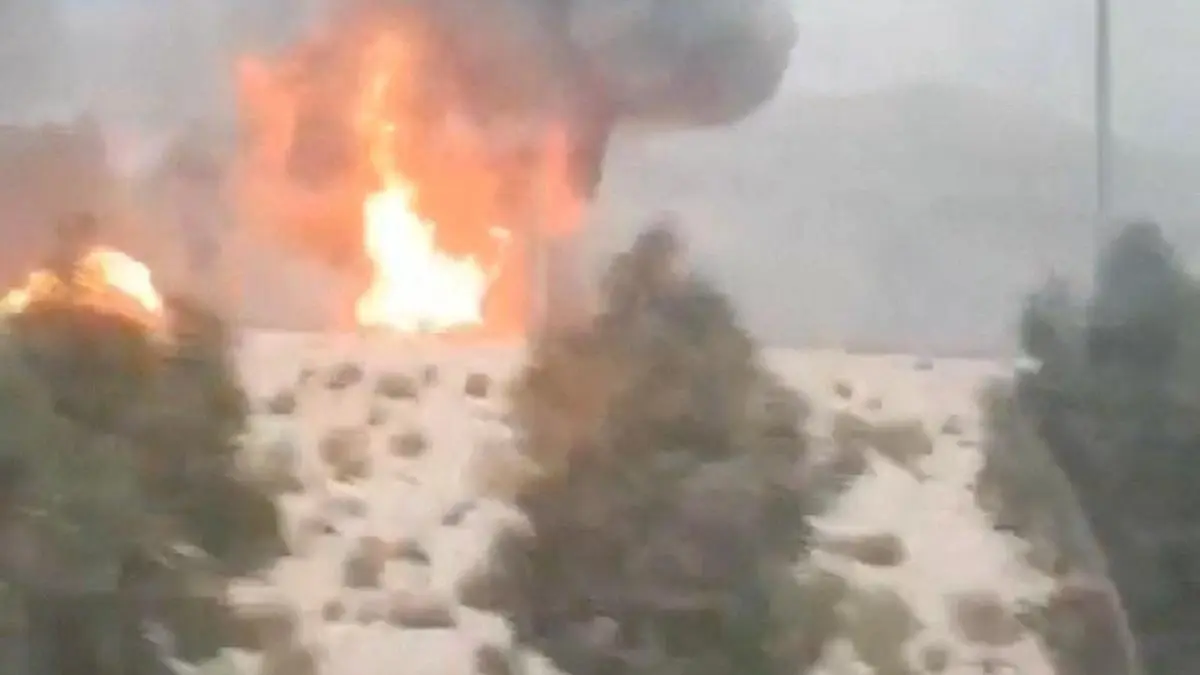
The South Pars/North Dome field represents the largest non-associated gas accumulation on earth, but for the Iranian state, it has transitioned from a primary revenue driver to a singular point of failure. While conventional geopolitical analysis treats the complex as an "energy lifeline," a structural audit reveals it is a rigid bottleneck. Iran’s domestic energy architecture is characterized by a high-concentration risk: over 70% of the nation’s total natural gas production originates from this single maritime coordinates. This density creates a strategic paradox where the very asset that provides national stability also functions as the most efficient lever for external kinetic or economic disruption.
The Mechanism of Total Dependency
Iran’s reliance on South Pars is not merely a matter of export volume; it is the fundamental input for the country's entire industrial and civil metabolic processes. The integration of this gas into the national grid follows a non-linear risk model. If production at South Pars drops by a margin of 20%, the systemic shock does not scale proportionally—it triggers a cascade of failures across three critical sectors:
- The Power Generation Vector: Roughly 80% of Iran’s electricity is generated via thermal power plants. Because these plants are increasingly optimized for natural gas, a disruption at the source necessitates a switch to low-quality fuel oil (mazut), which accelerates turbine degradation and yields prohibitive environmental and maintenance costs.
- The Industrial Feedstock Loop: The petrochemical and steel industries—Iran's primary non-oil export earners—depend on methane as both a caloric heat source and a chemical reactant. Without the specific flow rates guaranteed by South Pars, these industries face immediate stagnation, cutting off the state’s access to hard currency.
- The Residential Heating Mandate: During winter months, domestic consumption spikes to nearly 700 million cubic meters per day. The political cost of failing to meet this demand is higher than the economic cost of industrial shutdowns. Consequently, any supply contraction forces the state to cannibalize its industrial sector to prevent civil unrest.
Structural Constraints of the North Dome-South Pars Interface
The field is shared with Qatar, which manages the North Dome side of the reservoir. This creates a "common pool" extraction problem governed by pressure dynamics. As Qatar utilizes advanced pressure-maintenance technologies and modular liquefaction (LNG) facilities, the reservoir's overall pressure declines.
Iran lacks the specific compression technology required to maintain extraction rates as reservoir pressure drops. The technical deficit is the result of long-term capital flight and technology sanctions. To maintain current output, Iran requires massive investment in offshore compression platforms—structures that weigh upwards of 20,000 tons—which it cannot currently manufacture or install domestically. This creates a terminal decline curve. Every year that Iran fails to install these platforms, the "deliverability gap" widens, making the country's energy lifeline increasingly brittle.
The Geography of Vulnerability
The concentration of infrastructure within the Assaluyeh and Kangan zones creates a target-rich environment for kinetic disruption. Unlike a distributed energy network, South Pars relies on a centralized gathering system.
- Gathering Platforms: Dozens of offshore platforms are linked by subsea pipelines to the mainland. These pipelines are vulnerable to subsurface interference and are difficult to repair under active conflict conditions.
- Onshore Processing Facilities: The 24 phases of South Pars feed into a series of massive refineries along the coast. These facilities are high-pressure, high-temperature environments. A single precision strike on a de-ethanizer or a sulfur recovery unit doesn't just halt production; it can cause catastrophic thermal events that render the entire phase offline for years.
- The Strait of Hormuz Bottleneck: While much is made of oil tankers, the condensate—a high-value liquid byproduct of gas extraction—must be exported via the same narrow waterway. If condensate storage tanks at Assaluyeh reach capacity because exports are blocked, gas production must be throttled to prevent system overpressure, even if the domestic market is starving for fuel.
The Capital-Tech Bottleneck
The "lifeline" narrative ignores the accelerating depreciation of the South Pars assets. Strategic analysis must account for the Marginal Cost of Maintenance (MCM). In a sanctioned environment, the cost of sourcing specialized components (pumps, compressors, control systems) through gray markets adds a "sanction premium" of 20% to 40%.
Furthermore, the absence of Tier 1 international oil companies (IOCs) has resulted in a "knowledge debt." Modern reservoir management requires real-time 4D seismic monitoring and advanced horizontal drilling techniques to navigate the complex Kangan and Dalan formations. Iran’s domestic firms, while capable of basic operations, struggle with the sophisticated intervention required to arrest water encroachment—a phenomenon where water enters the wellbore as gas is depleted, effectively killing the well.
Economic Distortion and the Subsidy Trap
The Iranian government provides gas to its citizens at some of the lowest prices globally. This creates a demand-side distortion that is impossible to satisfy.
- Consumption Inefficiency: Because gas is nearly free, there is zero incentive for industrial or residential efficiency. This leads to a per-capita consumption rate that rivals the most developed economies despite a lower industrial output per unit of energy.
- Fiscal Erosion: The state is trapped. It cannot raise prices without risking social volatility, yet it cannot afford the infrastructure upgrades needed to sustain the supply for the very people it is subsidizing. South Pars is essentially subsidizing a systemic inefficiency that drains the national treasury.
The Asymmetric Warfare Calculation
In a conflict scenario, South Pars transitions from a strategic asset to a hostage. An adversary does not need to invade or occupy Iranian territory to neutralize its economy. They only need to disrupt the flow of gas for a period of 14 to 21 days.
The immediate result would be a nationwide blackout. Without gas, the electrical grid collapses. Without electricity, water pumping stations fail, telecommunications go dark, and the ability to coordinate a military or civil response is compromised. This is the definition of a "critical node" in systems theory. The centralized nature of the South Pars infrastructure allows an opponent to achieve strategic effects with minimal kinetic effort.
Deliverability vs. Reserves
Misinformation often centers on Iran’s "massive reserves." Reserves are a theoretical measure of what is in the ground; deliverability is the measure of what can be put into a pipe today. Iran’s deliverability is peaking.
Within the next 36 to 60 months, without a massive infusion of foreign technology—specifically from the likes of TotalEnergies or Shell, who have since exited—the South Pars field will enter a period of natural decline. The pressure is dropping by approximately 7 psi per year in certain sectors. Once pressure falls below the "dew point," heavy hydrocarbons condense within the reservoir, permanently blocking the flow of gas. This is a geological reality that cannot be countered by political rhetoric or domestic workarounds.
Strategic Requirement for Systemic Redundancy
The only path to mitigating the South Pars dependency is a radical decentralization of the Iranian energy mix, which currently appears functionally impossible under the current political-economic framework.
- Diversification of Feedstock: Shifting the power sector toward solar and nuclear would alleviate the "gas-to-power" bottleneck. However, the capital expenditure for such a transition is currently unavailable.
- LNG Storage and Floating Regasification: To create a buffer against South Pars disruptions, Iran would need significant gas storage capacity. Currently, its underground storage facilities (like Shourijeh and Sarajeh) can only hold a few days' worth of peak winter demand.
- Cross-Border Integration: Integrating the grid with neighbors (like Turkmenistan) provides a theoretical safety valve, but these relationships are often fraught with payment disputes and political friction, as seen in previous winter supply cuts from the Turkmen side.
The Iranian state must prioritize the acquisition of offshore compression technology over the expansion of new phases. The strategic priority is no longer growth; it is the management of decay. Failure to secure the hardware necessary to maintain reservoir pressure will result in a "hard landing" for the Iranian economy, where the South Pars lifeline becomes a tether that pulls the rest of the industrial base into a state of permanent contraction. The focus must shift from nominal production figures to the preservation of system pressure, as pressure is the literal and metaphorical force sustaining the state's viability.
The tactical move is the immediate reallocation of all available foreign currency toward the domestic manufacture of high-spec compression modules, even at the cost of delaying other regional military or political objectives. Without this, the South Pars complex will become a monument to stranded assets within the decade.