Geopolitical shocks rarely unfold as isolated tactical events. When strikes target military infrastructure across multiple sovereign territories, the underlying mechanism is not random aggression but a calibrated signal within a broader deterrence framework. The reported operational actions affecting United States military installations in Bahrain, Kuwait, and Jordan require a structural breakdown beyond surface-level reporting. Observers frequently misinterpret these incidents as sudden anomalies, missing the systemic variables that govern modern asymmetric state conflict.
Understanding this crisis demands examining the tripartite structure of regional basing architecture, the cost function of missile and drone saturation, and the diplomatic secondary effects that constrain the responses of host nations.
The Structural Vulnerability of Forward Posture
Forward military basing relies on proximity to zones of potential friction, but proximity introduces acute geographic exposure. The United States maintains a network of installations across the Persian Gulf and the Levant, designed historically to project power, ensure maritime security, and deter state-level adversaries.
These installations operate under specific structural constraints:
- Fixed Coordinates: Permanent or semi-permanent bases possess static geometry. Their runways, fuel depots, command bunkers, and radar arrays cannot be relocated in response to rising threat levels, creating permanent targets for precision munitions.
- Host Nation Sovereignty Friction: Facilities located within countries like Bahrain, Kuwait, and Jordan are subject to local political permissions. Host governments constantly balance the security guarantees provided by American presence against the domestic political fallout of being drawn into wider regional conflicts.
- Logistical Dependency: These hubs are consumption nodes that require continuous resupply of defensive interceptors, spare parts, and personnel rotation. Interruptions in regional airspace safety degrade the operational readiness of these hubs independently of physical damage from direct strikes.
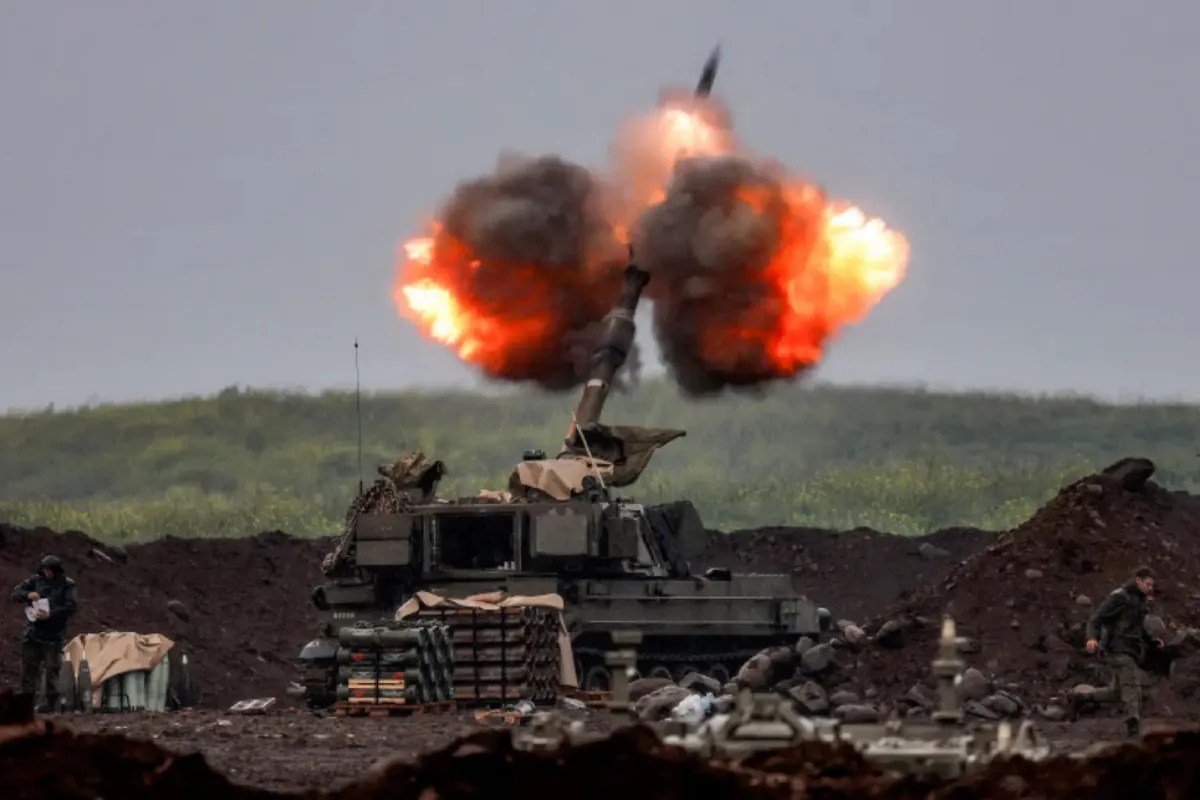
When state or non-state actors execute kinetic operations against these nodes, the objective is rarely total physical destruction. The primary goal is raising the operational friction for the host nations and the United States, forcing a re-evaluation of the utility of maintaining such a dense forward footprint.
The Economics of Saturation and Defense
Evaluating the effectiveness of these attacks requires analyzing the economic asymmetry of modern missile warfare. Defensive architectures such as Patriot batteries, terminal high altitude area defense systems, and localized point-defense networks are finite, expensive, and difficult to rapidly replenish.
The math of modern interception creates a distinct financial and strategic burden:
- Asymmetric Cost Generation: Low-cost uncrewed aerial vehicles and baseline ballistic munitions force defenders to expend high-value interceptor missiles whose unit costs dwarf the offensive weapons by orders of magnitude.
- Depletion Thresholds: Sustained pressure over a multi-day operational tempo strains supply chains. Even a low success rate for incoming munitions forces defenders into a reactive posture, where the risk of a single defensive saturation event outweighs the high probability of intercepting individual targets.
- Radar Signature and Early Warning Limits: The geographic proximity of launch sites to target installations compresses decision windows. Command elements must authorize defense systems within seconds, increasing the risk of misidentification, friendly fire, or catastrophic failure to engage.
This economic reality explains why secondary regional actors continue to employ these tactics despite facing overwhelming retaliatory capabilities. The logic is designed around exhaustion rather than immediate battlefield dominance.
Host Nation Calculus and Diplomatic Contradictions
The nations hosting these installations face acute diplomatic dilemmas. Kuwait, Bahrain, and Jordan occupy distinct geopolitical positions that dictate their risk tolerance and public messaging regarding strikes on foreign bases within their borders.
Bahrain hosts the headquarters of the United States Fifth Fleet, making its economy and internal security deeply entwined with American naval power projection. Kuwait serves as a crucial logistics and staging ground for land operations, maintaining formal defense agreements dating back decades. Jordan occupies a buffer position between the Levant and the Arabian Peninsula, relying heavily on foreign aid and security assistance while managing a domestic population highly sensitive to regional conflicts.
When these territories experience kinetic impacts or successful penetrations of their airspace, local governments face a bifurcated pressure matrix:
- External Security Reliance: Reducing or expelling foreign military presence risks exposing these states to predatory regional pressure from larger adversaries.
- Internal Legitimacy Protection: Allowing foreign forces to use domestic soil for offensive operations—or failing to prevent foreign strikes from landing—invites domestic unrest, extremist radicalization, and economic destabilization.
Consequently, official statements from these capitals often emphasize defensive readiness, sovereignty protection, and diplomatic de-escalation while quietly coordinating counter-measures with Washington. This creates a friction point where public posturing diverges sharply from operational reality.
Operational Assessment and Strategic Horizon
The recurrence of multi-theater strikes against forward-deployed assets signals a permanent shift in modern deterrence theory. Traditional deterrence assumed that overwhelming conventional military superiority would prevent adversaries from initiating direct kinetic actions against major power assets.
Current dynamics demonstrate that middle-tier powers and non-state networks have operationalized gray-zone tactics to bypass this barrier. By keeping actions below the threshold that triggers total systemic war, they impose chronic strategic costs on the United States and its allies.
Future stability in these corridors depends entirely on whether defensive technology can achieve cost parity with mass-produced offensive munitions, and whether regional diplomacy can establish durable de-confliction channels. Until the economic equation of interception changes, forward bases will remain high-risk, high-cost assets requiring continuous force-protection evolution.
Execute comprehensive hardening of critical command nodes, accelerate the deployment of directed-energy and low-cost interceptor alternatives to restore cost parity, and transition regional posture toward distributed, mobile basing frameworks that minimize the strategic value of fixed geographic targets.