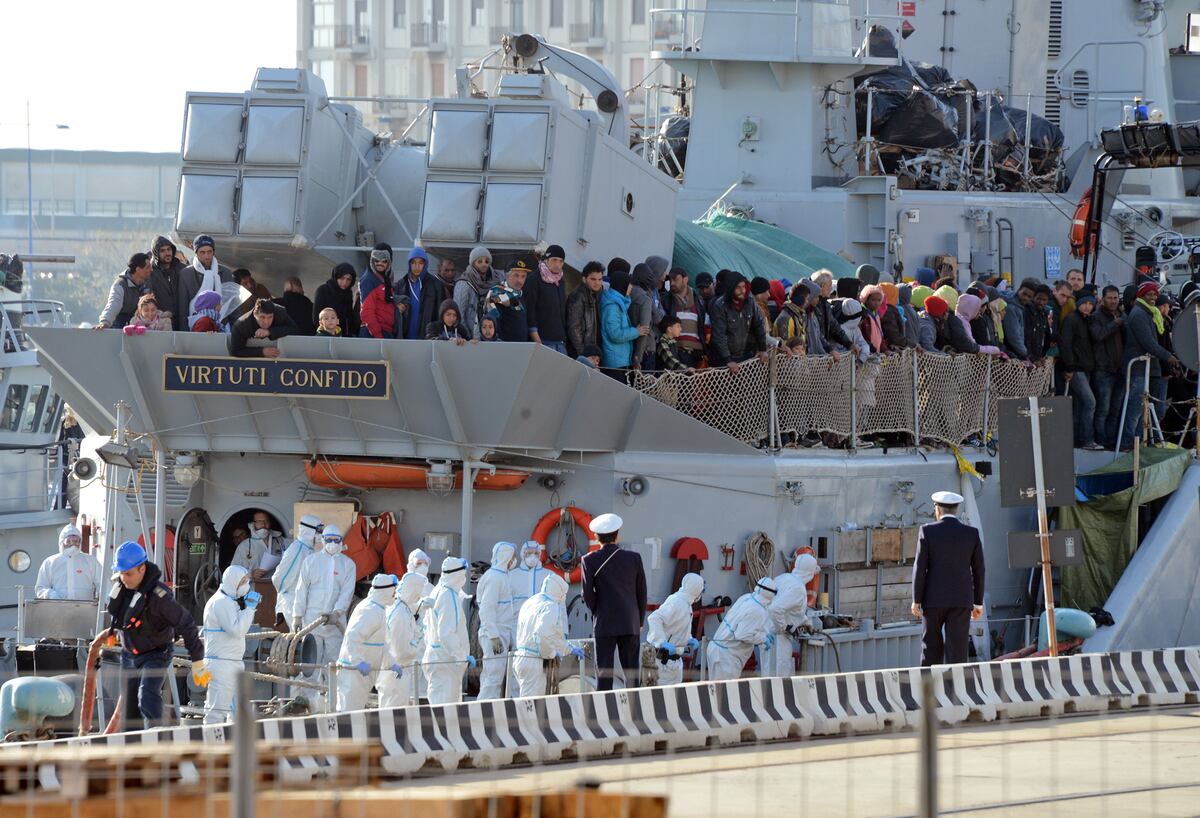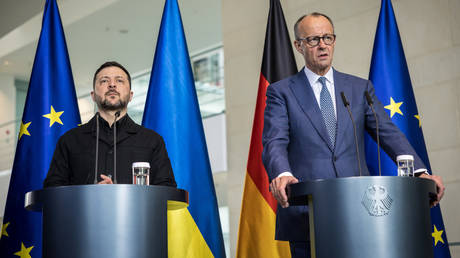
The debate surrounding the repatriation of military-age Ukrainian males currently residing in Germany centers on a friction point between sovereign defense requirements and the protection of international refugee status. Chancellor Friedrich Merz’s administration faces a complex optimization problem: balancing the integrity of the European social safety net against the strategic imperatives of an ally engaged in a conflict of attrition. This issue is not merely a diplomatic friction; it is a question of legal threshold, demographic capacity, and international burden-sharing.
The Tripartite Framework of Mobilization Pressure
Analyzing the movement of individuals from a host nation back to a conflict zone requires a breakdown of the three primary vectors: legal constraints, fiscal impact, and moral legitimacy.
The Legal Threshold of Protection: Current European Union policy, specifically the Temporary Protection Directive, provides a baseline of residency and work rights for displaced Ukrainians. The revocation of these rights requires a fundamental shift in the interpretation of "safety" in the country of origin. Proponents of repatriation argue that certain regions of Ukraine currently maintain sufficient stability for civilian life, thus transitioning the status of these individuals from "war refugee" to "economic migrant." This distinction is the bedrock of any legal argument for repatriation.
Fiscal and Demographic Trade-offs: Germany’s labor market possesses a high absorption capacity for skilled workers, yet there is a tension between filling domestic labor gaps and supporting the human capital needs of Ukraine’s defense. The fiscal cost of maintaining social support systems for millions of displaced persons is a measurable line item in the federal budget. When weighed against the potential contribution these individuals might make toward the Ukrainian war effort, the opportunity cost becomes an active variable in Berlin’s administrative planning.
Strategic Alignment and Diplomatic Cohesion: The relationship between Berlin and Kyiv dictates that the political cost of failing to assist in mobilization efforts must be reconciled with the risk of fracturing internal social consensus. If the German government takes a hardline stance, it risks alienating domestic constituents who favor humanitarian priorities, while failure to cooperate could be perceived by the Ukrainian leadership as a lack of commitment to the overarching strategic goal of military resilience.
Mechanisms of Enforcement and the Sovereignty Bottleneck
The execution of any policy aiming to facilitate the return of military-age men involves significant operational hurdles. Sovereignty acts as the ultimate filter in this process. A nation cannot unilaterally force a foreign national back to a third country without the active cooperation of the destination state and the exhaustion of due process.
The bottleneck here is not just political will; it is procedural capacity. Deportation or incentivized repatriation involves complex verification. Authorities must determine:
- Military Status: Distinguishing between those currently eligible for active duty and those exempt due to physical, medical, or family-status criteria.
- Residency Validity: Auditing the current employment status of individuals to see if their presence in the German workforce overrides the strategic demand for their mobilization.
- Right of Appeal: The German legal system provides robust mechanisms for individuals to contest changes in their residency status. Any broad-stroke policy faces years of litigation, which effectively neutralizes the immediate military benefit to the Ukrainian state.
Resource Allocation and International Law
The international law governing this situation is anchored in the Geneva Convention regarding the treatment of refugees. The principle of non-refoulement—the prohibition against returning individuals to a country where they face a credible threat to their lives—is the primary constraint.
To bypass or legally navigate this, the administration must establish that a safe harbor exists within Ukraine. This involves a geographic analysis of risk, mapping areas where the intensity of conflict is low enough to satisfy international humanitarian standards. From an analytical standpoint, this creates a "zonal classification" approach to refugee status. Rather than treating Ukraine as a monolithic conflict zone, the policy would require granular, city-by-city assessments of safety.
Operational Constraints on Repatriation
There is a significant information asymmetry between the German federal authorities and the Ukrainian recruitment offices. Without a synchronized data-sharing architecture, the German state lacks the capability to verify which individuals are actually sought by the Ukrainian military and which are merely subject to general conscription laws.
Building this infrastructure requires:
- Unified Database Integration: Establishing a secure channel for cross-referencing residency permits with specific mobilization lists provided by Kyiv.
- Incentive Structures vs. Compulsion: Economic theory suggests that forced repatriation produces diminishing returns due to the cost of enforcement and the resulting social friction. An alternative model involves the restructuring of social support payments to incentivize voluntary relocation. By shifting benefits from direct cash transfers to reintegration grants within Ukraine, the German government could potentially achieve higher participation rates with lower administrative overhead.
The Limits of Diplomatic Leverage
The assertion that hosting refugees is a form of passive support for the aggressor is a political argument, not a strategic one. The actual impact on the conflict depends on the professional background of the individuals in question. If the demographic of displaced men is skewed toward those with specialized military training or high-demand technical skills, their return to the theater of operations could alter the tactical landscape. If, however, the cohort is primarily civilian, the marginal gain for the Ukrainian defense is minimal, while the social cost of displacement in Germany remains high.
Strategic Recommendation
The German government should move away from the rhetoric of forced repatriation and toward a "Labor and Defense Synchronization" model. This involves the following tactical sequence:
- Conduct a comprehensive census of the demographic profile of military-age Ukrainian males currently under state support, specifically categorizing by professional skill sets and military specialization.
- Implement a bilateral, opt-in reintegration program that facilitates return for those with critical technical skills, providing financial and logistical support that is tied to their re-integration into the Ukrainian economy or civil defense apparatus.
- Formalize the criteria for "safe zone" residency within Ukraine, effectively ending the indefinite extension of blanket protection for individuals whose residency status is predicated on conflict-driven displacement.
- Shift the administrative focus from deportation to the cessation of social support for those who decline, under defined legal frameworks, to return or transition to alternative long-term work-permit status.
This shift replaces the binary of "stay or go" with a tiered system of engagement that preserves the human rights of the individuals while aligning the residency of Ukrainian nationals with the objective security requirements of both the host nation and the partner state.