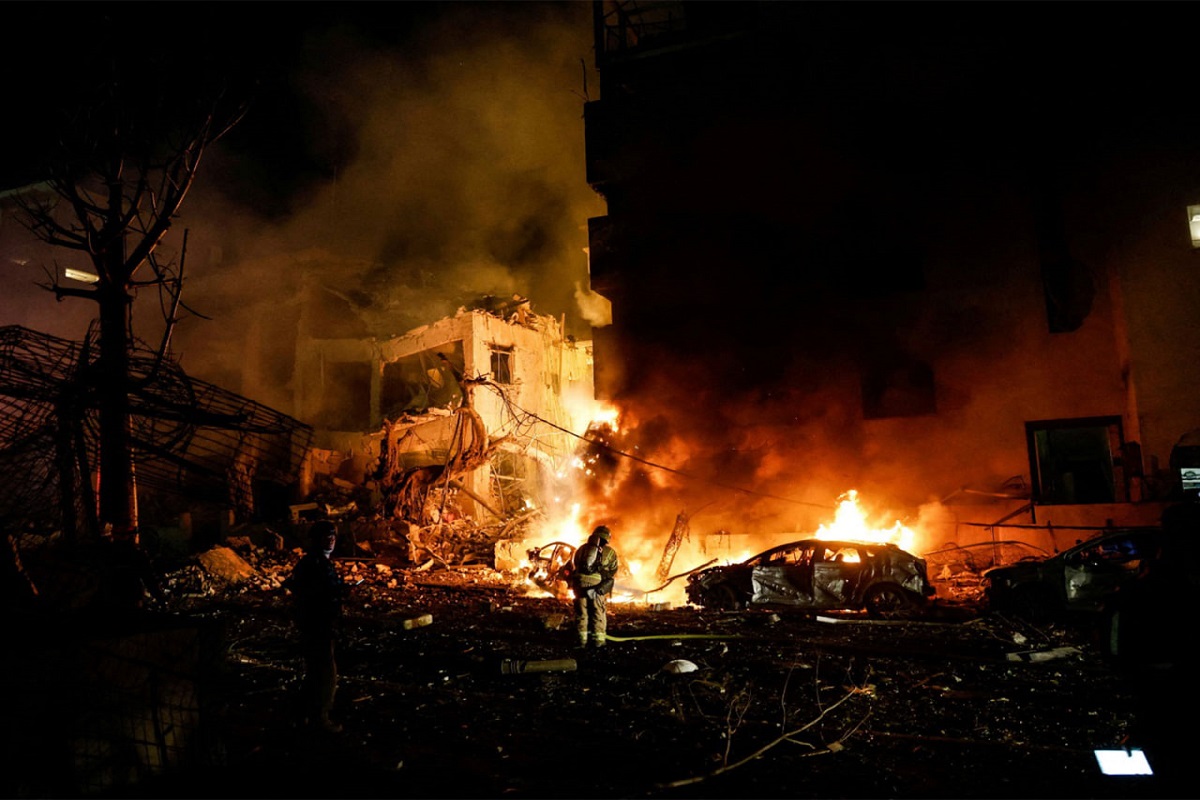
Military operations of this scale are never accidental. When the Israeli Air Force launched its multi-wave assault on Iranian missile production facilities and air defense batteries, the timing—early Saturday morning—was a calculated intersection of psychological warfare, religious observance, and raw tactical necessity. While casual observers might view the choice as a simple nod to the Jewish Sabbath or the Iranian weekend, the reality is far more clinical. Tel Aviv and Washington coordinated this window to exploit specific vulnerabilities in Iran’s domestic alertness while simultaneously managing the risk of a regional conflagration.
The strike hit at approximately 2:00 AM in Tehran. This is the dead of night during the transition from Friday to Saturday, a period when the Iranian military bureaucracy is at its most sluggish. By selecting this window, planners ensured that the initial shockwave would hit before the Iranian leadership could effectively mobilize a PR response or a counter-strike. It forced the Islamic Revolutionary Guard Corps (IRGC) to react in a state of sleep-deprived confusion.
The Sabbath Shadow and Tactical Deception
The most immediate theory regarding Saturday strikes often centers on the Jewish Sabbath. From a traditionalist perspective, an attack during Shabbat carries a certain irony, but for military planners, it serves as a potent tool for operational security. In the hours leading up to the strike, Israel remains in a state of ritual stillness. Domestic activity slows down. For foreign intelligence services monitoring Israeli troop movements or communications chatter, the quiet of the Sabbath can act as natural camouflage.
It is a classic "hide in plain sight" maneuver. If the IAF is preparing for a massive sortie, the lack of general civilian movement in Israel makes it harder for ground-level informants to spot the tell-tale signs of a nation going to war.
Furthermore, the Iranian weekend begins on Friday. By the time Saturday morning rolls around, the administrative and logistical gears of the Iranian state have been locked for over twenty-four hours. This creates a "response lag." When missiles are flying, every second spent waking up a commander or waiting for a decrypted order to reach a surface-to-air missile battery is a second that Israel uses to finalize its mission and exit the airspace.
Technical Superiority in the Dark
The decision to strike at night isn't just about catching people in bed. It is about the physics of modern warfare. Israel’s fleet of F-35 "Adir" stealth fighters and F-15I Ra'am jets are designed to own the night. Their synthetic aperture radar and thermal imaging systems allow them to pick out targets with terrifying precision regardless of visibility.
Iran’s air defense network, centered around the aging S-300 systems and various domestic iterations like the Bavar-373, struggles significantly more in a high-electronic-warfare environment during nighttime hours. By striking on a Saturday morning before dawn, Israel maximized its technological edge. The darkness provides a visual layer of protection against manual anti-aircraft fire, while Israeli jamming pods do the heavy lifting against the radar-guided threats.
The mission profile likely involved:
- Suppression of Enemy Air Defenses (SEAD) to blind Iranian radar.
- Precision strikes on solid-fuel mixing plants for ballistic missiles.
- Long-range standoff munitions launched from outside Iran's immediate borders to minimize risk to pilots.
Managing the Escalation Ladder
Washington’s fingerprints are all over the timing of these operations. The United States has a vested interest in ensuring that any Israeli retaliation does not spiral into a total energy crisis or an all-out regional war that would drag American boots onto the ground.
By striking on a Saturday, the global financial markets are closed. This is a critical, often overlooked detail in geopolitical strategy. If Israel had leveled Iranian facilities on a Tuesday morning, the immediate "fear spike" in oil prices would have sent Brent Crude through the roof within minutes. Such a shock could destabilize Western economies and create immediate political pressure on the White House.
A Saturday strike provides a forty-eight-hour "cooling off" period. By the time the markets open on Monday, the initial panic has been replaced by cold analysis. The world has time to see that the oil fields were spared and the nuclear sites remained untouched. This temporal buffer is a gift to economists and a leash on volatility.
The Psychological Toll of the Weekend Strike
There is a profound psychological weight to being attacked when you are supposed to be at rest. The Iranian population, already strained by economic sanctions and internal dissent, woke up to the sound of explosions during what should have been their quietest hours. This reinforces a specific narrative: the state cannot protect you, even in your most private moments.
For the IRGC, the Saturday strike is a humiliating reminder of the intelligence gap. It suggests that Israel knew exactly when the guard would be down. It implies that the Mossad or other intelligence agencies have a clear view of the Iranian military’s internal shift schedules and readiness protocols.
The Infrastructure of a Multi-Wave Assault
This wasn't a single "hit and run" job. Reports indicate multiple waves of attacks over several hours. This requires a level of loitering capability and mid-air refueling that is difficult to execute under the best of conditions.
Wave One: The Blinding
The first targets were almost certainly the "eyes" of the Iranian military. Radar stations in Syria and Iraq were reportedly hit first to clear a "corridor" for the strike package. Without these early warning systems, the Iranian interior was left vulnerable.
Wave Two: The Castration
The second wave focused on the production of the very missiles Iran uses to threaten Israel. By hitting the mixing plants used for solid-fuel engines, Israel didn't just destroy existing weapons; they destroyed the ability to build new ones for years to come. This is a long-term strategic neutering rather than a short-term tactical victory.
Wave Three: The Warning
The final wave served as a demonstration of reach. By hitting targets near Tehran, Israel proved that no part of the capital is off-limits. The timing ensured that as the sun rose on Saturday, the smoke rising from the outskirts of the city would be visible to everyone, from the supreme leader to the average citizen.
The Myth of the "Unexpected" Attack
While the media often portrays these events as "surprising," the reality is that the U.S. and Israel had been telegraphing this move for weeks. The deployment of the THAAD (Terminal High Altitude Area Defense) system to Israel by the U.S. was the final piece of the puzzle. It acted as a safety net, allowing Israel to strike with the knowledge that any immediate Iranian ballistic response would be met by the world's most advanced interceptor tech.
The "shock" wasn't that the strike happened, but that it was so surgically targeted. By avoiding the oil refineries at Abadan and the nuclear enrichment facilities at Natanz, Israel followed a script written in D.C. It was an attack designed to hurt the Iranian military's pride and capability without forcing the regime into a corner where its only option was a suicidal escalation.
Intelligence Dominance as a Weapon
The success of a Saturday strike depends entirely on "Human Intelligence" (HUMINT) and "Signals Intelligence" (SIGINT). You don't fly 100 aircraft over 1,000 miles unless you are certain the enemy's finger is off the trigger.
The choice of Saturday reveals that Israel has likely compromised Iranian internal communications to the point where they can predict response times with mathematical certainty. They knew which commanders would be away from their posts and which units were under-strength due to the weekend rotation. This isn't just a military strike; it's a display of total information dominance.
In the aftermath, the Iranian state media's initial reaction was to downplay the damage, claiming most "projectiles" were intercepted. This is a standard face-saving maneuver. However, satellite imagery in the coming days will tell a different story. The charred remains of expensive S-300 batteries—Russia’s premier export—will serve as a silent testament to the failure of Iranian defenses.
The Saturday strike has set a new baseline for the "shadow war" between Jerusalem and Tehran. It moved the conflict from the shadows of cyber-attacks and assassinations into the glaring light of overt kinetic warfare. The message sent was clear: the calendar is as much a weapon as the missile, and there is no day of the week where the Iranian military is truly safe.
Analyze the satellite passes over the Parchin military complex in the next 72 hours; the precision of the craters will reveal exactly how much of Iran's ballistic future was erased while the city slept.


