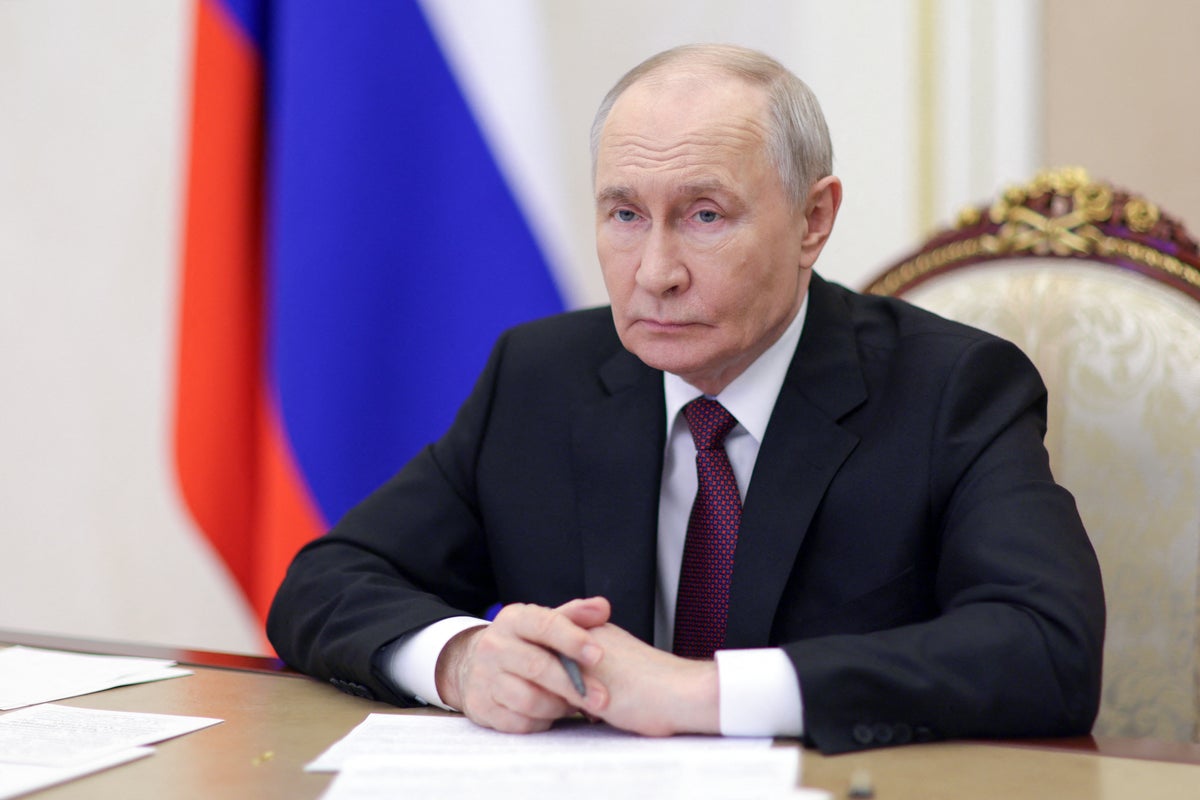
Signals of diplomatic flexibility from Moscow are flashing with increasing frequency. When a state traditionally reliant on unyielding coercion suddenly signals an opening for negotiations, western policy circles face a dangerous temptation to misread the moment. The assumption that a battered adversary is offering an off-ramp out of exhaustion often blinds strategists to the structural realities of protracted conflict. Moscow is not looking for a way out. It is looking for a way through.
A genuine pivot toward peace requires an alignment of internal political vulnerability and external military containment that does not currently exist. Instead, the current diplomatic noise serves a specific operational purpose. It aims to fracture international coalitions, freeze territorial losses, and buy the necessary window to reconstitute depleted forces. Western leaders who mistake this tactical pause for a structural collapse risk repeating the catastrophic policy miscalculations of the last decade.
The Anatomy of the Pause
Historically, Russian statecraft treats negotiations as an extension of active operations rather than an alternative to them. This approach relies on a concept known as reflexive control, where an adversary is fed specific information to alter their decision-making process to their own detriment. By projecting a sudden willingness to freeze the front lines, Moscow exploits the natural war-weariness of democratic societies.
The primary target of this messaging is the political architecture of Western aid. In democratic nations, public support for prolonged foreign assistance is inherently vulnerable to domestic economic pressures and political cycles. When the Kremlin hints at a diplomatic settlement, it immediately empowers factions within Western governments that advocate for reduced defense spending and domestic realignment. The argument writes itself for these groups. If a diplomatic resolution is on the table, continuing to send sophisticated hardware is framed as an obstacle to peace.
This creates a self-fulfilling prophecy. The mere discussion of negotiations slows the pipeline of military assistance. For the forces on the ground, a delay in ammunition shipments translates directly into lost territory and increased casualties. The pause is not a white flag. It is a screen behind which artillery stockpiles are rebuilt and new units are organized.
The Illusion of Economic Exhaustion
A common argument for taking early peace offers at face value is the belief that sanctions have finally pushed the Russian economy to the brink of collapse. This view misunderstands the nature of a mobilized command economy. While long-term structural damage is undeniable, the state has successfully converted its domestic apparatus to sustain a prolonged war of attrition.
The Kremlin has insulated its core war-making capacity through several mechanisms.
- Trade Redirection: Hydrocarbon exports have shifted entirely from European markets to buyers in Asia, maintaining a steady, if diminished, flow of hard currency.
- Shadow Supply Networks: Crucial electronic components and machinery continue to enter the country through complex transshipment networks operating via third parties in Central Asia and the Middle East.
- Industrial Reorientation: Domestic manufacturing has been forcibly restructured, with civilian factories converted to produce drones, armored vehicles, and artillery shells around the clock.
This economic reality means the domestic pressure to stop fighting is far lower than Western analysts frequently project. The Russian central bank has raised interest rates significantly to combat inflation, a move that would signal an imminent crisis in a consumer-driven Western economy. In a state where the primary employer is now the defense industrial base, these traditional economic indicators do not carry the same political weight. The state can tolerate high inflation and severe labor shortages as long as the security apparatus remains funded and the frontline units receive basic materiel.
Historical Precedents of the Frozen Conflict
We have seen this playbook execute with remarkable precision before. The agreements signed in 2014 and 2015 under the Minsk framework are a case study in how diplomatic pauses serve aggressive long-term ambitions. Those accords were negotiated at moments when rapid advances had stalled or when international pressure threatened to escalate significantly.
The resulting ceasefires were never fully honored on the ground. Instead, they succeeded in institutionalizing a low-intensity conflict that exhausted Ukrainian resources while keeping the state politically unstable and locked out of Western security structures. For seven years, the frozen front lines allowed Moscow to study Western responses, refine its cyber warfare tactics, and prepare the logistical groundwork for a much larger invasion.
Accepting a ceasefire under current conditions would reproduce the Minsk dynamic on a vastly larger scale. A frozen front line today establishes a new, highly militarized border deep within sovereign territory. It leaves vital economic engines, such as black sea shipping lanes and industrial hearts, permanently vulnerable to renewed aggression. More critically, it validates the principle that territorial acquisition via prolonged attrition is a viable strategy for regional hegemony.
The Defense Industrial Baseline
The true metric of strategic intent is found in factory output, not diplomatic communiqués. Intelligence reports tracking factory floor expansions and raw material acquisition paint a starkly different picture from the rhetoric of peace.
Estimated Artillery Ammunition Production and Acquisition (Annualized)
+-------------------+---------------------+---------------------+
| Source            | 2023 Output         | 2025/2026 Target    |
+-------------------+---------------------+---------------------+
| Domestic Russian  | 2.0 Million Shells  | 3.5 Million Shells  |
| External Imports  | 1.5 Million Shells  | 2.0 Million Shells  |
| Total Available   | 3.5 Million Shells  | 5.5 Million Shells  |
+-------------------+---------------------+---------------------+
These production targets require immense capital allocation and long-term supply contracts that cannot be easily reversed. A state intending to wind down a conflict does not lock itself into multi-year purchasing agreements for precursor chemicals and heavy industrial machinery. The expansion of these facilities indicates an expectation that the demand for heavy ordnance will persist deep into the decade.
Furthermore, a premature cessation of hostilities solves the Kremlin's acute manpower problem. Currently, high casualty rates require a continuous, politically sensitive recruitment drive. A frozen conflict allows the military to retain its current mobilized force while systematically training a new generation of conscripts without the immediate drain of frontline combat losses. Within twenty-four months, the structural imbalance in available manpower would tilt even more heavily in Moscow's favor.
The True Path to a Settlement
A durable peace is achieved only when the aggressor concludes that continuing the war is more dangerous to domestic regime survival than accepting a status quo ante. This requires a fundamental shift in Western strategy from managing escalation to enforcing containment.
First, the flow of material support must bypass the unpredictable cycles of domestic political debate. This can be achieved by establishing multi-year procurement funds financed through frozen state assets currently held in Western financial institutions. By legally binding these assets to long-term defense contracts, Western nations send a clear signal that their logistical capacity is detached from short-term electoral outcomes.
Second, the enforcement of economic restrictions must move from broad sector bans to aggressive secondary sanctions. The networks facilitating the flow of dual-use technology through neutral intermediaries must be systematically dismantled. This means forcing foreign banks and shipping companies to make a definitive choice between trading with Russia or retaining access to the Western financial system.
Diplomacy is a tool for codifying realities established on the battlefield, not a substitute for them. Until the cost of maintaining the current occupation exceeds the internal resources of the state, any offer of negotiations from the Kremlin remains a tactical maneuver. Western policymakers must reject the siren song of an easy exit and recognize that the only way to end the conflict is to ensure the math of aggression no longer works for the aggressor.