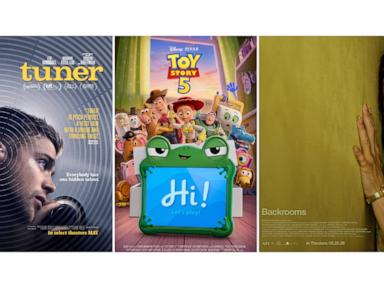
The contemporary subscription video-on-demand market operates on a broken economic assumption: that bundling disparate cultural properties under a single monthly access fee creates sustainable customer retention. When platforms curate heterogeneous slates—spanning legacy television comedies like A Different World, major cinematic franchise installments like Toy Story 5, and niche live-event music specials featuring artists such as Kenny Chesney—they reveal an underlying cost structure mismatch. The consumer decision matrix is not governed by aggregate catalog volume, but by marginal utility per dollar spent. Understanding how these content verticals intersect, cannibalize, or complement one another requires analyzing the structural economics of distribution, windowing, and audience fragmentation.
Subscription decay is driven by asynchronous consumption cycles. A user subscribing for serialized nostalgia television exhibits a completely different engagement duration and churn probability than a household acquiring short-term access for a theatrical family release or a live-concert broadcast. Aggregators attempt to solve this variance through portfolio diversification, treating viewers as risk-neutral investors in a diversified media fund. In practice, however, households behave as single-asset optimizers, canceling services immediately following the consumption window of their targeted asset. You might also find this connected story useful: Why Rebel Wilson is Fighting the Wrong War in Court.
The structural tension within modern streaming services stems from divergent asset lifecycles. Content can be categorized across three distinct economic vectors: long-tail library assets, tentpole theatrical releases, and ephemeral event programming.
Long-tail library titles operate on low marginal acquisition costs paired with predictable, albeit low-velocity, sustained viewing hours. These properties function as baseline retention floors, preventing total churn during content troughs. However, they lack the acquisition power necessary to drive new subscriber acquisition at scale. When platforms anchor their marketing around legacy syndication properties, they are generally attempting to monetize existing brand equity rather than capture high-intent new market share. As extensively documented in latest coverage by Variety, the implications are significant.
Tentpole theatrical properties demand immense capital expenditure for production and marketing, followed by compressed monetization windows. The economic mechanics of releasing major franchise sequels require maximizing simultaneous global awareness to convert casual viewers into theatergoers or immediate premium subscribers. When these assets transition to subscription streaming tiers, their marginal acquisition value drops precipitously. The strategic error lies in deploying high-capex assets to subsidize low-intent, price-sensitive subscribers who churn the moment the window closes.
Ephemeral event programming, such as concert specials or live sporting broadcasts, introduces maximum volatility into platform retention models. These assets generate acute spikes in concurrency and short-term acquisition, but possess virtually zero long-term retention value unless paired with continuous complementary programming. A subscriber acquiring access for a single live music event represents negative unit economics if their lifetime value does not exceed the platform-allocated licensing cost plus customer acquisition cost.
The friction between these three verticals creates a structural margin squeeze. To maintain broad-market appeal, platforms must over-index on capital-intensive original or licensed content while absorbing the high infrastructure costs of global content delivery networks and continuous UI/UX optimization.
Consumer expenditure on home entertainment has shifted from ownership to rental access, yet consumers maintain strict mental accounting regarding monthly platform caps. As the market matured from a single dominant monopoly provider to a fragmented oligopoly of vertically integrated studio networks, the marginal cost of maintaining a comprehensive entertainment portfolio surpassed the aggregate willingness-to-pay of the median household.
This dynamic triggers subscriber rotation behavior, colloquially termed churn-and-return. Households no longer maintain perpetual subscriptions across five or six distinct services. Instead, they dynamically allocate their monthly entertainment budget to whichever platform holds exclusive distribution rights to an active tentpole asset or cultural touchstone.
The underlying mechanics of this behavior expose the limitations of horizontal aggregation. When a platform attempts to serve toddlers seeking animated features, nostalgic adults seeking 1990s sitcoms, and demographic-specific music fans seeking live performance specials, the platform's recommendation algorithms and marketing funnels must serve mutually exclusive segments. Personalization engines attempt to bridge this gap, but they frequently result in siloed user experiences that fail to communicate the breadth of the value proposition, reinforcing the perception of underutilization.
Furthermore, the licensing economics governing legacy television properties are undergoing fundamental revision. Content owners realize that licensing library titles to third-party aggregators yields short-term cash flow but long-term brand dilution, as the platform captures the primary consumer relationship and first-party data. Consequently, the supply of high-performing library assets available for cross-platform licensing is contracting. Aggregators are forced to rely more heavily on proprietary production, increasing their exposure to development risk and cost overruns.
For studios and distributors navigating this environment, the operational imperative requires shifting from volume-based aggregation to yield-managed distribution. Rather than pursuing universal subscriber acquisition through undifferentiated catalog expansion, sustainable models will segment pricing structures based on asset velocity and consumption intensity. Tiered access models, ad-supported monetization layers, and targeted windowing strategies represent the structural mechanisms necessary to align consumer willingness-to-pay with the true cost of content production.
The trajectory of the market points toward radical unbundling followed by automated re-aggregation through third-party billing and discovery interfaces. Consumers will ultimately interact with a unified interface while routing micro-payments directly to underlying content originators on a consumption or windowed-access basis. Platforms that fail to adapt their unit economic models beyond the blunt instrument of the flat-rate monthly subscription will find themselves subsidizing the consumption habits of transient, low-margin audiences.