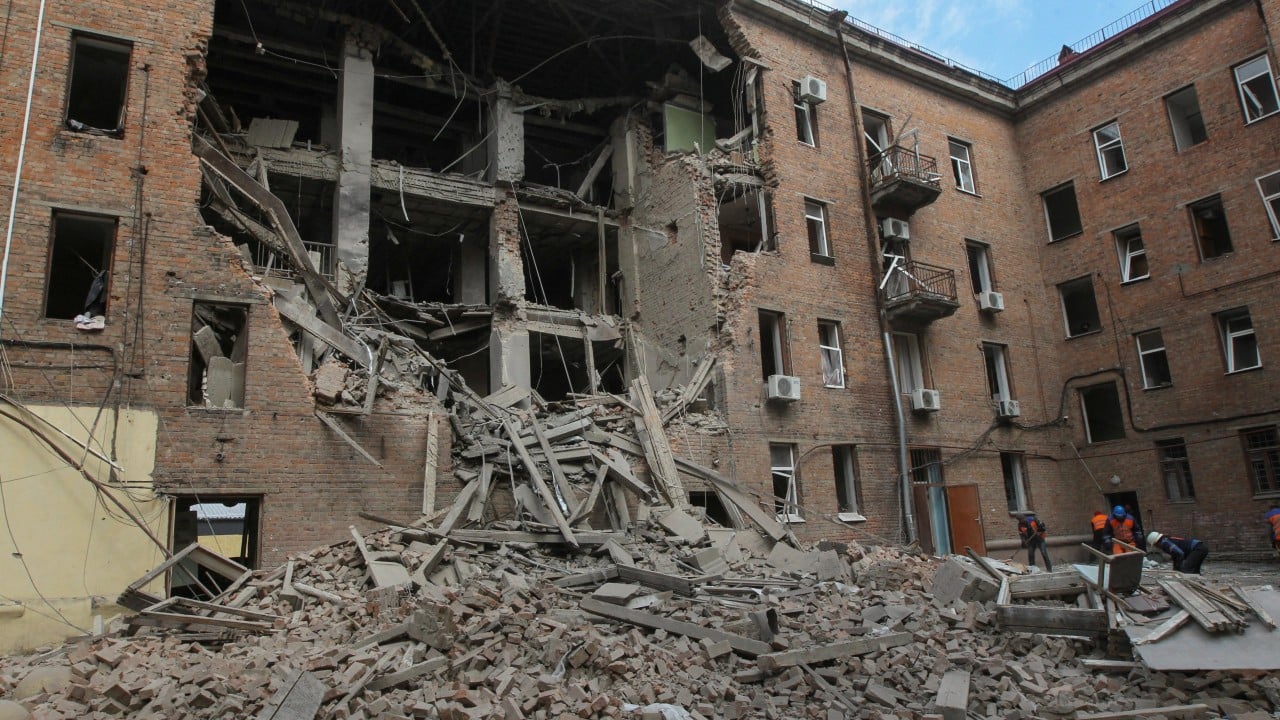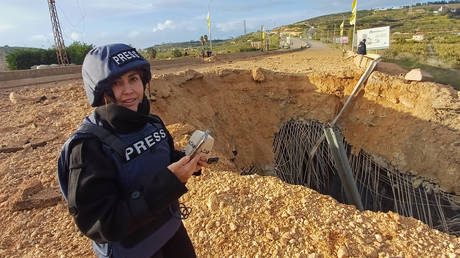
The physical safety of non-combatants in high-intensity urban warfare is governed by the friction between operational necessity and the strictures of International Humanitarian Law (IHL). When Lebanon accuses Israel of war crimes following the death of media personnel, the debate often dissolves into emotional rhetoric. A rigorous analysis, however, must focus on the Dual-Use Doctrine and the Proportionality Calculus. The death of a journalist in a conflict zone is rarely a singular event of malice; it is the output of a specific targeting logic where the distinction between "civilian" and "legitimate military objective" becomes blurred by the proximity of high-value electronic signals and tactical positions.
The Triad of Target Acquisition
To understand how journalists become casualties in the Lebanon-Israel theater, one must map the three variables that dictate kinetic strikes. For a different look, see: this related article.
- Signal Intelligence (SIGINT) Overlap: Journalists utilize high-frequency transmission equipment. In a saturated electronic environment, these signals often mimic the signature of military communication nodes or drone command-and-control units. If a journalist operates from a position shared by or adjacent to tactical units, the probability of "Signal Merging" increases, leading to a classification error within the automated or human-in-the-loop targeting cycle.
- The Geographic Buffer Constraint: South Lebanon’s terrain forces combatants and observers into narrow corridors. The Principle of Distinction requires a clear separation between military assets and civilians. When combatants utilize civilian structures for cover, the entire radius enters a state of "Contingent Legality." A strike is deemed lawful if the military advantage gained outweighs the civilian harm, a calculation known as the Proportionality Test.
- Temporal Urgency: Most strikes occur during "Time-Sensitive Targeting" windows. When an active launch site or command unit is identified, the decision loop—Observe, Orient, Decide, Act (OODA)—is compressed. This compression frequently results in the failure to identify secondary occupants of a structure, such as media crews, who may have entered the perimeter after the initial reconnaissance phase.
The Legal Threshold for War Crimes
Accusations of war crimes require proving specific intent (mens rea) rather than just the occurrence of a tragic outcome (actus reus). Under the Rome Statute and the Geneva Conventions, journalists are protected as civilians unless they take a direct part in hostilities.
The burden of proof in the Lebanese state's accusation rests on demonstrating that the strike was "Willful Killing" or "Intentionally directing attacks against civilians." From a strategic standpoint, this requires an audit of the Targeting Folder. If the IDF possessed intelligence that only media personnel were present and proceeded with the strike, the threshold for a war crime is met. If, however, the target was a Hezbollah tactical asset and the journalist was collateral, the legal debate shifts to whether the civilian harm was "excessive in relation to the concrete and direct military advantage anticipated." Related coverage on the subject has been provided by Associated Press.
This creates a systemic loophole. In modern asymmetric warfare, the "military advantage" of neutralizing a high-ranking operative or a missile battery is valued so highly that almost any level of civilian collateral can be justified within the internal legal frameworks of the attacking military.
The Cost Function of Media Presence
There is a measurable trade-off between battlefield transparency and operational security. For the Lebanese state, the presence of journalists serves as a Non-Kinetic Deterrent. The death of a journalist generates international diplomatic pressure, which is a strategic cost for Israel. Conversely, for the Israeli Defense Forces (IDF), the presence of media near active combat zones is viewed as a "Shielding Variable" that limits their freedom of movement.
The mechanism of "Informed Consent" in war zones is fundamentally broken. Journalists are often granted access by local actors who have a vested interest in the media witnessing specific outcomes. This creates a Selection Bias in the locations of reporters, often placing them at the exact friction points where kinetic exchanges are most likely to occur.
Structural Failures in the Deconfliction Process
Deconfliction is the process of sharing GPS coordinates between non-combatants and military forces to prevent accidental strikes. The recurring deaths of journalists indicate a collapse in this system.
- Latency in Information Sharing: Even if a media house provides coordinates to a central authority, that data must be disseminated down to the individual pilot or drone operator. In a high-speed conflict, the update frequency often lags behind the movement of the teams.
- Trust Deficits: Military forces are often hesitant to respect deconfliction zones if they suspect those zones are being exploited by the enemy for tactical concealment. This leads to a "Devaluation of the Protected Status," where a building marked as "Press" or "NGO" is treated with the same skepticism as a standard civilian structure.
- The Problem of Proximity: In southern Lebanon, Hezbollah's integration into the social and physical infrastructure means that a journalist’s hotel or vehicle is frequently within the "Blast Overpressure Radius" of a military target.
The Mechanization of Accountability
The current model of "Internal Investigations" conducted by the military involved creates a conflict of interest that prevents objective truth-seeking. However, the international community lacks the enforcement mechanism to demand real-time data from the black boxes of targeting aircraft.
To move beyond the cycle of accusation and denial, a transition to Open-Source Intelligence (OSINT) Verification is necessary. By triangulating social media footage, satellite imagery, and acoustic sensors, third-party analysts can reconstruct the "Kill Chain." This allows for a quantification of whether a journalist was at the center of the aim point or caught in the periphery.
The strategic reality is that as long as the conflict remains categorized as an existential struggle, both sides will prioritize tactical outcomes over international legal norms. Lebanon's accusations serve a diplomatic function, aiming to increase the "Political Friction" of Israeli operations, while Israel's strikes are driven by the "Logic of Attrition," where the removal of threats justifies the high risk of civilian casualties.
The ultimate trajectory suggests that journalists will increasingly be treated as high-risk variables rather than protected observers. Future operations must include a mandatory, real-time, blockchain-verified deconfliction log that is accessible to international monitors if the intent is truly to minimize civilian loss. Without this technological audit trail, the "Fog of War" will continue to serve as a convenient legal shield for kinetic errors.
The next strategic move for media organizations is the deployment of Autonomous Observation Units—drones and remote cameras—to decouple the human reporter from the physical risk of the strike zone. This shifts the cost of transparency from human lives to hardware, effectively bypassing the current failure of the proportionality calculus.