The resumption of long-haul flight operations by Air India and IndiGo is not a simple binary toggle from "off" to "on." It represents a complex recalibration of three interdependent variables: airspace accessibility, fleet utilization rates, and the unit economics of ultra-long-range (ULR) travel. While surface-level reporting focuses on the return of specific routes, a structural analysis reveals that these airlines are navigating a high-stakes optimization problem where the cost of a single rerouting can erode the entire margin of a transcontinental flight.
The Triad of Operational Resumption
Airlines do not "resume" flights based on whim; they do so when the intersection of technical capability and market demand crosses a specific profitability threshold. For Air India and IndiGo, this threshold is currently dictated by three primary pillars.
1. Airspace Geometry and Fuel Penalties
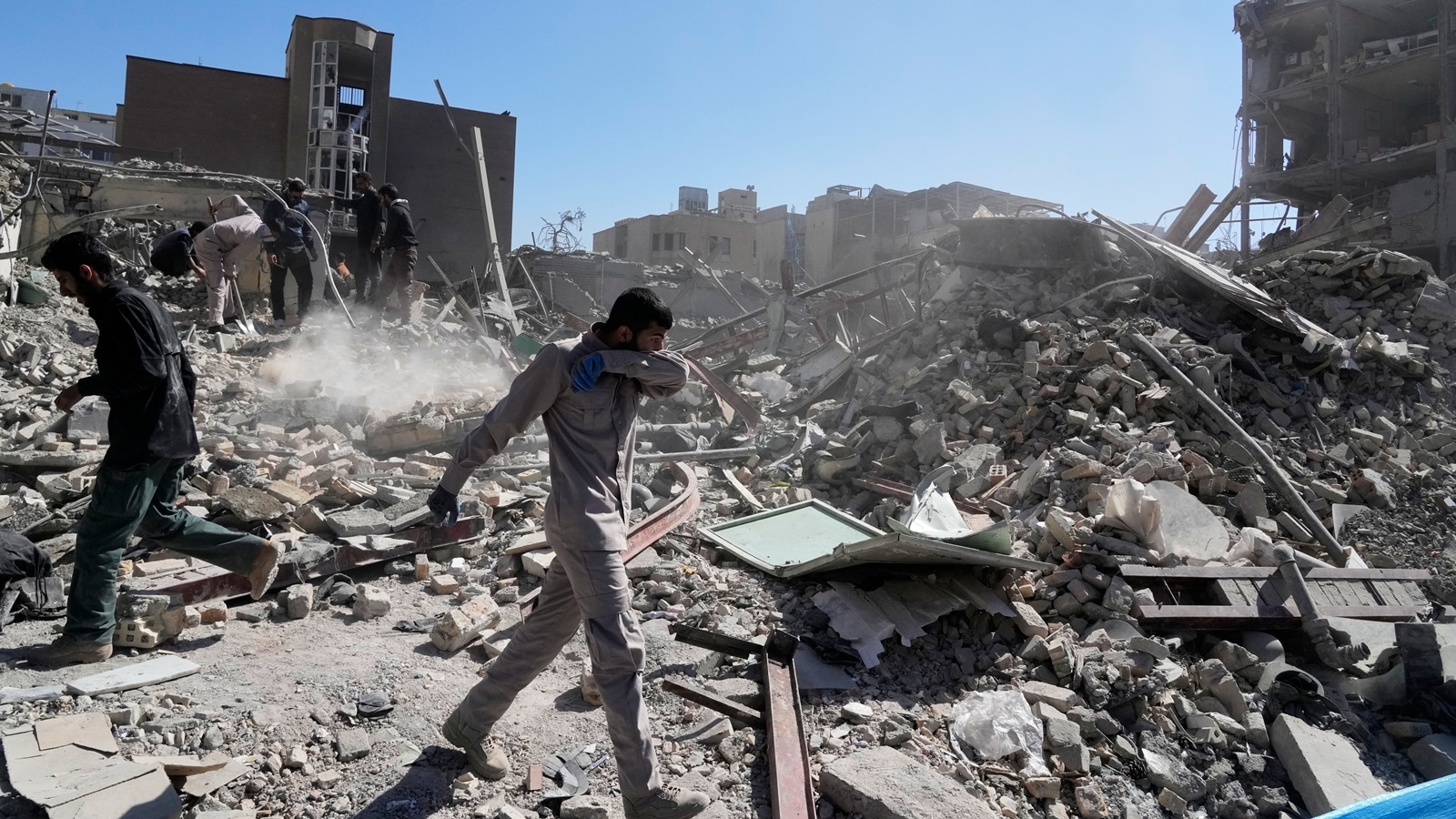
The primary bottleneck for long-haul routes connecting India to North America and Europe remains the geopolitical state of global airspace. When a primary corridor—such as the Russian or Iranian airspace—becomes restricted, the resulting "great circle" deviation is not merely a distance problem; it is a weight-and-balance crisis.
Each additional thirty minutes of flight time requires several tons of extra fuel. This creates a recursive weight penalty: the aircraft must carry more fuel to fly the extra distance, which makes the aircraft heavier, thereby burning more fuel per nautical mile. For Air India’s Boeing 777-300ER fleet, this can force a "payload hit," where the airline must leave behind high-yield cargo or even passengers to remain within the Maximum Take-Off Weight (MTOW) limits.
2. Fleet Serviceability and Cycles
IndiGo’s foray into longer routes—historically dominated by narrow-body A321XLRs or damp-leased wide-bodies—operates on a different economic logic than Air India’s legacy long-haul model. The resumption of these routes is gated by "C-Check" maintenance cycles and engine availability. For IndiGo, the reliability of the Pratt & Whitney GTF engines remains a variable that dictates the "spare ratio"—the number of grounded aircraft required to support an active schedule. A route only resumes when the probability of a technical dispatch reliability (TDR) event falls below a specific risk tolerance.
3. Crew Duty Day (FDTL) Constraints
Flight Duty Time Limitations (FDTL) serve as a hard cap on operational flexibility. On select long-haul routes, a 15-minute delay on the tarmac can result in a crew "timing out." If the crew exceeds their legal working hours before takeoff, the flight must be cancelled or delayed by 12–24 hours to fly in a fresh crew. The resumption of these routes suggests that both carriers have achieved a specific "crew density" at key hubs to buffer against these systemic shocks.
The Cost Function of Ultra-Long-Range Recovery
To understand why certain routes (like Delhi to San Francisco or Mumbai to London) are prioritized over others, one must examine the $C_{total}$ formula for a long-haul leg:
$$C_{total} = C_{fixed} + (F_{rate} \times T_{flight}) + C_{crew} + C_{navigation}$$
- $C_{fixed}$: Aircraft lease payments and insurance, which accrue whether the plane flies or not.
- $F_{rate}$: The fuel burn rate, heavily influenced by altitude and headwinds.
- $T_{flight}$: The total block time, which is currently inflated by detours.
- $C_{navigation}$: Overflight fees paid to national aviation authorities.
Air India’s strategy focuses on routes where the "Yield per Available Seat Kilometer" (YASK) is high enough to absorb the $F_{rate} \times T_{flight}$ expansion. This is why premium-heavy routes to the US East Coast are resumed before lower-yield leisure routes to secondary European cities. The "premium mix"—the ratio of Business and First Class seats to Economy—is the only cushion against volatile jet fuel prices.
Architectural Shifts in the Hub-and-Spoke Model
IndiGo’s participation in the long-haul segment signals a shift in the Indian aviation architecture. Historically, Indian long-haul was a point-to-point service managed by wide-body aircraft. IndiGo is attempting to apply a "virtual wide-body" strategy through strategic codeshares and the gradual introduction of longer-range narrow-body aircraft.
This creates a competitive tension:
- Air India’s Strategy: Consolidating wide-body operations at Delhi (DEL) and Mumbai (BOM) to create a "fortress hub" that competes with Dubai (DXB) and Doha (DOH).
- IndiGo’s Strategy: Using high-frequency domestic feeders to "pump" passengers into long-haul international segments, minimizing the time the aircraft spends on the ground (Turnaround Time or TAT).
The bottleneck for both is the "Slot Constraint." Major international airports like London Heathrow (LHR) or New York (JFK) operate on a "use it or lose it" slot system. The resumption of flights is often a defensive maneuver to protect these multi-million dollar assets, even if the initial load factors are sub-optimal.
Technical Risk: The Pratt & Whitney and Rolls-Royce Variable
The reliability of engine hardware is the silent arbiter of this recovery. Air India’s A350 fleet and IndiGo’s A321 fleet are both subject to global supply chain pressures regarding engine components.
- Thermal Stress: Long-haul flights involve sustained high-altitude cruise, which, while efficient, puts different stresses on turbine blades compared to the short-cycle "hops" of domestic travel.
- Micro-cracking and Longevity: The "resumption" of flights increases the "cycle accumulation" on engines. If the supply chain for spare parts remains fractured, a high-intensity resumption today could lead to a "grounding wave" six months from now.
The decision to fly is therefore an exercise in "Expected Value" (EV). Management must weigh the certain revenue of a flight today against the statistical probability of a grounded aircraft (AOG) in the future due to accelerated wear.
Strategic Displacement of Middle Eastern Carriers
A critical, often overlooked driver of this resumption is the attempt to reclaim "6th Freedom Traffic." For decades, Indian travelers heading to the West have been funneled through Middle Eastern hubs. By resuming and expanding direct long-haul routes, Air India and IndiGo are attempting to shorten the "Total Travel Time" (TTT), which is the primary metric for corporate travelers.
The success of this displacement depends on "Seamlessness," but not in the marketing sense. It depends on:
- Baggage Through-Check Systems: Reducing the "mishandled baggage" rate at DEL and BOM.
- Minimum Connection Time (MCT): Engineering schedules so that a passenger from a Tier-2 city can connect to a London flight in under 90 minutes.
The Margin of Safety in Rerouting Operations
The current geopolitical climate forces flights to operate with "Extended Diversion Time Operations" (ETOPS) ratings. For twin-engine aircraft like the Boeing 787 or Airbus A350, being allowed to fly 180 or 370 minutes away from the nearest suitable airport is a requirement for trans-oceanic routes.
If an airline’s ETOPS certification is downgraded due to maintenance lapses or training gaps, they are forced to fly "hugging the coast," which adds massive distance and cost. The resumption of these routes implies that both carriers have cleared the rigorous regulatory hurdles required to operate at maximum ETOPS efficiency.
Operational Recommendation for Market Stabilization
The path forward requires a move away from "capacity dumping"—the practice of flooding routes with seats to gain market share at the expense of profit. Instead, the strategic play is "Dynamic Fleet Reassignment."
Airlines must develop the data infrastructure to swap aircraft types (e.g., swapping a 777 for a 787) within a 6-hour window based on real-time fuel price spikes or airspace closures. This "modular scheduling" is the only way to insulate the balance sheet from the external shocks that have historically crippled Indian long-haul aviation. The focus should shift from "Route Resumption" to "Route Elasticity," ensuring that the cost of flying an extra 500 miles due to a closed border does not turn a profitable flight into a loss-making liability. Carriers should prioritize the hardening of their "AOG (Aircraft on Ground) Logistics" to ensure that when the inevitable technical failure occurs on these long-haul routes, the recovery time is measured in hours, not days.