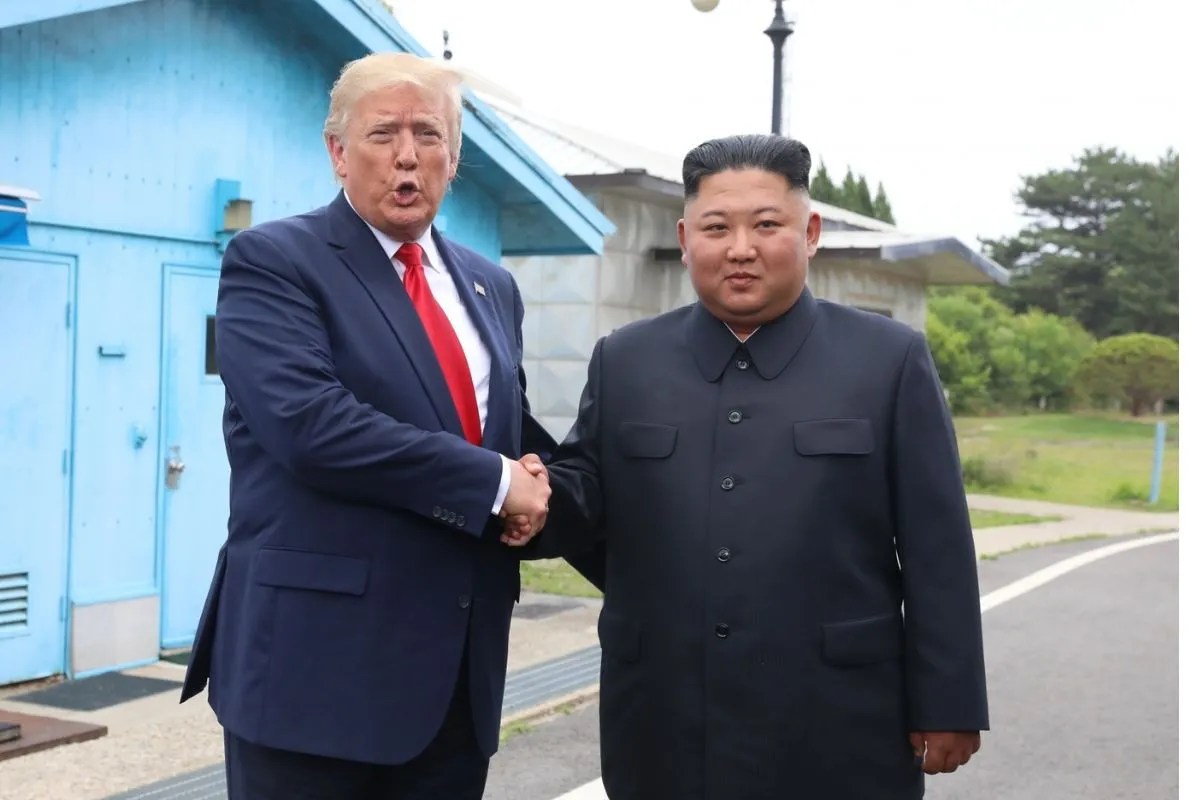
The operational integrity of the United States-Republic of Korea (ROK) security architecture is currently experiencing a recalibration driven by shifting executive priorities in Washington. When the head of an alliance unilaterally scales back joint military exercises citing personal diplomatic rapport with a regional adversary, it introduces systemic risk into established deterrent frameworks. This analysis identifies the mechanism of this shift, tracing how individual diplomatic preference intersects with long-term regional stability protocols.
The Mechanism of Strategic Decoupling
Joint military exercises, such as the recently initiated Ulchi Freedom Shield, serve three primary functions in a theater-based security model: readiness validation, signal transmission, and alliance cohesion. By ordering a substantial reduction in these activities, the United States executive branch has effectively decoupled the tactical necessity of force preparedness from the broader diplomatic objective of direct engagement with Pyongyang. Don't miss our previous coverage on this related article.
The rationale provided by the White House—specifically the cost burden and the perceived unthreatening posture of North Korea—ignores the function of these exercises as a continuous deterrent. Readiness against conventional and non-conventional threats, such as cyber warfare and GPS disruption, relies on the high-frequency repetition of simulated combat. Reducing these intervals increases the latency between the identification of a threat and the mobilization of a response.
The Cost-Function and Diplomatic Leverage
The integration of disparate foreign policy objectives into a single decision matrix illustrates a shift toward transactional governance. The linkage between the reduction of military drills and the ROK’s decline to participate in US-led initiatives regarding Iranian denuclearization is a departure from traditional alliance management. To read more about the background here, Associated Press offers an excellent summary.
In established security frameworks, military cooperation and regional policy alignment are generally treated as distinct spheres of negotiation. The current administration has collapsed these spheres. By conditioning regional security on unrelated multilateral goals, Washington is transitioning the ROK alliance from a fixed strategic commitment into a variable, performance-based agreement. This creates a specific bottleneck: Seoul must now navigate the tension between sustaining its primary security guarantee and maintaining its independent foreign policy sovereignty.
Institutional Friction and Operational Continuity
The divergence between presidential directives and the execution of ongoing military operations highlights a breakdown in top-down control. While the executive branch commands the scaling back of maneuvers, regional command structures—as evidenced by the start of the drills as scheduled—operate under established protocols.
This creates a dual-reality environment:
- The Political Narrative: Exercises are framed as hostile, costly, and unproductive to diplomatic progress.
- The Operational Reality: The Combined Forces Command continues to simulate combat scenarios to mitigate risks from North Korean weapons systems.
This friction diminishes the signaling power of the alliance. When a deterrent signal is qualified by the executive branch as "inappropriate" or "hostile," its utility as a strategic tool is negated. A deterrent is only effective if it is perceived by the adversary as unwavering. By publicly questioning the necessity of these drills, the executive signals to Pyongyang that the commitment to total force readiness is negotiable.
The Risk of Strategic Miscalculation
The primary danger in this transition is not the immediate reduction in training hours but the signal of fragmentation. North Korea’s historical approach to diplomatic overtures involves leveraging the perception of weakness or internal division within the US-ROK alliance to advance its own weapons programs.
If Pyongyang interprets the reduction of military exercises as a strategic concession rather than a diplomatic goodwill gesture, the risk of miscalculation increases. The "Two Hostile States" doctrine adopted by North Korea signifies a hardening of its position. Simultaneously, the erosion of the multilateral enforcement mechanism—facilitated by Russia’s move to block UN monitoring—means that the burden of containment falls exclusively on the bilateral US-ROK relationship.
Recommendations for Strategic Stabilization
To prevent the total degradation of the deterrent, stakeholders must prioritize the following adjustments:
- Decouple Tactical Readiness from Diplomatic Signaling: Military readiness standards must be codified by professional defense establishments, separate from the shifting priorities of executive-level summits. Establishing a baseline of essential combat exercises that remain insulated from diplomatic flux is required to maintain regional equilibrium.
- Standardize Consultative Channels: The confusion surrounding the status of ongoing drills confirms a failure in the communication pipeline. Establishing a verified, high-level diplomatic-military working group—with standing protocols that cannot be bypassed via social media—would stabilize expectations for both Seoul and Washington.
- Formalize Security Guarantees: Given the volatility of personalistic diplomacy, the ROK must seek to formalize existing security commitments in binding agreements that transcend individual administrations. This reduces the uncertainty inherent in a system where the primary security umbrella is subject to the changing personal affinities of the sitting US President.
The current trajectory points to a weakening of the traditional security consensus in the Pacific. Future stability will depend on the ability of the defense apparatus to maintain operational continuity even as the political framework remains in a state of high-intensity, transactional flux.

:max_bytes(150000):strip_icc()/lake-mead-173940030-5c25228846e0fb00014e8584.jpg)