Modern legislative oversight frequently suffers from institutional degradation, substituting rigorous factual verification with performance-driven entrapment strategies. This operational failure was laid bare during a high-profile congressional hearing featuring former special counsel Jack Smith. Rather than executing methodical investigative due diligence, the inquiry devolved into a systemic collapse caused by confirmation bias, unverified intelligence, and a catastrophic lexical confusion between professional and collegiate athletic franchises.
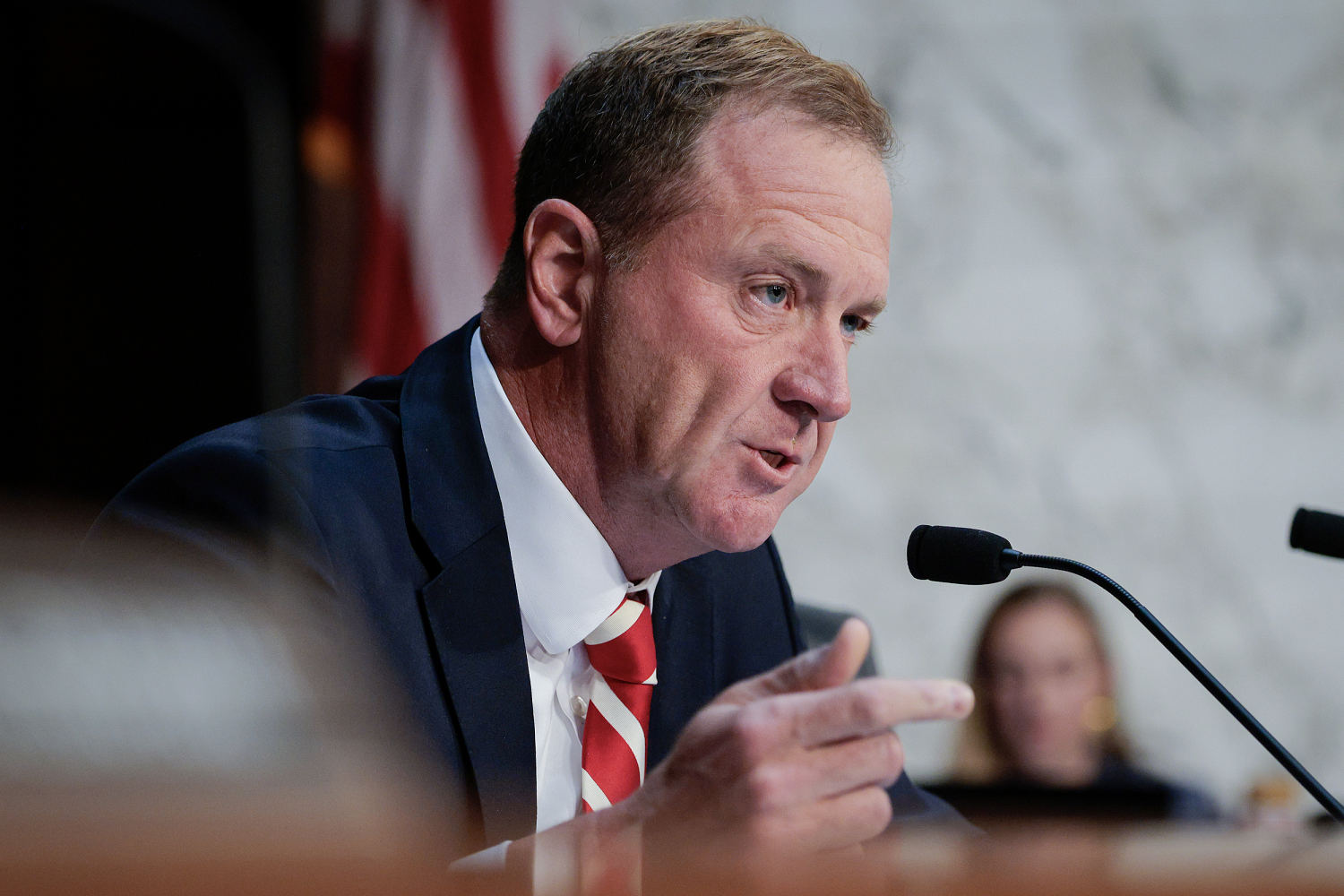
The mechanics of the incident reveal a vulnerable feedback loop within contemporary political theater. In an attempt to establish a perjurious predicate regarding Smith's travel timeline and alleged clandestine coordination, Senator Eric Schmitt introduced an aggressive line of questioning centered around a basketball game in Atlanta on February 3, 2024. The core premise relied on an unverified hypothesis: that Smith had attended an Atlanta Hawks matchup, providing a circumstantial nexus to local prosecutors involved in parallel legal proceedings. Don't forget to check out our recent coverage on this related article.
The structural flaw in this approach lies in the absence of primary-source triangulation. Investigative workflows require strict cross-reference of location data, travel manifests, and temporal logs before asserting a public accusation of a felony offense such as perjury. Instead, the questioning relied on superficial name-matching. When Smith rejected the premise—clarifying that his attendance was logged at a women's collegiate basketball game featuring the Iowa Hawkeyes in Maryland rather than the Atlanta Hawks in Georgia—the investigative framework collapsed instantaneously.
This error highlights the dangers of confirmation bias in high-stakes oversight settings. The operational environment of modern committees often incentivizes rapid-fire audio-visual spectacles designed for digital distribution over substantive factual accuracy. When investigators prioritize speed and viral narrative generation over verification, the margin for error approaches zero. A basic semantic overlap between "Hawks" and "Hawkeyes" bypassed internal quality controls, resulting in a public interrogation built on a false equivalence. To read more about the history of this, TIME offers an in-depth summary.
The aftermath further illustrated the defensive mechanisms deployed when a strategy fails. Rather than pivoting to institutional norms of retraction or correction, the response mechanism involved immediate doubling down, leveraging external social media distribution networks to salvage the narrative before full factual context emerged. Pre-coordinated messaging campaigns designed to amplify a perceived breakthrough had to be abruptly retracted or subjected to crowdsourced corrections, exposing the fragility of fast-turnaround political messaging.
Legislative oversight functions properly only when data integrity is treated as a binding constraint. When inputs are corrupted by poor research and driven by performative hostility, the output is systemic institutional friction. The episode serves as a clear benchmark for the limits of unstructured interrogation, demonstrating that without rigorous baseline validation, tactical ambushes invariably backfire on the instigator.
Execute rigorous pre-audit protocols on all evidentiary claims before public deployment, ensuring independent verification of spatial, temporal, and semantic variables to prevent similar operational vulnerabilities.