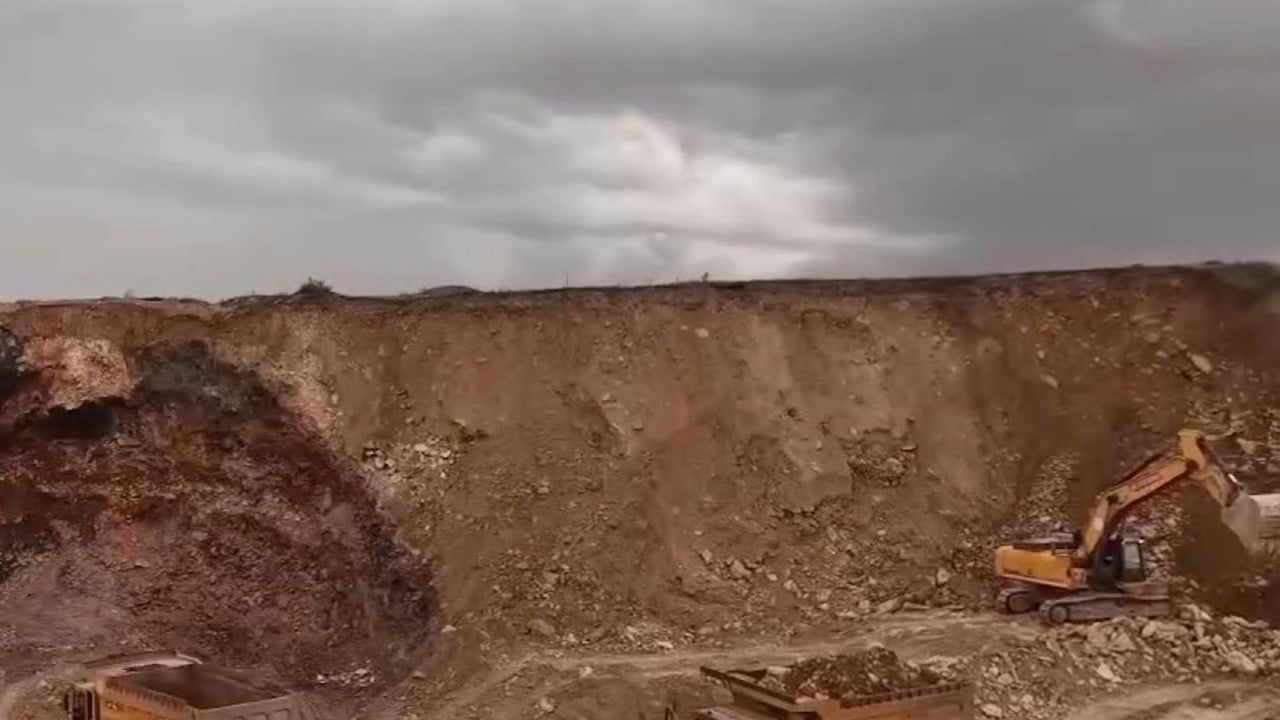
Preservation frameworks fail when institutional distance exceeds local accountability. In remote geographies, cultural heritage assets face a specific economic vulnerability: the cost of enforcement outstrips the visible return on investment for localized governance. This dynamic explains how a six-metre breach was carved through the Guojiayao section of the Ming Dynasty Great Wall in Ningwu County, Shanxi Province, to accommodate twenty years of coal mining waste dumping. Deconstructing the mechanics behind this degradation reveals systemic failures in monitoring latency, incentive misalignment, and the friction of regulatory compliance in peripheral zones.
The Geography of Neglect and Surveillance Latency
The vulnerability of structural heritage is governed by a simple monitoring equation. The probability of illicit exploitation increases inversely with population density and tourist traffic. While iconic segments near major administrative centers benefit from continuous optical and physical surveillance, remote sectors operate under high surveillance latency. Building on this topic, you can also read: The Logistics of Deterrence: Why Japan Is Remaking Its Munitions Architecture.
In the case of the Guojiayao section, the physical isolation of the site created an information vacuum. Local industrial actors, specifically regional coal operations like the Ningwu Chaokai Coal Industry, calculated that the cost of proper waste disposal exceeded the expected penalty of breaching a dilapidated earthen and masonry barrier. The excavation of a trench through the ramparts began as an operational shortcut in 2007. Because the site lacked automated telemetry, boundary demarcation, and routine inspections, the illegal vector persisted for two decades. The installation of protective posts did not occur until 2025, long after the structural integrity of the wall had been compromised.
Regulatory Friction and Enforcement Asymmetry
National protection mandates often suffer from execution bottlenecks at the municipal level. China's legal framework for heritage preservation stipulates immediate corrective action upon the identification of structural threats. However, enforcement relies on a chain of custody for accountability that is prone to friction. Observers at BBC News have also weighed in on this situation.
Whistle-blower reports regarding the dumping of industrial slag and coal mining waste were repeatedly routed to local officials over a twenty-year period without triggering effective mitigation. This operational inertia highlights three systemic bottlenecks in local governance:
- Economic Prioritization: Local municipal budgets often prioritize immediate resource extraction and industrial output over passive cultural preservation, creating a structural bias toward looking past minor environmental and heritage infractions.
- Jurisdictional Ambiguity: In peripheral counties, overlapping responsibilities between environmental protection agencies and cultural relics bureaus generate diffusion of responsibility.
- Verification Delays: Without digitized reporting loops or independent auditing, local bodies can suppress or deprioritize civil complaints regarding rural degradation.
The Cost Function of Industrial Waste Management
The root cause of the Ningwu breach is economic rather than malicious. Mining operations generate massive volumes of overburden, slag, and coal gangue. Transporting this material to designated containment facilities involves logistics expenditure, fuel consumption, and tipping fees.
By utilizing the historical wall as a gravity chute or a dump threshold, the operators externalized their waste management costs onto a non-renewable public asset. The economic incentive structure favored destruction because the financial penalty for violating heritage laws historically paled in comparison to cumulative long-term transportation and disposal savings. The asset sacrificed—an ancient architectural fortification—was treated as a valueless spatial obstacle rather than a protected historical resource.
Strategic Remediation Protocols
Rectifying historical negligence requires a shift from reactive penalty models to automated prevention architectures. Emergency structural reinforcement and environmental remediation at Ningwu County address the symptom rather than the systemic vulnerability.
To eliminate systemic risk across remote heritage inventories, institutional frameworks must implement automated geospatial monitoring. High-resolution satellite telemetry combined with drone-based photogrammetry can detect unauthorized terrain alteration within a compressed review cycle, bypassing the delays inherent in localized human reporting. Furthermore, tying industrial operating licenses directly to mandatory buffer-zone integrity metrics ensures that commercial entities bear an immediate operational penalty for encroaching upon protected perimeters. Asset preservation in peripheral zones depends entirely on reducing the friction of oversight to match the speed of industrial exploitation.