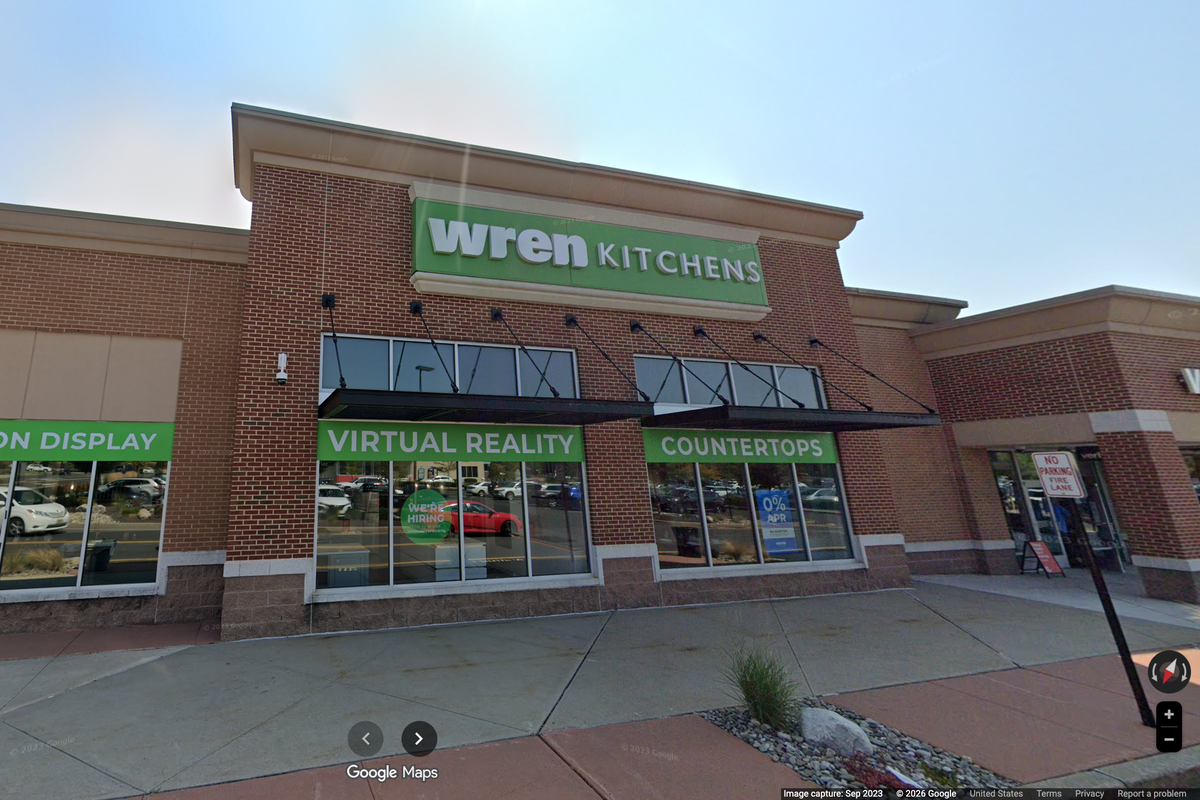
The insolvency of a major foreign entity within the United States market is rarely a product of singular bad luck; it is the inevitable outcome of misaligned unit economics and a failure to account for localized logistical friction. When a dominant UK market leader attempts to export a vertically integrated business model into the North American theater, they face a specific set of structural pressures that differ fundamentally from their home market. The recent cessation of operations by Wren Kitchens in the US illustrates a critical breakdown in the "Direct-to-Consumer at Scale" framework, where the overhead of specialized manufacturing facilities collided with a tightening credit environment and the high cost of last-mile delivery across a continental geography.
The Triple Constraint of International Market Entry
The failure of this expansion can be dissected through three specific operational bottlenecks that the competitor's reporting categorized merely as "misfortune." In reality, these are quantifiable variables that define the survival of high-CAPEX (Capital Expenditure) retail.
1. The Geographic Multiplier and Logistical Friction
In the United Kingdom, a centralized manufacturing hub can service the entire island with minimal transit time and relatively low fuel-to-revenue ratios. The US market imposes a geographic tax. Establishing a massive manufacturing presence in Wilkes-Barre, Pennsylvania, initially appeared to be a strategic move to capture the Northeast corridor. However, the costs of maintaining a specialized fleet and the labor-intensive nature of installing custom-built cabinetry across multiple states created a "Distance Decay" in profit margins. Unlike flat-pack competitors, a fully assembled cabinet model requires high-volume, low-density shipping—essentially paying to transport air. When fuel prices and driver wages surged, the logistics cost per unit likely exceeded the modeled threshold for profitability.
2. Vertical Integration as a Liability
Vertical integration is often lauded for margin capture, yet it creates an inflexible cost base. By owning the manufacturing, the showrooms, and the delivery infrastructure, a company loses the ability to scale down during a cyclical downturn. In a high-interest-rate environment, the US housing market experienced a significant cooling in discretionary home improvement spending. A company with a lighter asset model could have pivoted or reduced third-party procurement. A vertically integrated firm like Wren remained tethered to the massive fixed costs of its Pennsylvania plant and its expansive, high-rent showroom footprint.
3. The Customer Acquisition Cost (CAC) vs. Lifetime Value (LTV) Imbalance
The "Kitchen" category is inherently a low-frequency, high-ticket purchase. There is virtually no recurring revenue. This necessitates a constant, aggressive inflow of new leads. In the UK, Wren benefited from decades of brand equity and a saturation of the physical market. In the US, they were forced to compete in a hyper-aggressive digital and physical advertising space against entrenched incumbents like Home Depot and Lowe’s. The cost to acquire a single customer in a new territory often exceeds the initial gross margin of the first project. Without the runway to reach a "tipping point" of brand recognition, the burn rate on marketing became unsustainable.
The Anatomy of the Sudden Insolvency
The suddenness of the US closure—often perceived by the public as a "surprise"—is a standard feature of private equity or family-owned corporate restructuring. Once the projected "Time to Profitability" extends beyond the available liquidity, the rational actor ceases operations immediately to preserve the remaining assets of the parent entity.
The Liquidity Gap
We can hypothesize the existence of a liquidity gap driven by the following mechanism:
- Customer Deposits as Operating Capital: In many retail models, the deposits paid by customers for future projects are used to fund current operational expenses.
- The Velocity Trap: As long as new orders grow, the cash flow remains positive. The moment order velocity slows, the company cannot cover the cost of fulfilling the backlog of previous orders.
- The Default Trigger: Once the parent company (Wren Kitchens UK) determines that the US subsidiary is a "sunk cost" and halts further capital injections, the subsidiary is legally required to stop trading to avoid "wrongful trading" or fraudulent conveyance charges.
Risk Mitigation for Displaced Stakeholders
For the customers currently left with incomplete kitchens or lost deposits, the path to recovery is governed by the hierarchy of creditor claims in a bankruptcy or liquidation proceeding.
Secured vs. Unsecured Claims
Customers are typically classified as unsecured creditors. In the liquidation of a retail entity, the order of payout is strictly defined:
- Administrative Expenses: The costs of the bankruptcy lawyers and the liquidators themselves.
- Secured Creditors: Banks or lenders who hold liens against the manufacturing equipment or property.
- Priority Claims: Certain employee wages and tax obligations.
- Unsecured Creditors: This includes vendors, suppliers, and customers with prepayments.
Given this hierarchy, the probability of a cash refund directly from the liquidated entity is statistically low. The strategic move for the consumer is to bypass the insolvent company and utilize the protections inherent in the financial system.
The Chargeback Mechanism as a Primary Lever
Under the Fair Credit Billing Act (FCBA) in the US, consumers who paid via credit card have a robust mechanism for "Non-Delivery of Services."
- The 60-Day Window: While the standard window is 60 days from the date of the statement containing the charge, many major issuers (Visa, Mastercard, Amex) provide extended protections for "Services Not Rendered" where the delivery date was scheduled for a future time.
- Merchant Category Code (MCC) Pressure: If a merchant's chargeback rate exceeds a certain percentage (usually 1%), the payment processors freeze their accounts. This often happens just before a public collapse, meaning the funds for those refunds might already be held in escrow by the banks.
Strategic Forecast for the US Custom Cabinetry Sector
The exit of a major player like Wren signals a broader shift in the "Middle-Market" kitchen industry. We are seeing a divergence between two successful models: the Ultra-Premium bespoke model and the Low-Cost modular model. The "Mid-Tier Bespoke at Scale" model, which Wren attempted, is currently caught in a pincer movement of rising labor costs and consumers opting for lower-cost alternatives due to diminished purchasing power.
The Modular Pivot
Expect a significant shift toward "Semi-Custom" modularity. Companies that can decouple manufacturing from the local market—using global supply chains for components while maintaining local assembly—will hold a lower risk profile. The reliance on a single, massive US-based plant for a foreign entrant is now proven to be a high-variance strategy that lacks the necessary agility for the current economic cycle.
The Professionalization of Installation
The "Last Mile" of the kitchen industry is not the delivery; it is the installation. The failure of many large-scale retailers is rooted in their inability to control the quality and scheduling of third-party contractors. Any future entrant into the US market must solve the "Installation Bottleneck" by either employing a W-2 workforce (high cost/high control) or developing a sophisticated digital platform to manage 1099 labor (low cost/variable control). Wren’s struggle to maintain a consistent installation standard across a vast US footprint likely contributed to the "rework" costs that further eroded their margins.
Definitive Strategic Action for Industry Observers
The collapse of Wren US should be viewed as a stress test result for the entire sector. Organizations operating in high-CAPEX retail must immediately audit their "Break-Even Occupancy" for showrooms and their "Logistical Radius" for delivery. If a showroom cannot generate a 3:1 revenue-to-rent ratio within 18 months, it represents a systemic risk. Furthermore, firms must diversify their lead generation beyond high-cost digital auctions and move toward organic architectural and real estate partnerships to lower their CAC. The era of "growth at any cost" in the home improvement space has concluded; the era of "defensible unit economics" has begun.