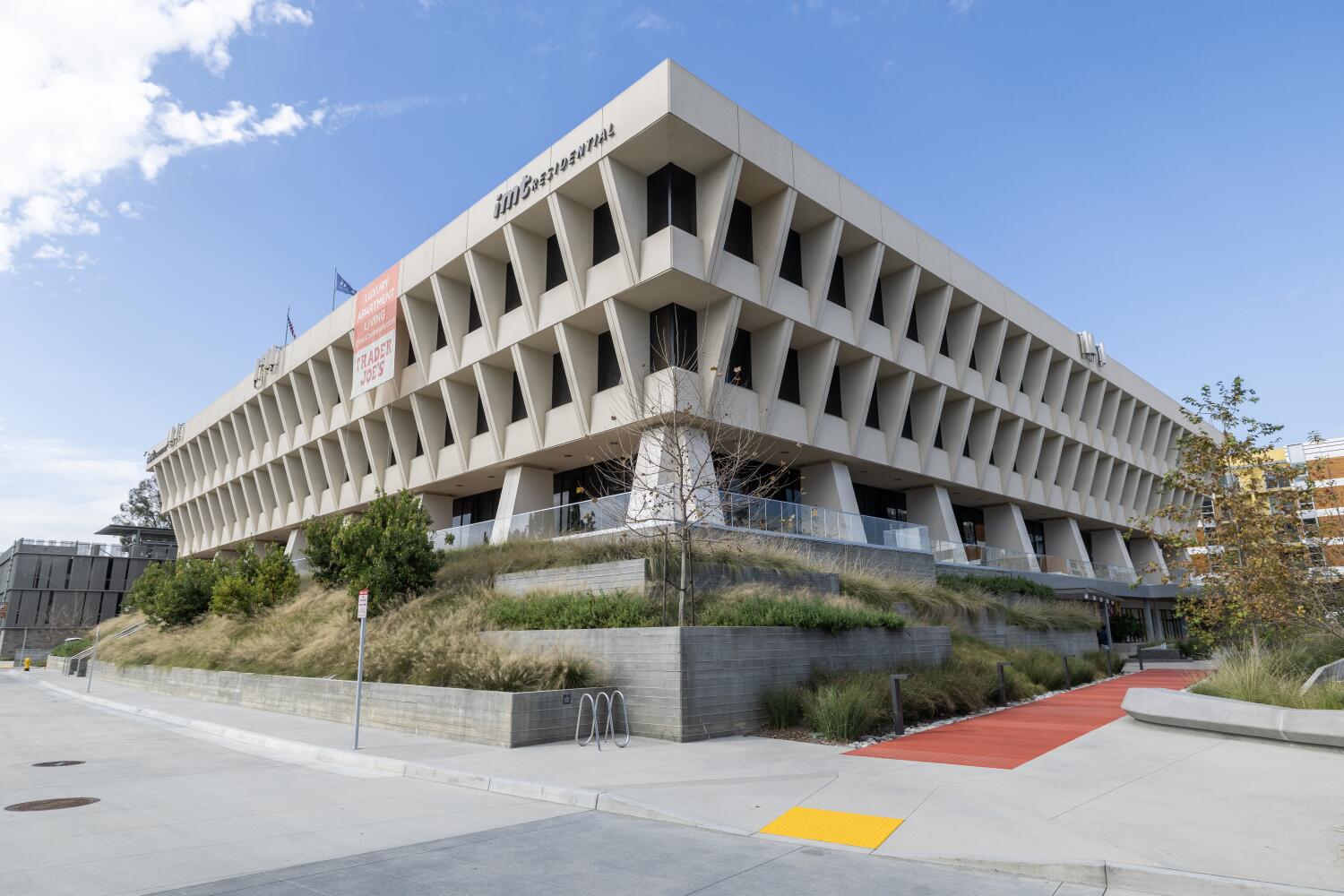
The Los Angeles Citywide Adaptive Reuse Ordinance (Citywide ARO) is not a housing policy; it is a fundamental recalibration of urban asset utilization designed to resolve a specific friction in the capital markets. By decoupling the conversion of commercial assets into residential units from the standard discretionary review process, the city is attempting to compress the "entitlement risk premium" that has historically rendered office-to-residential conversions financially unviable. The success of this initiative depends less on the intent of the ordinance and more on the interplay between three critical variables: the physical geometry of the existing floor plates, the structural integrity of the legacy systems, and the current cost of debt.
The Triad of Conversion Feasibility
To analyze why this ordinance represents a departure from previous zoning strategies, one must examine the specific mechanisms it targets. The Citywide ARO aims to lower the "barrier to entry" for developers by removing several systemic bottlenecks that historically killed conversion projects in the cradle.
The Entitlement Bottleneck: Under previous regulations, converting a commercial building required a "change of use" permit that often triggered a full discretionary review, including public hearings and potential environmental impact reports (CEQA). The new ordinance establishes a "by-right" path, provided the building meets age and structural requirements. This removes the variable of political uncertainty from the development timeline.
The Density Misalignment: Conventional residential zoning typically dictates a maximum number of units based on lot size. Commercial buildings, designed for high-occupancy office use, often possess a higher floor-area ratio (FAR) than what would be allowed for a new residential build on the same site. The ordinance permits developers to maintain existing floor area and height, effectively grandfathering in density that would otherwise be illegal to build today.
Parking and Open Space Requirements: Residential codes usually require specific amounts of dedicated parking and communal open space. These are physical impossibilities for many mid-century office towers sitting on zero-lot-line footprints. By waiving or drastically reducing these mandates, the ordinance solves for the physical constraints of the existing concrete shells.
The Floor Plate Paradox
While the ordinance solves for the legal framework, it cannot solve for the laws of physics. The primary reason most office buildings in Los Angeles remain vacant rather than being converted is the "deep floor plate" problem. Modern office buildings are designed for open-plan layouts with massive distances between the exterior windows and the building's core (the elevator shafts and stairs).
Residential units require natural light and ventilation in every bedroom. In a deep-core office building, the center of the floor plate becomes "dead space" because it is too far from the windows to be legally habitable. This creates an inefficient net-to-gross ratio.
- The Inefficiency Ratio: If a developer can only utilize 60% of a floor’s square footage for leasable apartment space because the inner 40% has no light access, the per-square-foot cost of the project skyrockets.
- The Plumbing Multiplier: Commercial buildings are plumbed for central restrooms near the core. Residential buildings require "wet stacks" for kitchens and bathrooms in every individual unit. Retrofitting a post-tensioned concrete slab with hundreds of new vertical pipe penetrations is an invasive, high-risk engineering feat that frequently exceeds the cost of ground-up construction.
The Economic Model of the Commercial-to-Residential Yield Gap
A developer’s decision to execute a conversion is a function of the spread between the current "as-is" value of the office building and the projected "stabilized" value of the residential asset minus the cost of conversion.
$$V_{spread} = V_{residential} - (V_{office} + C_{conversion})$$
Where $V_{spread}$ must be high enough to satisfy the equity investors' risk-adjusted return requirements. The Citywide ARO attempts to shrink $C_{conversion}$ (by removing regulatory fees and time delays), but it cannot influence $V_{office}$ or the cost of construction labor. Currently, many office owners carry debt on their properties that exceeds the building's value as a conversion candidate. This "equity gap" means owners would have to record a massive loss just to sell the building to a developer who wants to build apartments. The ordinance is a necessary condition for conversion, but it is not a sufficient one in an environment with elevated interest rates.
Seismic and Structural Realities
Los Angeles presents a unique engineering hurdle: the 1994 Northridge earthquake standards. Many of the buildings targeted by the ordinance are "non-ductile concrete" or "pre-Northridge steel" structures.
- The Retrofit Trigger: A "change of use" under the Los Angeles Building Code often triggers a mandatory seismic upgrade to current standards.
- Structural Stiffness: Office buildings are designed for different "live loads" than residential buildings. While office floors are generally stronger, the distribution of weight in an apartment building (with heavy partitions, appliances, and tubs) changes the center of mass.
- The Cost Function: If a seismic retrofit is required, it can add $50 to $100 per square foot to the project cost. For a 100,000-square-foot building, this is a $5 million to $10 million line item that does not produce any additional revenue.
Segmenting the Inventory: Which Buildings Will Actually Convert?
Not all "empty office buildings" are candidates for this ordinance. The market will likely bifurcate into three distinct tiers:
- Tier 1: Pre-War Assets (The "Easy" Wins): Buildings constructed between 1900 and 1940. These typically have narrower floor plates, operable windows, and high architectural character. They were built before central HVAC, meaning they were designed for natural light and air—the exact requirements of modern residential code.
- Tier 2: Mid-Century Modern (The Challenge): 1950s–1970s "box" towers. These are the primary targets of the ordinance. They have deep floor plates but often have simple post-and-beam construction that is easier to modify than later designs.
- Tier 3: Post-1980s Skyscrapers (The Non-Starters): These buildings have massive floor plates, sealed glass skins, and complex life-safety systems. They are almost never viable for residential conversion because the cost to "core out" the center of the building for light would be prohibitive.
The Strategic Recommendations for Capital Deployment
Investors looking to capitalize on the Citywide ARO should ignore the headline numbers regarding "thousands of units" and focus on micro-level structural viability. The real opportunity lies in "B-Class" office assets in transit-oriented districts that were already facing obsolescence before the work-from-home shift.
- Prioritize Asset Acquisition at Land Value: Only acquire assets where the purchase price per square foot is approaching the value of the dirt itself. The cost of conversion is too volatile to pay any premium for the existing "office" cash flow.
- Focus on Unit-Mix Flexibility: Design layouts that utilize the "dead space" in deep floor plates for internal storage, home offices, or media rooms—areas that do not legally require windows. This maximizes the leasable square footage without requiring expensive structural "voids."
- Monitor the Sunset Clauses: The ordinance includes specific timelines for project commencement. The first wave of developers to successfully navigate the new by-right process will set the benchmark for construction costs; wait for the first three successful "Permit Issuance" case studies before committing major capital to non-standard structures.
The L.A. Citywide ARO represents a tactical retreat by the city from over-regulation, acknowledging that the private market is the only engine capable of addressing the housing deficit. However, the conversion of the city's skyline will be a surgical process, not a wholesale transformation. Success will be determined by engineering precision and the ability to find "thin" buildings in a "thick" market.