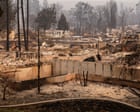
When a single human action initiates an ecological disaster spanning thousands of acres, the public discourse typically defaults to moral outrage rather than structural analysis. The recent arrest of an individual in Washington state for allegedly sparking the largest regional wildfire provides a critical case study in environmental risk exposure, law enforcement accountability, and the systemic vulnerabilities of rural wilderness management. Understanding this event requires stripping away sensationalism to examine the exact mechanics of ignition, the legal frameworks governing environmental destruction, and the economic externalities borne by taxpayers and local ecosystems.
The Ignition Vector and Environmental Vulnerability
Wildfire initiation relies on a simple thermodynamic equation: fuel, oxygen, and an ignition source meeting under specific atmospheric conditions of low humidity and high temperature. In dry summer environments, the margin for error approaches zero. Human-caused ignitions, whether intentional or accidental, exploit systemic environmental degradation such as drought stress, accumulated dry underbrush, and high wind corridors. Meanwhile, you can find similar stories here: What We Know About the Tragic Cyprus Car Fire That Claimed an 88 Year Old British Expat and His Dog.
The primary vulnerability in the Pacific Northwest lies in the wildland-urban interface. As human populations expand into forested zones, the frequency of ignition events increases non-linearly. When an individual introduces an open flame or spark into a parched ecosystem, the rate of spread is dictated by three primary environmental variables:
- Topography: Steep slopes accelerate fire progression upward through pre-heating vegetation via convective heat transfer.
- Fuel Loading: Decades of fire suppression policies have frequently resulted in unnatural accumulations of dense timber litter and ladder fuels.
- Meteorological Conditions: Low relative moisture content in fine fuels allows instantaneous combustion upon exposure to minimal thermal energy.
When legal authorities charge a suspect with starting a major wildfire, the investigative burden relies heavily on forensic botany, burn pattern analysis, and digital footprint tracking. Investigators must reverse-engineer the fire's origin point, isolating the exact vector of thermal transfer that transitioned a controlled space or spark into an uncontrolled crown fire. To understand the complete picture, we recommend the excellent article by The Guardian.
The Legal and Financial Calculus of Environmental Destruction
Prosecuting an alleged arsonist in a wildfire case involves complex legal mechanics that differentiate between criminal intent, recklessness, and negligence. Under Washington state law, malicious mischief and reckless burning statutes scale dramatically based on the monetary value of property damage, suppression costs, and ecological harm.
The financial architecture of a major wildfire response comprises several distinct cost centers:
- Suppression Expenditure: Direct deployment of aerial assets, heavy machinery, and hand crews often costs municipal, state, and federal agencies millions of dollars per day.
- Infrastructure Replacement: Destruction of power grids, transportation corridors, and residential structures creates long-term capital deficits for local governments.
- Natural Capital Depletion: The loss of timber assets, watershed integrity, and carbon sequestration capacity represents a profound, albeit frequently unquantified, economic drain.
Holding an individual legally accountable for these aggregated costs presents an inherent systemic paradox. Civil judgments or restitution orders rarely yield meaningful financial recovery because the total liability routinely exceeds millions of dollars, rendering the defendant permanently insolvent. Consequently, the justice system functions primarily as a deterrent and a punitive measure rather than an economic remediation tool.
Institutional Response and Preventive Bottlenecks
Emergency management agencies operate under strict resource allocation constraints. When a fire surpasses initial containment thresholds, operational strategy shifts from tactical suppression to triage-based asset protection. This transition highlights a persistent failure in proactive mitigation.
Preventive interventions—such as controlled burns, mechanical thinning, and stringent fire-ban enforcement during peak drought cycles—consistently yield higher return on investment than reactive suppression. However, public policy and budgetary allocations remain skewed toward post-ignition response. Agencies face political friction, public pushback over smoke pollution from prescribed burns, and jurisdictional fragmentation between federal forest services and state departments of natural resources.
To alter this trajectory, regional risk mitigation must decouple from purely reactive policing. This demands continuous remote-sensing surveillance of high-risk corridors, automated thermal detection arrays in remote wilderness zones, and rigorous enforcement of public access restrictions during extreme fire weather warnings. Without structural changes to how society manages human access to vulnerable ecosystems, ignition events will continue to overwhelm suppression capacities, transforming localized criminal acts into catastrophic regional systemic failures.