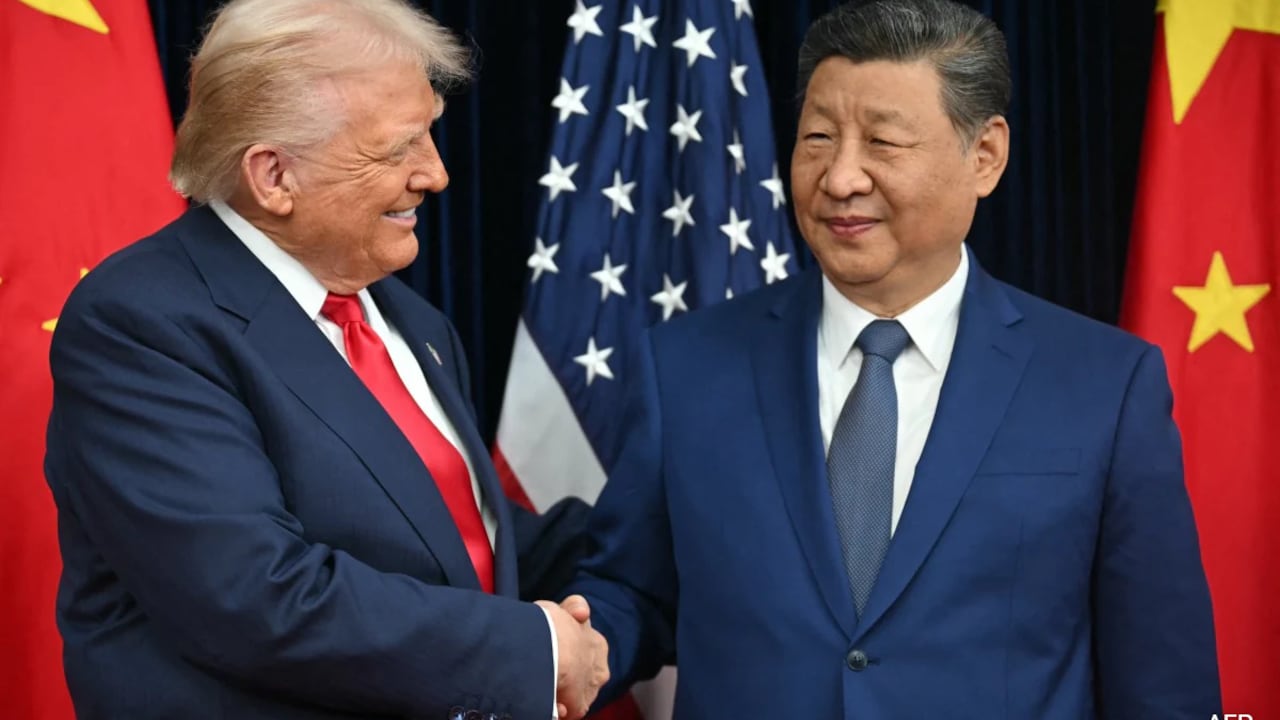
Bilateral negotiations between the United States and China operate within structural constraints dictated by domestic industrial policy, supply chain inertia, and strategic competition. The proposed reciprocal tariff reductions targeting thirty billion dollars of non-sensitive goods in each direction, alongside formalized dialogues regarding advanced computational systems, represent a calibrated pause rather than a permanent structural alignment. Analyzing the mechanics of these agreements requires examining the economic cost functions of tariff barriers and the game-theoretic parameters governing artificial intelligence oversight between rival superpowers.
The Tariff Reduction Mechanism and Supply Chain Friction
Tariffs function as a tax on domestic consumers and intermediate goods processors, creating deadweight loss across integrated supply chains. The framework established through the bilateral trade council targets non-sensitive categories—including agricultural products, wood, cosmetics, small appliances, and toys—to provide immediate relief to margin-pressed sectors without compromising core technological or defense manufacturing bases.
The implementation timeline highlights the operational friction inherent in state-level trade management. While political summits generate headline figures, execution depends on regulatory alignment and customs enforcement. China's management of non-soybean agricultural purchases, which have tracked below historical targets, illustrates the divergence between aggregate agreements and execution velocity. Beijing links expanded commodity imports to the realization of reciprocal tariff adjustments, turning agricultural purchasing volumes into a lagging indicator of broader trade normalization.
[Tariff Reduction Agreement]
       │
       ├─► Non-Sensitive Goods Tranche ($30B bilateral ceiling)
       │         │
       │         ├─► US Exports: Agriculture, Wood, Cosmetics
       │         └─► China Exports: Small Appliances, Toys, Decorations
       │
       └─► Execution Variable: Agricultural Import Volume & Customs Implementation
This exchange mechanism exposes the structural limits of executive-level economic truces. Trade deficits and industrial policies cannot be resolved through short-term purchase commitments alone, because private sector purchasing agents respond to market pricing signals, shipping logistics, and regulatory compliance risks rather than state directives.
The Architecture of Superintelligence Risk Management
Parallel to trade adjustments, the institutionalization of a bilateral dialogue on artificial intelligence and superintelligence introduces a novel diplomatic category: systemic technical risk mitigation between geopolitical rivals.
The architecture of this dialogue focuses on three operational vectors:
- Pre-release evaluation protocols and testing methodologies for advanced models.
- Mechanisms to maintain human oversight and command authority over automated systems.
- Direct incident communication channels designed to prevent technological escalations or automated feedback loops from triggering geopolitical crises.
The primary challenge in this domain is the asymmetry of domestic innovation ecosystems and the commercial race for computational dominance. Treasury and trade officials must balance the imperative of preventing unintended catastrophic outcomes against the domestic political demand to preserve domestic technological leadership. Establishing a communication channel for AI-related incidents acts as a structural circuit breaker, mitigating the risk of algorithmic misinterpretation during military or critical infrastructure events, but it does not resolve the underlying competition for foundational hardware, semiconductor supply chains, and algorithmic talent.
Strategic Outlook and Operational Execution
The durability of the thirty-billion-dollar tariff adjustment and the AI dialogue depends on institutional follow-through rather than diplomatic communiqués. The creation of formal trade and technology councils provides a permanent bureaucratic venue to process friction, but domestic political shifts—such as legislative oversight, congressional hearings, and administration changes—introduce continuous variables that can disrupt implementation.
For market participants and institutional strategists, the analytical takeaway is clear. Treat bilateral trade truces as localized liquidity events for specific export categories rather than macroeconomic realignments. Monitor the operationalization of the AI incident communication channels as the primary metric of whether strategic stability mechanisms are functional or merely nominal. The equilibrium between Washington and Beijing remains defined by managed competition, where tactical cooperation on risk reduction coexists with structural rivalry across economic and technological domains.