High-fatality commercial transit accidents are rarely isolated errors of individual judgment; rather, they represent systemic failure points across regulatory, mechanical, and operational domains. When a heavy commercial vehicle collides with stationary or slow-moving transport on a major thoroughfare, the incident exposes vulnerabilities in driver fatigue management, vehicle conspicuity standards, and infrastructure safety margins. Analyzing such events requires moving past surface-level liability assignment and deconstructing the underlying variables that govern heavy transport safety.
The Operational Risk Matrix in Long-Haul Transport
Commercial freight transport operates under tight temporal and economic constraints that directly influence operational safety. The primary risk vectors can be categorized into three distinct operational pressures.
First, driver physiological limits constitute a critical variable. Long-haul transit schedules frequently push against the boundaries of human circadian rhythms and sustained vigilance capabilities. Without strict, technologically enforced telemetry tracking for rest intervals, cumulative fatigue degrades reaction times and hazard perception. When a driver encounters an unexpected roadway obstacle, cognitive latency determines whether the outcome is a near-miss or a catastrophic collision.
Second, vehicle kinetic profiles dictate severity. A heavy-duty truck possesses mass and momentum magnitudes that dwarf standard passenger vehicles or buses. When kinetic energy transfer occurs during an impact with a stationary or slower-moving heavy vehicle, the structural deformation of the passenger compartment accelerates exponentially. The velocity differential between the striking vehicle and the impacted object defines the force absorption requirements, which frequently exceed the structural crashworthiness thresholds of standard commercial buses.
Third, fleet maintenance and mechanical integrity govern failure probabilities. Brake system degradation, tire wear patterns, and auxiliary lighting failures reduce the margin of error when emergency maneuvers are required. In many jurisdictions
Systemic Vulnerabilities in Heavy Freight Transit and Fatal Road Collision Dynamics
news
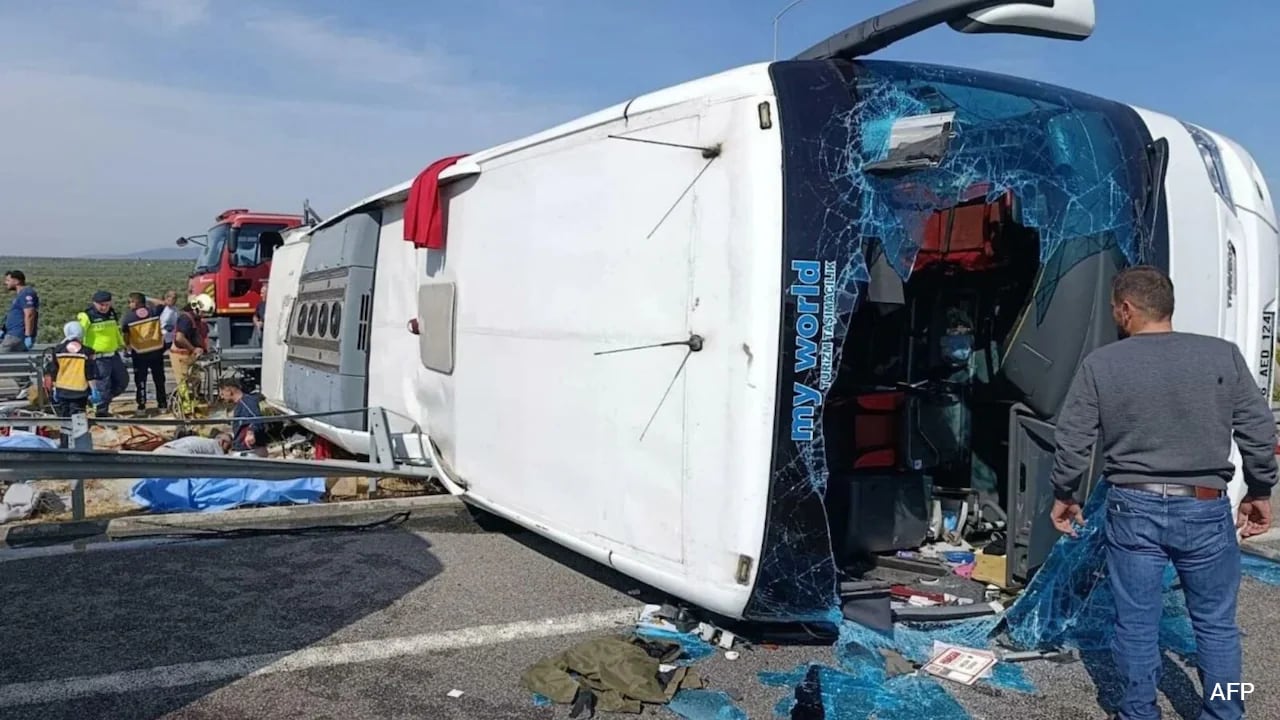
The fatal collision between a long-haul commercial truck and a passenger bus in Turkey, resulting in eleven fatalities and multiple severe injuries, illustrates a systemic breakdown in transport infrastructure safety protocols. Standard incident reports attribute these events to driver negligence or momentary lapses in attention. This analytical deconstruction examines the underlying variables—kinetic energy transfer, driver fatigue vectors, and enforcement deficits—that transform routine transit networks into high-consequence risk environments.
The Physics of Commercial Vehicle Impact Mechanics
When a commercial vehicle of massive tonnage collides with a passenger transit bus, the severity of the outcome is governed entirely by kinetic energy dissipation principles. The kinetic energy scale factor is determined by the combined mass and velocity of both objects. A freight truck operating at highway speeds carries an exponential amount of momentum compared to a passenger vehicle or a localized transit bus.
During an off-axis or head-on impact, the energy absorption structures of standard buses are rarely engineered to withstand the concentrated shear forces delivered by the rigid chassis of a heavy freight carrier. The resulting structural collapse compromises the passenger cabin integrity, leading to catastrophic occupant displacement and fatal blunt-force trauma.
Mitigating this risk requires moving beyond reactive driver blame toward proactive infrastructure design. Separated median barriers with high-containment ratings, mandatory automated emergency braking systems on heavy commercial fleets, and rigid geometric alignment of highway lanes are structural interventions required to alter the baseline safety threshold. When these engineering controls are absent, any operational error by a driver instantly translates into maximum structural failure.
The Economics and Physiology of Driver Fatigue
Commercial transit accidents are rarely isolated cognitive errors; they are predictable outcomes of systemic operational pressures. The detention of both drivers following the collision addresses legal accountability, yet it ignores the macro-level economic incentives that govern freight transport.
Long-haul drivers operate under strict delivery windows and economic remuneration models that penalize downtime. This structure encourages the suppression of fatigue indicators. Chronic sleep deprivation degrades cognitive processing speed, narrows visual field attention, and impairs hazard perception latency.
When a driver operates a heavy vehicle under severe fatigue, micro-sleep episodes occur without conscious awareness. If these episodes coincide with critical highway junctions or unexpected stationary hazards, the reaction time window closes before corrective steering or braking inputs can be initiated. Regulatory bodies that fail to enforce strict, technologically verified electronic logging of rest periods are effectively subsidizing high-risk operational behaviors.
Regulatory Enforcement Gaps and Oversight Failure
The institutional response to major transit fatalities typically centers on punitive measures directed at the individuals operating the vehicles at the moment of impact. This focus obscures the regulatory vacuum that permits substandard vehicle maintenance, excessive payload weights, and non-compliance with mandatory rest cycles to persist across logistics networks.
Effective safety management systems rely on continuous auditing rather than post-incident penalization. In many developing transit corridors, inspection protocols for heavy freight vehicles are sporadic, allowing mechanical failures—such as brake degradation, worn tire treads, and steering linkage fatigue—to go undetected. Similarly, commercial transport companies frequently operate with minimal compliance oversight, creating an environment where corner-cutting becomes economically rational.
Addressing these structural vulnerabilities requires shifting the regulatory burden from individual operators to corporate fleet management. Fleets must be held legally and financially liable for scheduling practices that incentivize safety violations. Furthermore, automated weigh-in-motion sensors and digital tachograph mandates must be deployed universally to remove human discretion from compliance verification.
Strategic Operational Intervention Framework
To alter the trajectory of commercial transit fatalities, regional transport ministries and logistics operators must implement a prioritized corrective sequence.
The immediate operational priority involves the deployment of mandatory telematics across all commercial freight vehicles to monitor real-time driver alertness, speed profiles, and braking frequency. This eliminates reliance on retrospective logbook audits.
The intermediate structural priority requires redesigning high-risk transit corridors with physical separation barriers capable of absorbing heavy vehicle impacts without breaching into oncoming lanes. Dual-carriageway expansions must replace legacy undivided highways where head-on collisions remain statistically probable.
The long-term institutional priority is the restructuring of freight pricing models to decouple driver compensation from speed and distance alone, ensuring that rest and vehicle maintenance are integrated into the core cost of logistics operations.