Political positioning rarely occurs in a vacuum; it follows a predictable economic and structural calculus governed by resource allocation, name recognition thresholds, and ideological market positioning. When a veteran legislator publicly signals an exploratory interest in a national executive bid, the action functions as a signal to donors, party infrastructure gatekeepers, and media gatekeepers. Deconstructing this political maneuver requires examining the underlying mechanics of ambition, institutional positioning, and the strict constraints facing non-traditional primary candidates in modern American elections.
The Resource Threshold and the Cost Function of National Ambition
Launching a national campaign imposes a punishing cost function on any political actor. The inputs required are capital, institutional loyalty, and media oxygen. For a sitting senator from a safe seat, the financial risk is asymmetrical. Campaigning for the presidency does not jeopardize a state-level legislative mandate if local laws permit concurrent filings, but it does demand an aggressive reallocation of time away from committee leverage and legislative drafting.
The economic model of a modern primary run relies on a dual-fundraising engine: small-dollar digital contributions driven by ideological alignment, and high-net-worth donor networks managed by political action committees. A candidate entering late or from a distinct ideological wing must calculate the marginal cost of acquiring donor share in an already crowded marketplace. If the incumbent or frontrunner coalition commands the primary institutional apparatus, challengers face diminishing returns on paid media expenditures.
Opportunity Cost Analysis
- Legislative Influence: Time spent on the national circuit displaces direct oversight of domestic policy negotiations and committee assignments.
- Donor Capital Depletion: Primary fundraising drains donor networks that would otherwise fund localized state defense campaigns.
- Brand Dilution: Shifting focus from a distinct legislative identity to a broad national platform risks alienating the core constituency that guarantees safe reelection margins.
Ideological Differentiation and Market Positioning
In any political primary, candidates compete for market share within specific ideological segments. The Republican primary electorate, for instance, evaluates contenders through distinct analytical filters: economic populism, institutional resistance, national security posture, and cultural alignment.
A candidate originating from the southern conservative bloc must differentiate their value proposition from populist firebrands and technocratic executives alike. The strategic play involves carving out a specific niche—often defined by fiscal austerity rhetoric paired with sharp, highly targeted rhetorical delivery that plays effectively in digital media loops. This is not merely a matter of personal style; it is a deliberate market-positioning strategy designed to capture earned media without incurring the prohibitive capital expenditures required for saturated television ad buys.
However, differentiation carries structural risks. Over-indexing on a specific rhetorical style can solidify a candidate's ceiling among moderate suburban voters who historically dictate general election outcomes. The calculus therefore demands a delicate equilibrium between primary-stage mobilization and general-election viability.
The Media Amplification Loop and Earned Media Efficiency
Paid media is prohibitively expensive. Consequently, viability in the early stages of a presidential cycle depends entirely on earned media efficiency—the ratio of media coverage generated to capital expended.
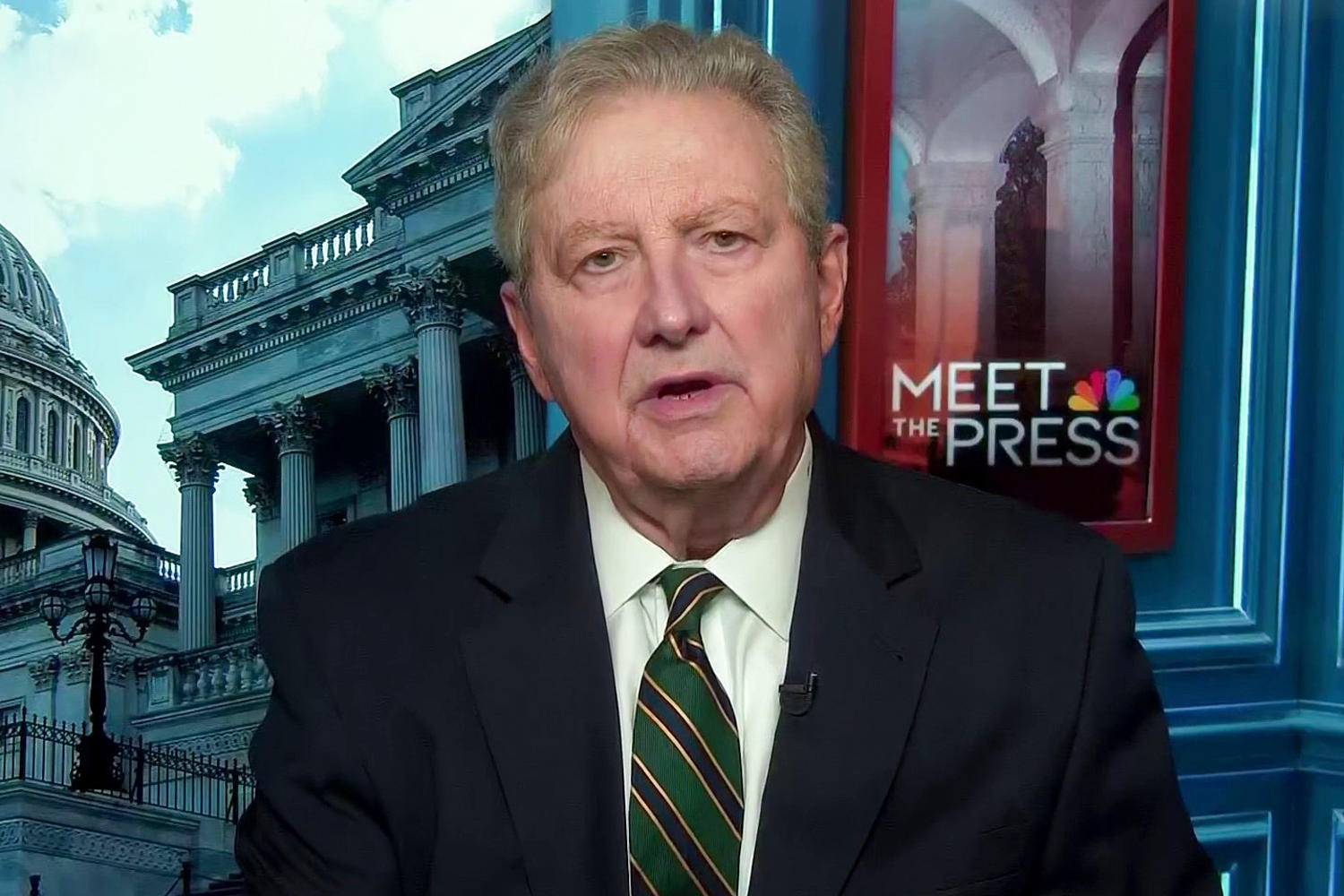
When a prominent senator muses about a presidential run in an interview, they test the responsiveness of the media ecosystem. Media outlets operate on predictable engagement algorithms. A provocative quote or an unexpected declaration of interest triggers a cascading series of retweets, cable news panel analyses, and secondary op-eds. This creates a high-frequency feedback loop that costs the candidate nothing in ad buys while maximizing brand recall among primary voters.
The tactical execution of this phase relies on controlled ambiguity. By stating that an option is under consideration rather than officially declaring candidacy, the politician retains maximum tactical flexibility. They can measure baseline polling movement, gauge donor enthusiasm, and assess opposition research vulnerabilities without triggering formal Federal Election Commission reporting requirements or enduring the rigorous scrutiny of an active exploratory committee.
Institutional Friction and the Party Apparatus
The modern primary system is heavily influenced by party rules, state delegate allocation formulas, and institutional gatekeepers. A challenger operating outside the inner circle of the national party apparatus faces structural friction at every turn.
State-level filing deadlines, petition requirements, and debate qualification thresholds are designed to filter out marginal campaigns. Even for a seasoned lawmaker with high name recognition, navigating these technical hurdles requires an experienced operational team capable of executing complex logistical maneuvers across multiple states simultaneously.
Furthermore, endorsements from state legislators and local power brokers serve as a proxy for organizational strength. National donors look to these local indicators to determine whether a candidate possesses the infrastructure necessary to convert enthusiasm into actual votes. Without a robust ground game in early-voting states like Iowa, New Hampshire, and South Carolina, even the most skilled media operator will struggle to transition from exploratory musings to a viable ballot presence.
Strategic Execution
To convert exploratory positioning into a viable structural trajectory, any subsequent operational phase must prioritize three distinct milestones:
- Liquidity Verification: Securing formal commitments from high-net-worth bundlers before making any public declaration to ensure a baseline operational runway.
- Geographic Footprint Design: Establishing localized operational committees in early primary states to bypass the reliance on pure earned media.
- Policy Consolidation: Translating broad rhetorical positioning into a rigorous, costed legislative platform that withstands academic and media scrutiny.