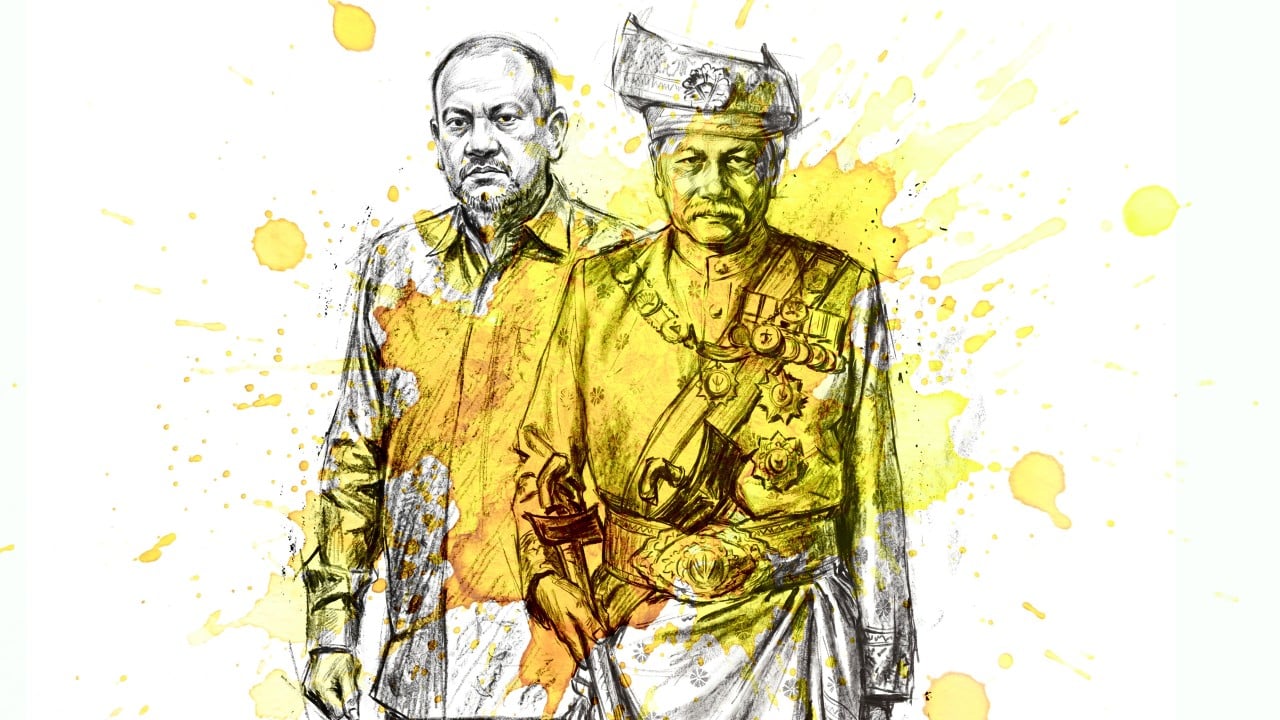
The institutional stability of Malaysia relies on a calibrated equilibrium between written federal-state compacts and uncodified traditional systems. When this equilibrium fractures, the points of failure trace back to ambiguities in foundational legal texts and competing interpretations of customary authority. The constitutional crisis in Negeri Sembilan exposes the systemic vulnerabilities inherent in managing a hybrid elective monarchy governed concurrently by the State Constitution of 1959 and the ancient matriarchal matrix of Adat Perpatih. Deconstructing this friction requires analyzing the administrative mechanisms, statutory ambiguities, and jurisdictional boundaries that transformed an internal customary dispute into a structural governance test.
The Dual Sources of Authority and Jurisdictional Friction
Negeri Sembilan operates within a unique framework where executive legitimacy draws from two distinct institutional reservoirs: the statutory power vested in the written State Constitution and the traditional authority exercised by the Undang Yang Empat (the four ruling territorial chieftains) through the Dewan Keadilan dan Undang (DKU). This arrangement creates an inherent governance hazard. The system assumes that customary recognition and written constitutional procedures will move in lockstep. For an alternative look, check out: this related article.
When discrepancies arise between the removal or appointment of traditional chieftains at the local district (luak) level and the recognition procedures administered by the DKU, the institutional machinery stalls. The written Constitution establishes strict procedural hurdles for calling upon the Yang di-Pertuan Besar to abdicate or vacate office—specifically mandating a thorough inquiry and joint proclamations under defined statutory signatures. Conversely, Adat Perpatih vests immense discretionary weight in ancestral lineage and clan consensus, which resists rigid codification. When traditional leaders and modern state executives interpret these overlapping domains through mutually exclusive lenses, institutional paralysis ensues.
Statutory Ambiguities in the 1959 Constitution
The primary vulnerability of the Negeri Sembilan constitutional framework lies in the interpretive space left by Articles 10, 14, and 16 of the State Constitution. Further analysis on the subject has been provided by The Guardian.
- The Inquiry Threshold: Article 10 outlines the mechanism for addressing questions concerning the ruler, yet the text lacks procedural granularity regarding the execution of a required "full and complete enquiry". It does not specify evidentiary standards, notice periods, or the exact judicial forum required to validate grounds such as an overt act against royal dignity. This absence of procedural instruction converts administrative disagreements into contests of political will.
- Enforcement Gaps: While Article 16 grants finality to the advice and determinations of the DKU on customary questions—stipulating they cannot be challenged in any court—the text provides no internal enforcement mechanism. When a contested office-holder or opposing faction refuses to vacate traditional premises or accept administrative rulings, the system relies on external actors, such as the civil courts or police, to arbitrate matters of royal succession.
- The Supremacy Clause Dilemma: Article 32 attempts to reconcile written law with unwritten custom by stating that ancient custom applies only where it is consistent with the written text. However, it fails to establish a precise hierarchy for resolving deadlocks where customary actors claim that the written constitution itself has infringed upon foundational Adat principles.
The Executive and Judicial Vector
The intersection of royal succession disputes with electoral politics introduces a secondary layer of instability. Under the Westminster-derived structure operating at the state level, the Menteri Besar and the State Executive Council (Exco) govern through majority confidence in the Legislative Assembly while maintaining a constitutional relationship with the Yang di-Pertuan Besar.
When political realignments occur—such as shifts in legislative backing or the reconfiguration of the state executive following elections—the administrative apparatus is abruptly caught between competing royal claimants. If members of the executive branch recognize a proclamation issued by one traditional faction while the sitting ruler exercises constitutional powers to revoke executive appointments under Article 38, the separation of powers collapses into an institutional interregnum. The reliance on high court injunctions and executive withdrawals of formal notifications demonstrates that modern statutory mechanisms are poorly equipped to process simultaneous claims of traditional legitimacy.
Institutional Remediation and Safeguards
To prevent future structural collapses of this magnitude, institutional architects must address the governance debt embedded in the state's legal framework.
First, the state legislature and customary councils must codify precise procedural bylaws for the "full and complete enquiry" mandated by the constitution, replacing subjective interpretations with objective evidentiary thresholds.
Second, the jurisdictional boundaries between the civil courts and the DKU require statutory harmonization. While the finality of customary determinations under Article 16 must be respected to preserve heritage, the administrative execution of those determinations requires a transparent, codified dispute-resolution protocol that does not depend on shifting legislative majorities.
Third, executive actors must establish strict institutional firewalls ensuring that daily governance and the formation of the state government remain insulated from succession disputes within traditional clan structures.
The durability of Negeri Sembilan's constitutional monarchy depends entirely on its capacity to modernize its procedural rules without eroding the ancient customary consensus that defines its identity. Without structural amendments clarifying the limits of traditional authority versus written constitutional mandates, the system remains exposed to recurring executive friction and jurisdictional deadlock.


