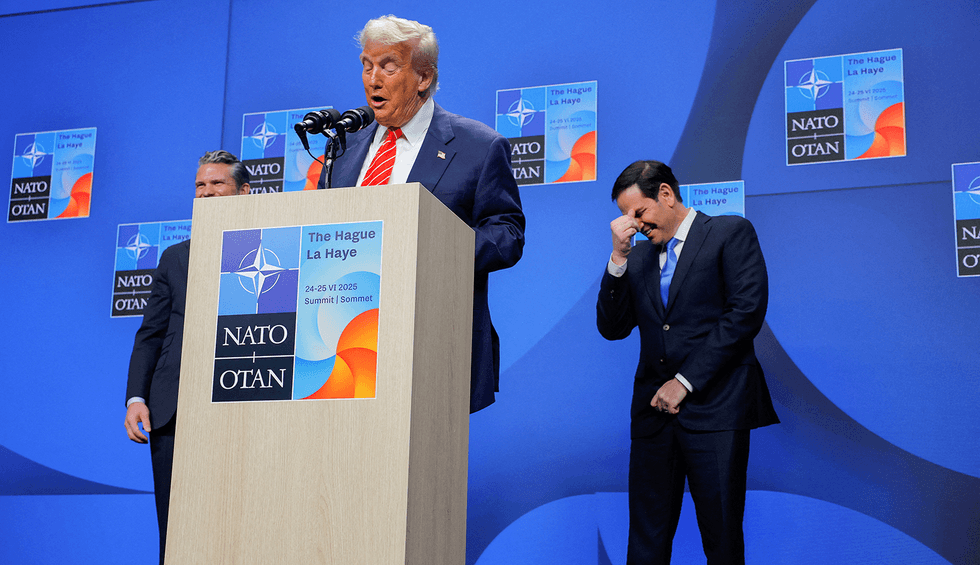
The current reduction of United States military personnel in Germany represents an intentional shift from conventional alliance-based force posture to an ad hoc executive command model. Rather than an administrative oversight, this withdrawal functions as a tactical lever in a broader diplomatic negotiation. The military apparatus learned of this movement through public signaling and secondary review channels because the decision-making process bypassed the standard interagency deliberation cycle.
The Decision Logic
The mechanism for this troop adjustment relies on a binary cost-benefit calculation that prioritizes immediate executive policy goals over legacy theater stability. By isolating the Germany withdrawal from traditional NATO consultation, the administration achieves three specific objectives:
- Strategic Coercion: Applying direct pressure on allies who refuse to participate in current Middle East theater operations.
- Resource Reallocation: Aligning physical presence with active conflict requirements, prioritizing the immediate war effort over territorial defense in Europe.
- Institutional Flexibility: Removing the friction of congressional and allied oversight, allowing the White House to adjust force levels unilaterally based on fluid diplomatic outcomes.
The conflict between the administration and the German government regarding the conflict with Iran serves as the primary catalyst. When diplomatic leverage fails to produce coalition support, the administration utilizes force posture as a direct instrument of negotiation. The Pentagon’s statement citing a "thorough review of theater requirements" is a bureaucratic standard operating procedure designed to frame a political maneuver as an operational necessity.
Operational Consequences and Structural Gaps
The withdrawal of 5,000 personnel, with the potential for further reductions, creates a significant operational vacuum that current European defensive capabilities cannot immediately fill. This introduces a distinct set of risks to the Atlantic security architecture.
- Deterrence Dilution: The removal of specific assets, such as a brigade combat team and long-range fires capability, reduces the immediate tactical response capacity available to European Command.
- Command and Control Fractures: Germany houses critical command hubs for both European and Africa Commands. Reducing the protective footprint around these nodes necessitates a reliance on host-nation security that is currently strained by political friction.
- Legislative Bottlenecks: Congress previously codified minimum troop strength requirements in Europe. Unilateral executive action here forces a legal collision course. The administration is navigating the gray zone of these statutes by characterizing the move as a "review" or "redeployment" rather than a permanent base closure.
The Dynamics of Information Asymmetry
The military’s "blindsiding" is a feature of a system where intelligence and policy silos operate with total autonomy from the Executive Office. The Pentagon, NATO, and Congress are relegated to the role of reactive observers. They assess the policy change only after the President has broadcast the intent, turning internal logistics into a frantic damage-control exercise.
This creates an environment where military planners cannot maintain long-term readiness cycles. When force posture becomes a short-term tactical chip, training rotations, maintenance schedules, and infrastructure investments are compromised. Planning for a six-to-twelve-month withdrawal window—while the stated intent remains subject to change at the President's discretion—prevents any meaningful optimization of the remaining force.
Strategic Forecasting
The administration’s trajectory signals a transition toward a transactional foreign policy where forward-deployed assets are treated as disposable capital. Future force adjustments will likely follow this pattern:
- Escalation Trigger: A public disagreement with a NATO ally over a specific policy priority.
- Announcement: An unsourced or executive-led statement of intent to reduce forces.
- Operational Disconnect: The Department of Defense scrambles to reconcile the announcement with existing treaty obligations and congressional mandates.
- Implementation: A "thorough review" concludes that the withdrawal meets "theater requirements," finalizing the reduction.
The most probable outcome is a hollowed-out NATO presence where the United States maintains its most critical technological and intelligence assets while stripping away the conventional ground forces that traditionally guaranteed deterrence. The primary risk is not the specific loss of 5,000 troops, but the erosion of predictability in the US-Europe security compact. Allies must now budget for a scenario where American participation in regional defense is no longer a constant, but a variable contingent on current political alignment. The strategic play for any entity involved—whether a NATO member or a domestic agency—is to build independent defensive infrastructure that does not rely on the continuity of American force presence.