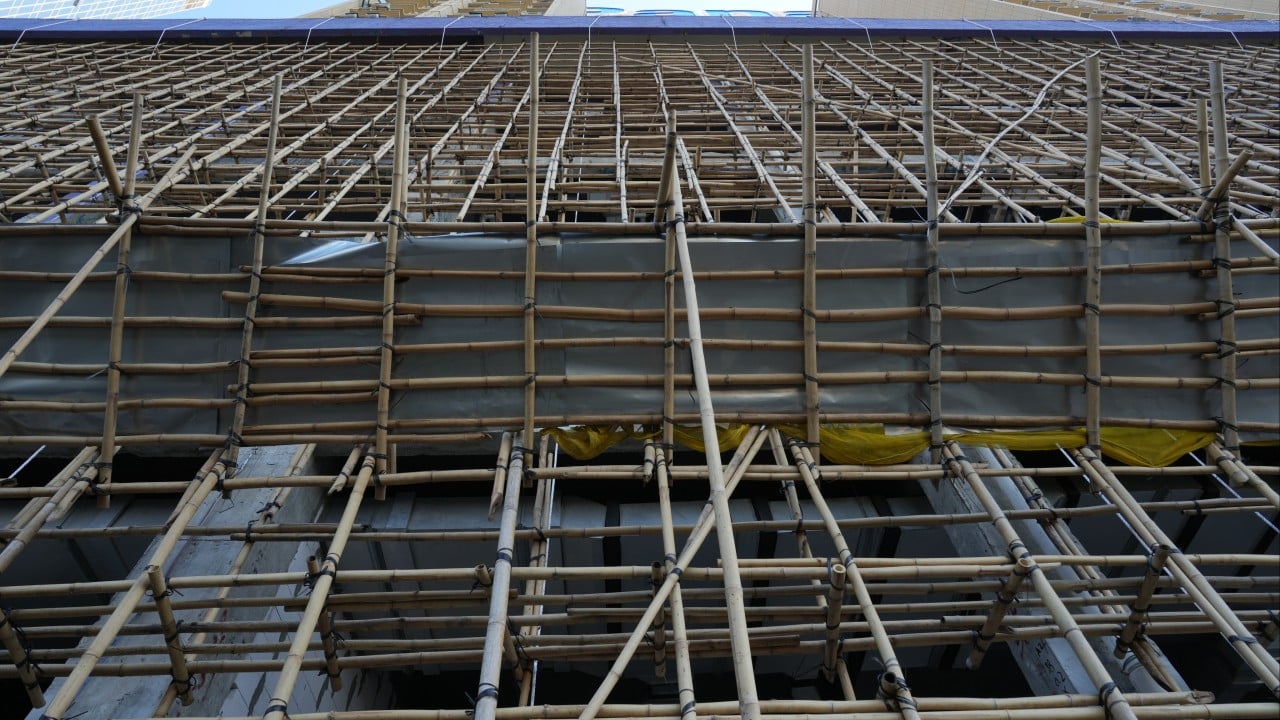
Residential and commercial security is often compromised not by a failure of digital systems, but by the physical modification of the building's exterior envelope during renovation. Scaffolding represents a temporary but profound shift in a property’s risk profile, effectively transforming a vertical barrier into a multi-level platform for unauthorized entry. When police report arrests following scaffolding-assisted burglaries, they are describing the exploitation of a specific architectural "backdoor" that bypasses ground-level security sensors, high-definition cameras, and physical reinforced entry points.
The Physical Utility of Scaffolding in Criminal Logistics
The presence of scaffolding alters the entry-cost function for a burglar. In standard conditions, reaching a second or third-story window requires specialized equipment (ladders) or high-risk physical exertion, both of which increase the "time-to-detection" and the "noise-signature" of the intrusion. Scaffolding removes these friction points.
The Access Elevation Model
Scaffolding provides three distinct tactical advantages to an intruder:
- Vertical Mobility: It converts the hardest-to-reach areas of a building into the most accessible. Upper-floor windows are frequently left unlocked or utilize weaker locking mechanisms compared to ground-floor doors.
- Visual Occlusion: Debris netting and wooden planks provide a "blind spot" for street-level witnesses and patrol cars. An intruder on a third-story platform is shielded by the very structure meant to protect the workers.
- Load Bearing and Stability: Unlike a ladder, which is unstable and limits the amount of equipment or stolen goods a person can carry, scaffolding provides a stable floor. This allows for the use of heavy-duty tools (angle grinders or pry bars) with maximum leverage.
The Three Pillars of Site Vulnerability
To quantify the risk associated with a construction site, one must look at the intersection of structural design, site management, and environmental factors. The vulnerability of a scaffolded building is a product of these three variables.
1. The Perimeter Permeability
The most common failure point is the base of the scaffold. If the first level of the structure is accessible from the ground without a ladder, the entire building is compromised. Effective site management requires the removal of the lowest ladder sections at the end of each shift or the installation of "ladder guards"—locked metal plates that prevent unauthorized climbing. When these are omitted, the "barrier to entry" drops to near zero.
2. The Lighting Deficit
Standard security lighting is designed to illuminate the ground and the building facade. Scaffolding creates complex shadows and internal "corridors" that existing lighting cannot penetrate. Without temporary, motion-activated lighting installed within the scaffolding structure itself, the area becomes a dark-zone where movement cannot be tracked by traditional CCTV.
3. The Alarm Bypass
Most residential security systems focus on "Point of Entry" (POE) sensors on the ground floor. Burglars aware of this pattern use scaffolding to target windows that are not integrated into the alarm circuit. This creates a "silent entry" scenario where the primary defense system is never triggered because the intruder never interacts with the protected zone.
Deconstructing the Security Failure Chain
The arrest of two individuals following a scaffolding-based entry suggests a failure in the Operational Security (OPSEC) of the site. Security is a chain; the strength of the system is determined by the weakest link in the daily routine of the construction crew and the property owner.
- The Routine Failure: Workers often leave windows "vented" or slightly open to dissipate dust or paint fumes. These openings are easily exploited from a scaffold platform.
- The Tool Availability: Leaving construction tools (saws, hammers, screwdrivers) on the scaffolding overnight provides an intruder with the means to breach the building using the owner’s own equipment.
- The Identification Lag: On active sites with multiple subcontractors, a person in a high-visibility vest on a scaffold may not look out of place to a casual observer, even after hours. This "social engineering" aspect of physical security allows intruders to operate in plain sight.
The Cost of Mitigation vs. The Price of Loss
The economic incentive for burglars is high because the "investment" required to breach a scaffolded building is low. Conversely, the cost for a property owner to secure a scaffold is relatively small compared to the potential loss of high-value assets or the compromise of structural integrity.
Necessary Hardening Protocols
A rigorous security strategy for any property under renovation must include:
- Physical Hardening: Installing 2.4-meter high plywood hoarding around the base of the scaffolding to prevent initial scaling.
- Electronic Detection: Deploying temporary, battery-powered Wireless Visual Verification (WVV) systems. These sensors detect heat and motion, sending a video clip to a monitoring station the moment a person enters the scaffold structure.
- Legal and Contractual Accountability: Including specific security requirements in the contract with the scaffolding firm, ensuring they are liable for failing to secure ladders or remove access points at the end of the workday.
The Relationship Between Scaffolding and Targeted Surveillance
Criminals rarely choose a target at random when scaffolding is involved. Observation of the site during working hours allows an intruder to map the internal layout of the building through open windows and identify where the most valuable items are located. This pre-meditation turns an "opportunistic" crime into a "targeted" strike.
The mechanical advantage provided by scaffolding is a force multiplier for criminal activity. It negates traditional architectural defenses by shifting the theater of operations to the building's least protected elevations.
Property owners must treat scaffolding not as a neutral tool for maintenance, but as a temporary bridge that connects the public space to their private interior. The strategy for mitigation must be proactive: assume the scaffolding is a viable path for an intruder and secure it with the same rigor applied to the front door. This involves a shift from passive security (locks and walls) to active security (detection and rapid response).
Every scaffolding installation should be audited for "climbability" by an independent party. If a person of average fitness can reach the first lift of the scaffold without a key or specialized tool, the site is effectively open to the public. High-intensity, vibration-sensitive alarms should be attached to the scaffolding poles themselves to detect the frequency of someone climbing the metal structure, providing an early warning before a window or door is even touched. This creates a defensive perimeter that extends outward from the building, reclaiming the "buffer zone" that the scaffolding originally occupied.