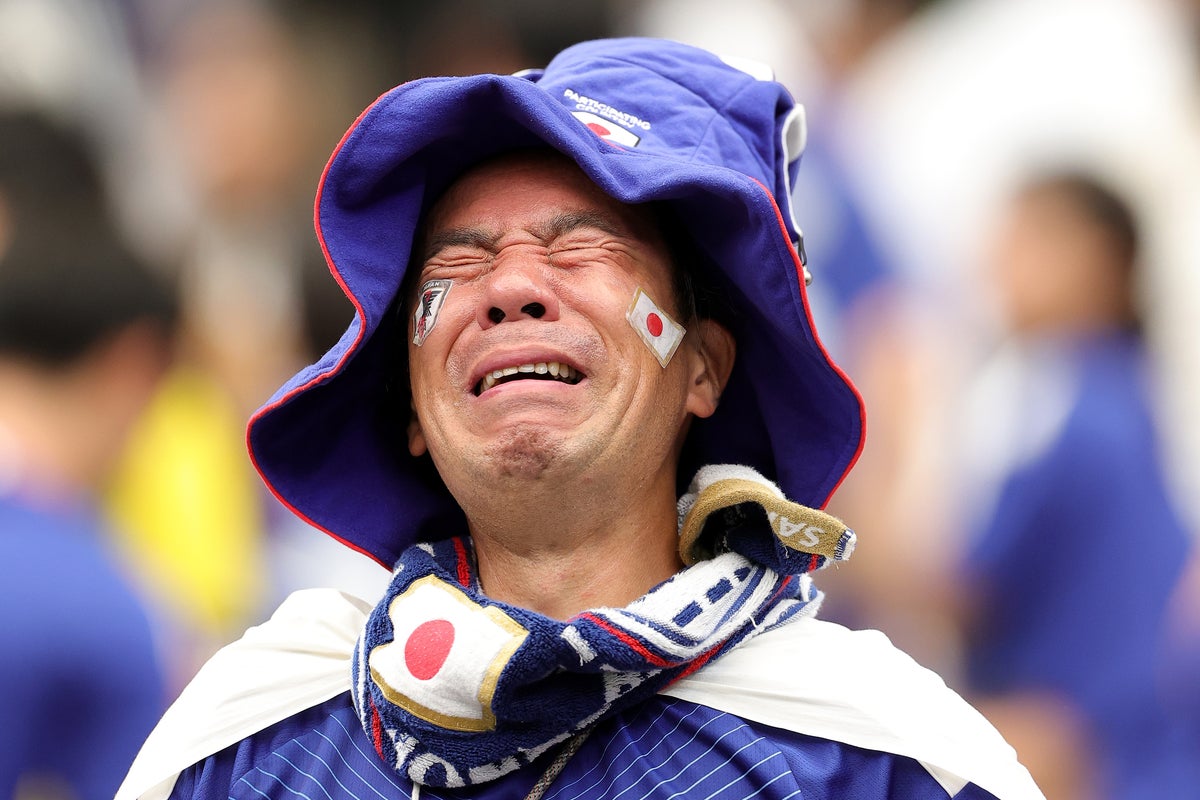
The headlines write themselves. Disgruntled soccer fans, tears streaming down their faces, clutching empty hands outside a stadium because their World Cup tickets were canceled at the eleventh hour. Naturally, the class-action lawyers smell blood, filing massive lawsuits against StubHub for "crushing dreams."
The public reacts with predictable, conditioned outrage. They paint a picture of a predatory corporate giant willfully ripping off innocent families.
It is a beautiful narrative. It is also completely wrong.
The lazy consensus surrounding secondary ticketing marketplaces misses the foundational mechanics of global commerce. When you buy a highly coveted ticket on a secondary platform months before an event, you are often not buying an asset that currently sits in a vault. You are participating in a highly volatile derivative market.
Suing StubHub because a speculative seller failed to deliver your World Cup ticket is equivalent to suing the New York Stock Exchange because a short-seller failed to deliver your shares during a short squeeze. It fundamentally misunderstands who holds the risk, who owns the inventory, and how liquidity works in high-demand ecosystems.
The Speculative Short Selling of the Ticketing World
To understand why these cancellations happen, we must strip away the emotional baggage of "shattered dreams" and look at the cold mechanics of speculative ticketing.
Many fans assume every listing on a secondary marketplace represents a ticket currently sitting on someone's kitchen counter. In reality, a massive percentage of high-end sports inventory is sold via speculative listing. Professional brokers use algorithmic models to short the ticket market.
Imagine a scenario where a broker lists a World Cup final ticket for $3,000 in January. They do not own the ticket yet. They are betting that closer to the event, through their network of corporate sponsors, federation insiders, and primary allocations, they can acquire that exact seat for $1,500. If they succeed, they pocket a clean $1,500 profit.
This short-selling mechanism provides immense liquidity to the market. It allows transactions to occur months before official distribution channels even release the physical or digital passes.
But what happens when the market moves against the short seller?
If demand explodes exponentially—say, because an unexpected underdog makes the final, or allocation pools are severely restricted by FIFA—the price to acquire that ticket might skyrocket to $6,000. The broker faces a massive financial deficit.
When the cost to fulfill the contract exceeds the broker's liquidity or risk tolerance, they default. They cancel the order.
StubHub does not cancel the ticket; the independent broker cancels the ticket because they got caught on the wrong side of a massive market squeeze.
Marketplaces Are Infrastructure, Not Inventory Holders
The legal arguments leveled against secondary platforms almost always rely on a flawed premise: that the platform acts as the direct vendor.
I have spent years analyzing operational structures in high-growth marketplace tech. The gold standard of these ecosystems relies on a clear operational firewall. Amazon does not own the inventory of the third-party merchant shipping electronics from Shenzhen. eBay does not own the vintage watch sold by a collector in Ohio.
StubHub operates on the exact same architecture. It is an escrow and clearinghouse platform. It provides the digital storefront, handles the payment processing, and enforces financial penalties on bad actors.
When a broker defaults on a World Cup ticket, the platform's protocol is triggered. The buyer is refunded, often with an additional credit or an attempt to find alternative seating.
The lawsuit complaints argue that a refund is insufficient because it does not cover the cost of flights, hotels, and emotional distress. But expecting a transaction clearinghouse to underwrite the tangential travel liabilities of every user is a financial absurdity.
If you purchase a laptop on eBay to run a presentation for a million-dollar client, and the seller ships a broken device, eBay forces a refund. They do not pay you the million dollars you lost from the failed business presentation. The contract covers the asset value, not your secondary life choices.
The Mirage of the Guarantees
"But they advertise a fan-protection guarantee!" the plaintiffs scream.
Yes, they do. And consumers routinely fail to read the explicit terms of those guarantees.
A protection guarantee ensures you get your money back, or a comparable replacement if available. It does not guarantee that the laws of supply and demand will magically bend to create an asset out of thin air when a global tournament is entirely sold out.
Consider the sheer physical constraint of a World Cup stadium. There are a finite number of Category 1 seats. If three hundred speculative brokers default simultaneously because FIFA slashed corporate allocations, there are physically no alternative tickets available for the platform to buy up and hand to you. No amount of corporate capital can manifest a seat that does not exist.
The guarantee is a financial hedge, not a magical wand. It protects your capital; it does not insurance-proof your vacation.
Why Crying for Price Caps Is Financial Illiteracy
Whenever these high-profile market failures occur, politicians and consumer advocacy groups immediately demand price caps on secondary ticket sales. They argue that if tickets could only be resold at face value, this entire speculative house of cards would collapse.
They are right about the collapse, but entirely wrong about the consequences.
If you enforce rigid price ceilings on secondary markets, the market does not become fairer. It simply goes underground.
Without centralized platforms processing payments through secure escrow, the entire trade reverts to anonymous Telegram channels, cash-in-hand street deals outside stadiums, and unverified wire transfers. The rate of outright fraud, counter-feiting, and total capital loss would skyrocket by orders of magnitude.
Centralized marketplaces, with all their friction and structural defaults, drag the black market into the gray market, offering at least some level of systemic recourse and financial recovery. Forcing face-value caps removes the incentive for platforms to provide escrow services, leaving consumers infinitely more vulnerable to actual criminals.
The Hidden Cost of Premium Event Access
Navigating high-profile international travel requires a sober calculation of risk.
If you book a $10,000 trip to Doha or Mexico City based entirely on a unfulfilled speculative ticket purchase from a third-party marketplace, you are intentionally exposing yourself to systemic counterparty risk.
The hard truth nobody wants to hear is this: if you cannot afford the financial loss of a canceled ticket, you cannot afford to attend a premier global sporting event via the secondary market.
The wealthy individuals and corporate hospitality firms who navigate these ecosystems understand this perfectly. They buy from multiple vendors, build relationships with primary allocation holders, or price the risk of failure directly into their budgets. They do not rely on a class-action lawsuit to salvage their financial planning.
Stop Blaming the Mirror for Reflecting Reality
The outrage surrounding the World Cup ticket cancellations is fundamentally an anger directed at scarcity itself.
The World Cup is the most resource-constrained sporting event on earth. Demand outstrips supply by thousands of percentage points. In any ecosystem with that level of disparity, friction is inevitable. Speculative brokers will overleverage themselves, allocations will shift unexpectedly, and contracts will break.
Suing the platform that hosted the transaction is a lazy attempt to find a deep pocket to pay for the inherent volatility of global sports ticketing. The lawsuit will wind its way through the courts, billable hours will stack up, and eventually, the plaintiffs will realize that the terms of service they checked without reading hold more legal weight than their public tears.
If you want absolute certainty, buy your tickets directly from the primary governing body during the initial lottery. If you miss out, accept that entering the secondary marketplace means playing in a high-stakes financial arena where defaults occur, trades fail, and dreams are just unhedged positions waiting to be liquidated.