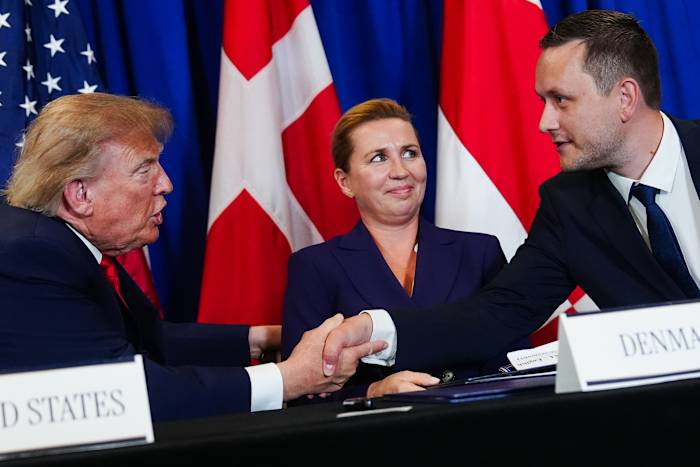
Subnational climate diplomacy operates as a market-stabilizing mechanism when national executive policy shifts toward deregulation and fossil fuel expansion. When California Governor Gavin Newsom engages directly with foreign heads of state in New York during high-level international summits, the objective extends far beyond political messaging against Donald Trump. Rather, these engagements represent a deliberate structural strategy to bypass federal gridlock, maintain international regulatory alignment, and protect green capital flows within the world’s fifth-largest economy.
To understand the mechanics of this political friction, analysts must look past partisan rhetoric and examine the underlying institutional architectures. The competing approaches of Governor Newsom and President Trump represent two fundamentally opposing theories of economic governance, energy security, and international cooperation. By evaluating the specific policy levers available to a state executive versus a federal administration, the true operational scope—and the hard legal ceilings—of subnational diplomacy become clear.
The Structural Anatomy of Subnational Climate Diplomacy
Standard political coverage often frames state-level international engagement as mere presidential posturing. In reality, California’s participation in global climate forums—such as Climate Week NYC and gatherings parallel to the United Nations General Assembly—is rooted in tangible regulatory and economic interdependence. Because California possesses unique statutory authorities and a massive consumer market, its domestic environmental policies function as de facto international standards.
This diplomatic posture relies on three primary operational mechanisms:
- Regulatory Export and Market Standardization: California’s Air Resources Board (CARB) holds specific waivers under the federal Clean Air Act allowing it to set vehicle emissions standards stricter than federal baselines. Because over a dozen other U.S. states legally adopt California’s standards under Section 177 of the Clean Air Act, automakers and global supply chains must manufacture to Sacramento’s specifications to access roughly 40 percent of the domestic automotive market. When Newsom meets with European or Asian leaders, these discussions center on harmonizing zero-emission vehicle (ZEV) mandates and battery supply chain standards so manufacturers face unified global compliance targets rather than fragmented regional rules.
- Subnational Carbon Market Linkage: California operates one of the world’s largest multi-sector cap-and-trade programs, which is already formally linked with the Canadian province of Quebec. Maintaining direct diplomatic channels with international counterparts—including subnational coalitions like the Under2 Coalition—allows California to explore cross-border carbon credit recognition, methane monitoring protocols, and joint clean-tech research agreements without requiring ratification by the U.S. Senate.
- Capital Allocation and ESG Signaling: Institutional investors managing trillions of dollars in global assets require long-term policy predictability before deploying capital into capital-intensive infrastructure like offshore wind, green hydrogen, and grid-scale battery storage. By publicly committing to California’s statutory mandate of achieving carbon neutrality by 2045 alongside foreign leaders, Newsom signals to international sovereign wealth funds and private equity firms that California’s regulatory environment remains insulated from federal policy reversals.
Contrasting Theories of Energy and Economic Governance
Newsom’s accusation that Trump is abdicating global climate leadership highlights a foundational divergence in how both leaders define national interest and economic competitiveness. A rigorous analysis requires attributing each position to its underlying economic philosophy rather than treating either as an arbitrary political stance.
The Subnational Decarbonization Thesis
Governor Newsom and aligned state officials operate under the premise that the global transition away from fossil fuels is an irreversible macroeconomic trend driven by technological cost curves and international trade policy. From this perspective, retreating from multilateral climate agreements—such as the Paris Agreement—does not halt the global energy transition; it merely forfeits American market share in clean technology manufacturing to geopolitical competitors, particularly China and the European Union.
According to statements from Newsom’s administration and allied policy analysts, federal withdrawal creates a leadership vacuum that damages U.S. diplomatic credibility. If the federal government steps back from emissions reduction targets, California asserts it must step forward to reassure international partners that major American economic centers remain committed to decarbonization, green supply chains, and climate finance.
The Federal Energy Dominance Thesis
Conversely, Donald Trump and proponents of his energy platform argue that stringent climate regulations and multilateral agreements impose asymmetrical economic costs on American industries and consumers while failing to constrain major developing emitters. From this viewpoint, prioritizing domestic oil, natural gas, and coal production—often termed "energy dominance"—lowers domestic manufacturing costs, strengthens national security by reducing reliance on foreign supply chains for critical minerals, and prevents inflation driven by rapid, subsidized grid transitions.
Supporters of the Trump administration's approach contend that unilateral state-level climate diplomacy undermines the constitutional principle that the federal government speaks with one voice in foreign affairs. Critics of California’s policies further argue that aggressive state mandates drive up local energy prices, strain electrical grid reliability, and export emissions rather than eliminating them when manufacturing relocates to jurisdictions with looser environmental standards—a phenomenon economists refer to as carbon leakage.
Legal Ceilings and Constitutional Bottlenecks
While subnational diplomacy generates significant political visibility and facilitates non-binding memorandums of understanding (MOUs), state executives operate within strict constitutional boundaries. Understanding these legal constraints is essential for assessing what state-level climate agreements can actually achieve when opposed by a sitting president.
- The Compact Clause (Article I, Section 10): The U.S. Constitution explicitly prohibits states from entering into any "Treaty, Alliance, or Confederation" with a foreign power without the consent of Congress. Consequently, any agreement Newsom signs with a foreign national or subnational government in New York must be structured as a non-binding MOU or a parallel regulatory alignment rather than an enforceable international treaty. Foreign leaders understand that California cannot legally bind the United States to financial commitments or emissions targets.
- Federal Preemption and Dormant Commerce Clause: Under the Supremacy Clause, federal law overrides conflicting state regulations when Congress or the federal executive acts within its constitutional authority. A federal administration opposed to state-level climate mandates can challenge California’s regulatory reach through multiple avenues: revoking Clean Air Act waivers via the Environmental Protection Agency (EPA), restricting federal infrastructure grants, or challenging state carbon border adjustments under the Dormant Commerce Clause, which bars states from unduly burdening interstate or foreign commerce.
- The Foreign Affairs Doctrine: The Supreme Court has historically held that state laws or actions that intrude into the field of foreign affairs—particularly when they conflict with an express federal policy—can be struck down even in the absence of a specific conflicting federal statute. If state-level climate agreements begin to resemble formal foreign policy initiatives that directly contravene federal diplomatic objectives, they become vulnerable to Department of Justice litigation.
The Corporate Compliance Dilemma
The friction between Sacramento and Washington creates a complex operational environment for multinational corporations, energy producers, and financial institutions. Rather than simplifying business operations through federal deregulation, a sharp divergence between federal and state climate policies often increases compliance complexity.
When federal environmental rules are rolled back while California and allied states maintain or tighten theirs, companies face a bifurcated domestic market. Automotive manufacturers, consumer goods companies, and financial institutions—which are increasingly subject to California’s corporate climate disclosure laws (such as SB 253 and SB 261 requiring Scope 1, 2, and 3 emissions reporting)—cannot simply abandon decarbonization strategies without risking exclusion from the California market and losing alignment with European Union directives like the Corporate Sustainability Reporting Directive (CSRD).
This dynamic explains why foreign leaders continue to grant high-level diplomatic audiences to state governors. International policymakers recognize that in a federalist system, regulatory power over land use, utility regulation, building codes, and major consumer markets is heavily decentralized. Engaging with California allows foreign governments to coordinate directly with the jurisdiction actively writing the technical rules that multinational corporations must follow.
Operational Limitations of the Subnational Model
To evaluate the true efficacy of California’s climate diplomacy, analysts must acknowledge where the subnational model hits hard structural limits. State-level action cannot fully substitute for federal authority in three critical domains:
- Sovereign Climate Finance: Developing nations require hundreds of billions of dollars in concessional financing, loan guarantees, and loss-and-damage funds to transition their energy grids and adapt to climate impacts. State governments lack the balance sheet capacity, sovereign credit mechanisms, and multilateral development bank voting shares (such as at the World Bank or IMF) required to deploy sovereign-scale international climate finance.
- Trade Policy and Tariffs: Only the federal government can negotiate bilateral trade agreements, impose carbon border adjustment tariffs on imports, or establish strategic trade alliances to secure critical minerals like lithium, cobalt, and rare earth elements. California can incentivize local clean-tech adoption, but it cannot shield domestic manufacturers from global trade distortions.
- Domestic Affordability and Grid Execution: California’s diplomatic credibility depends entirely on its domestic execution. High retail electricity rates, permitting bottlenecks for high-voltage transmission lines, and land-use constraints pose severe operational risks to California’s 2045 carbon neutrality goals. If state policies result in visible economic friction or grid instability at home, the international appeal of the "California model" diminishes rapidly, regardless of diplomatic outreach in New York.
Strategic Forecast for Market Participants and Policymakers
The collision between California’s subnational climate diplomacy and federal energy policy will not resolve into a single national consensus; instead, it will institutionalize a permanent two-track regulatory environment within the United States.
For corporate strategists, institutional investors, and policy analysts, the optimal response is to decouple long-term capital planning from short-term federal political cycles. Organizations should anchor their supply chain, emissions reporting, and product development standards to the strictest prevailing regulatory jurisdictions—specifically the intersection of California statutory mandates and European Union directives—while utilizing federal deregulation selectively to accelerate domestic permitting and infrastructure deployment where permissible. Relying on federal rollbacks to justify pausing decarbonization investments exposes enterprises to severe stranded-asset risks and immediate market access barriers across major subnational and international economies.